A Relationship in Repair
India and China, whose ties soured after the Galwan clash in 2020, are gradually attempting to normalize relations. The turning point came last year when Prime Minister Narendra Modi met Chinese President Xi Jinping on the sidelines of the SCO summit in Kazan. That meeting paved the way for renewed engagement, leading to Chinese Foreign Minister Wang Yi’s two-day trip to New Delhi—a visit loaded with symbolism as both countries weigh cooperation in a world unsettled by Washington’s policies.
Wang Yi’s Arrival and Agenda
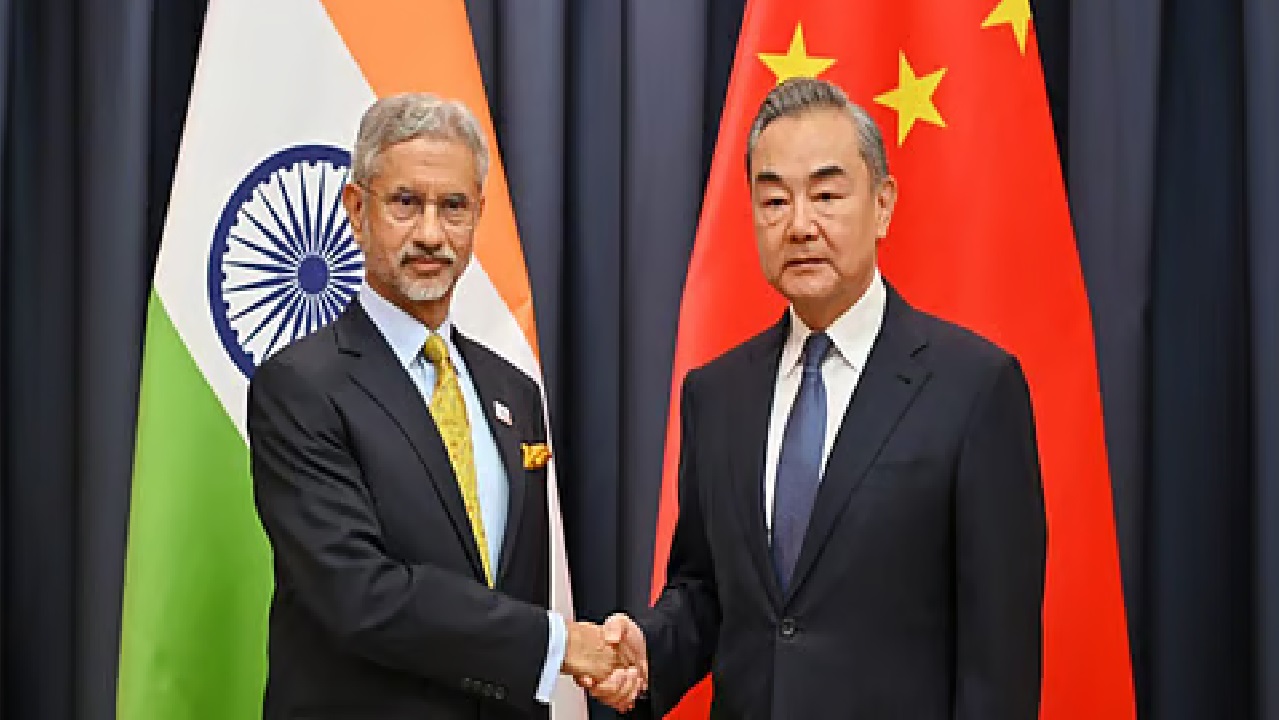
Wang Yi arrived in Delhi on Monday, received by senior MEA officials, and soon met External Affairs Minister S. Jaishankar. Their talks covered trade, connectivity, river data-sharing, pilgrimages, and cultural exchanges. Later, Wang is set to meet NSA Ajit Doval to address the border situation and Prime Minister Modi before the upcoming SCO summit in China.
Jaishankar stressed that moving forward requires “candid and constructive” dialogue. For India, any reset hinges on peace along the Line of Actual Control (LAC), where troops remain deployed despite partial disengagement.
Economic Concessions: Fertilisers and Rare Earths
A key breakthrough was China’s assurance to resume supplies of fertilisers, rare earth minerals, and tunnel-boring machines—items crucial for India’s agriculture, auto industry, and infrastructure projects. With nearly a third of India’s fertiliser imports sourced from China, the move marks a tangible improvement in economic ties.
For Beijing, these concessions signal willingness to use trade as a bridge; for Delhi, they help relieve domestic shortages while testing whether China’s commitments hold steady.
Border Issues Still Central
While the Jaishankar-Wang meeting avoided detailed boundary talks, these are to be taken up by NSA Doval. Even after multiple disengagement rounds, thousands of troops remain stationed along the 3,488-km LAC. As Jaishankar noted, sustainable progress requires calm at the frontier—without it, other gains risk being derailed by another flare-up.
The Trump Factor: A Shared Concern
Casting a shadow over the talks is U.S. President Donald Trump’s tariff offensive. Washington has imposed 50 per cent duties on Indian exports, citing New Delhi’s continued Russian oil imports, while sparing Beijing from equivalent penalties.
Both India and China see this as a reminder of Washington’s unpredictability. For Delhi, tariffs compound economic pressure; for Beijing, Trump’s approach reinforces the case for solidarity among developing nations. If New Delhi and Beijing inch closer, it could complicate Trump’s strategy of balancing one against the other in Asia.
Multipolar Rhetoric and Taiwan Sensitivities
Wang Yi framed India-China cooperation as part of a “once-in-a-century transformation,” urging the two largest developing nations to strengthen multipolarity. India responded cautiously, reiterating its One-China policy on Taiwan while stressing that engagement must remain balanced. The careful wording highlights India’s attempt to accommodate Beijing’s concerns while keeping strategic options open.
Fragile but Moving Forward
Wang Yi’s visit has injected cautious optimism into a relationship long defined by mistrust. Economic concessions on fertilisers and rare earths are encouraging, yet the unresolved border question looms large. Shared discomfort with U.S. tariffs may nudge India and China toward pragmatic cooperation, but trust will build only if peace is maintained on the ground.
For Trump, the thaw could diminish Washington’s leverage—forcing recalibration in how the U.S. engages both Asian powers. For now, Delhi and Beijing are probing whether rivalry can coexist with rapprochement in a shifting global order.
(With agency inputs)