Government in Talks with Platforms on Age Restrictions
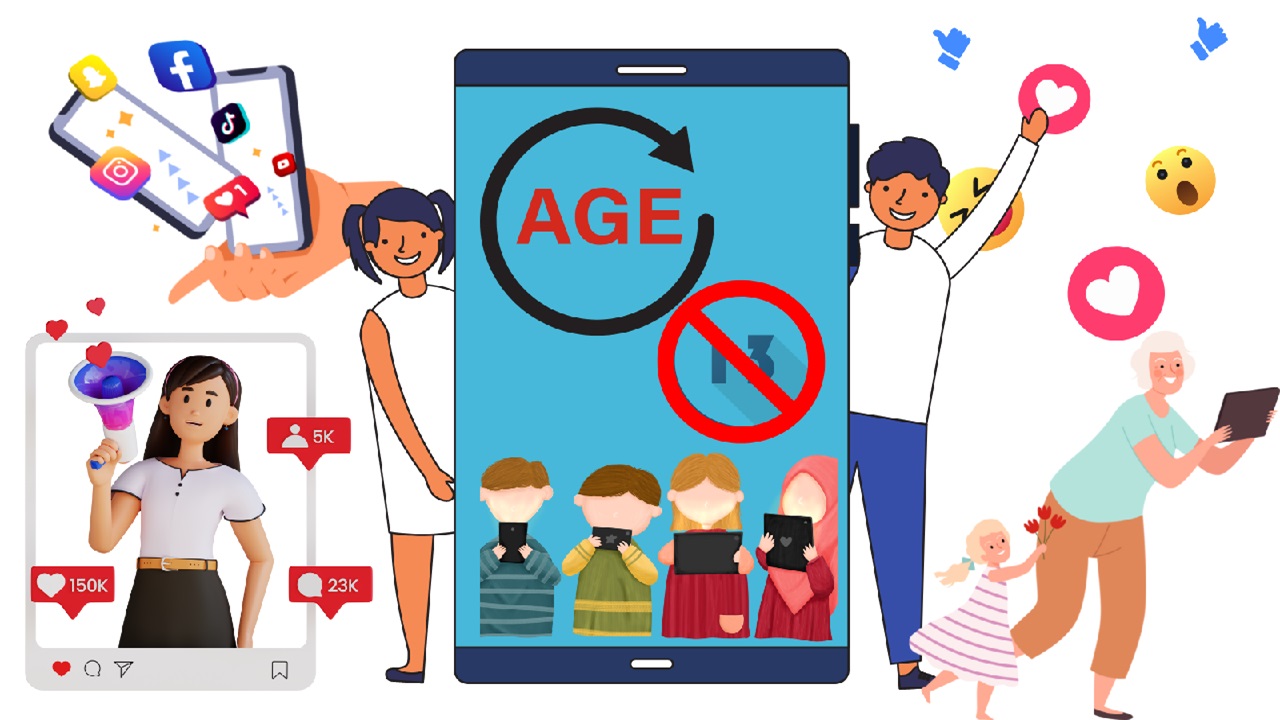
The Union government has opened discussions with major social media intermediaries on imposing age-based curbs for children, with IT Minister Ashwini Vaishnaw confirming consultations on a potential “blanket, age-based” restriction framework. The move, tied to the Digital Personal Data Protection regime and broader online-safety concerns, signals India’s intent to align with global efforts to protect minors from harmful online content, addictive algorithms, and deepfake-driven risks. Officials say the aim is to find a “balanced and implementable” model that safeguards children without stifling digital access or innovation.
Global Momentum Driving Child Online Safety Rules
Across the world, governments are tightening rules around children’s social media use. Australia has legislated a blanket under-16 ban on major platforms effective March 2025, while the European Union has mandated age-verification systems under the Digital Services Act since 2024. The United Kingdom’s Online Safety Act and debates in the United States around the KOSA bill reflect growing concern over mental-health harms and algorithmic exposure. Sub-national jurisdictions, including Spain and the U.S. state Florida, are also experimenting with parental-consent thresholds and stricter defaults.
This global wave has created policy pressure for India, home to one of the world’s largest youth internet populations. Policymakers increasingly see age-differentiated access as essential to curb cyberbullying, exposure to explicit content, and AI-generated deepfakes.
What Age Threshold Is Proposed in India?
No specific age limit has been officially finalised. The government has indicated that consultations with firms such as Meta, X, and YouTube are ongoing to determine an appropriate threshold and enforcement mechanism.
India’s data-protection law already requires verifiable parental consent for minors’ data processing, forming the legal foundation for any future ban or restriction. Policy discussions and think-tank recommendations suggest possible thresholds below 16 or 18, echoing international precedents, but officials have stressed that India’s scale and digital diversity require a tailored approach. State-level pilots and academic proposals favour phased rollouts—starting with stronger parental controls and age-verification tools before any nationwide prohibition.
Policy Drivers and Strategic Considerations
Officials cite rising reports of online harms among minors and the need for differentiated content filtering. According to UNICEF, India has hundreds of millions of young internet users, making it one of the most complex markets to regulate. Proposed measures under discussion include age-verification technologies, faster takedown timelines for harmful content, and platform-level safety defaults.
At the same time, the government is emphasising that regulation will not derail India’s digital-economy ambitions. Investments from companies such as Google, Amazon, Microsoft, and the Adani Group into AI and data infrastructure underline a parallel push to position India as a global technology hub.
A Nuanced Path Ahead
India’s exploration of age-based social media curbs reflects a broader global shift toward protecting children in digital spaces. Yet the country’s scale—hundreds of millions of users across varied socio-economic contexts—means any blanket ban will demand careful calibration. The most likely path forward is a phased regulatory framework combining parental controls, platform accountability, and targeted restrictions rather than an immediate universal ban. If executed thoughtfully, India could set a model that reconciles child safety with digital inclusion, ensuring that regulation strengthens—rather than constrains—its fast-growing online ecosystem.
(With agency inputs)