Fallout of the Pahalgam Attack
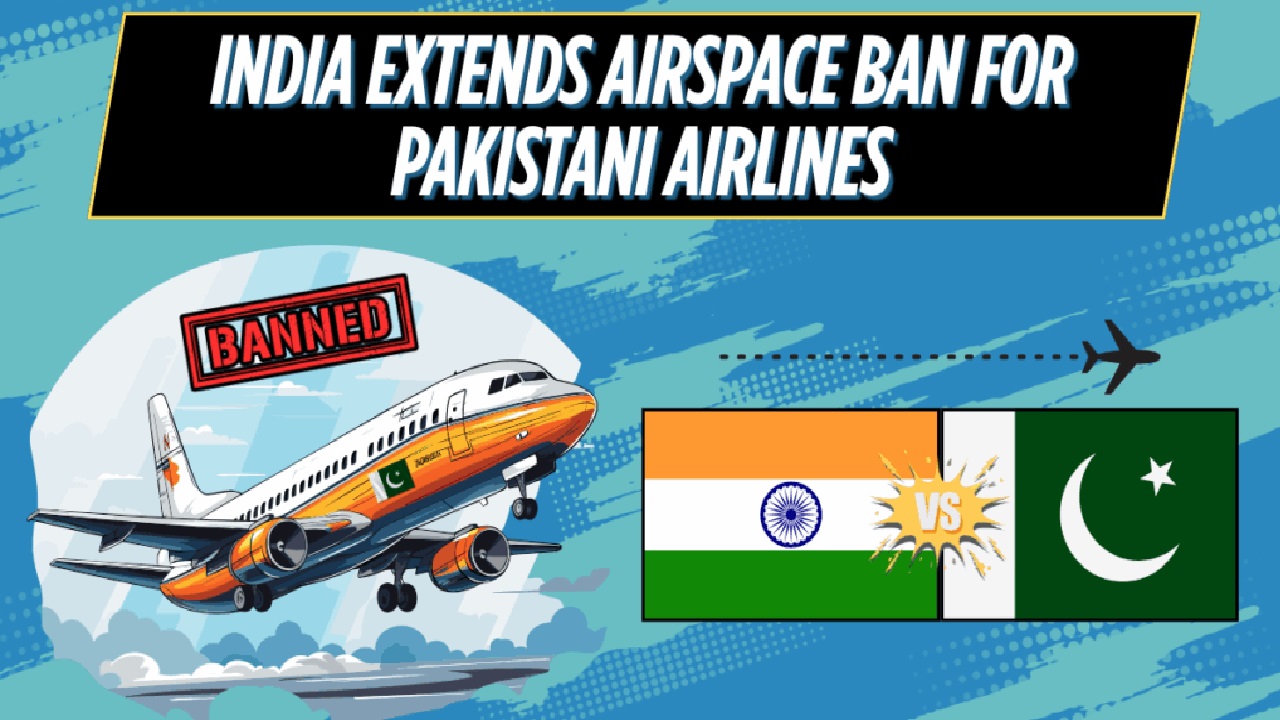
The April terror assault in Pahalgam not only deepened hostility between New Delhi and Islamabad but also triggered a series of retaliatory steps that have spilled into aviation. In the wake of the incident, Pakistan swiftly blocked Indian aircraft from traversing its skies. India reciprocated within days, shutting its own airspace to Pakistani planes. What began as a short-term restriction has now stretched into half a year, with both nations repeatedly renewing their bans.
Tit-for-Tat Closures
Pakistan first barred Indian flights on April 24, initially for 30 days, citing security concerns. India responded on April 30 by imposing a similar prohibition on Pakistani carriers. Each side has since extended the restrictions through consecutive Notices to Airmen (NOTAMs). Recently, Islamabad renewed its ban just before its expiry on September 24, while New Delhi confirmed its closure will last until October 24. This cycle underscores the absence of diplomatic progress in easing tensions.
Global Carriers Unaffected
Interestingly, the restrictions apply only to national carriers. International airlines continue to transit both countries’ skies without obstruction. This selective enforcement highlights how both governments are targeting each other while avoiding broader disruption to global aviation networks.
Impact on Indian Airlines
The brunt of the closures has fallen on Indian carriers. Nearly 800 weekly flights that would normally cross Pakistani territory—from northern Indian hubs to destinations in Europe, West Asia, and North America—must now take longer detours. Depending on the route, journeys are extended by anywhere from 15 minutes to several hours. These adjustments translate into significantly higher fuel costs, complicated scheduling, and additional burdens on airline crews. For carriers already operating in tight-margin environments, the financial strain is mounting.
Minimal Effect on Pakistan
In contrast, Pakistan’s flag carrier, PIA, has little to lose from India’s countermeasure. With its shrinking fleet and limited international operations, the airline is scarcely affected by exclusion from Indian skies. This imbalance in consequences further hardens perceptions in India that the measure, while symbolically important, is economically lopsided.
Need for De-Escalation
The prolonged airspace standoff reflects a broader diplomatic freeze following the Pahalgam attack. While the closures serve as political gestures, they come at a steep cost to Indian aviation and inconvenience to travelers. Constructive dialogue, rather than extended restrictions, offers the only sustainable way forward. Restoring air connectivity would not only ease economic strain but also signal willingness to rebuild trust in a region where tensions too often ground cooperation.
(With agency inputs)