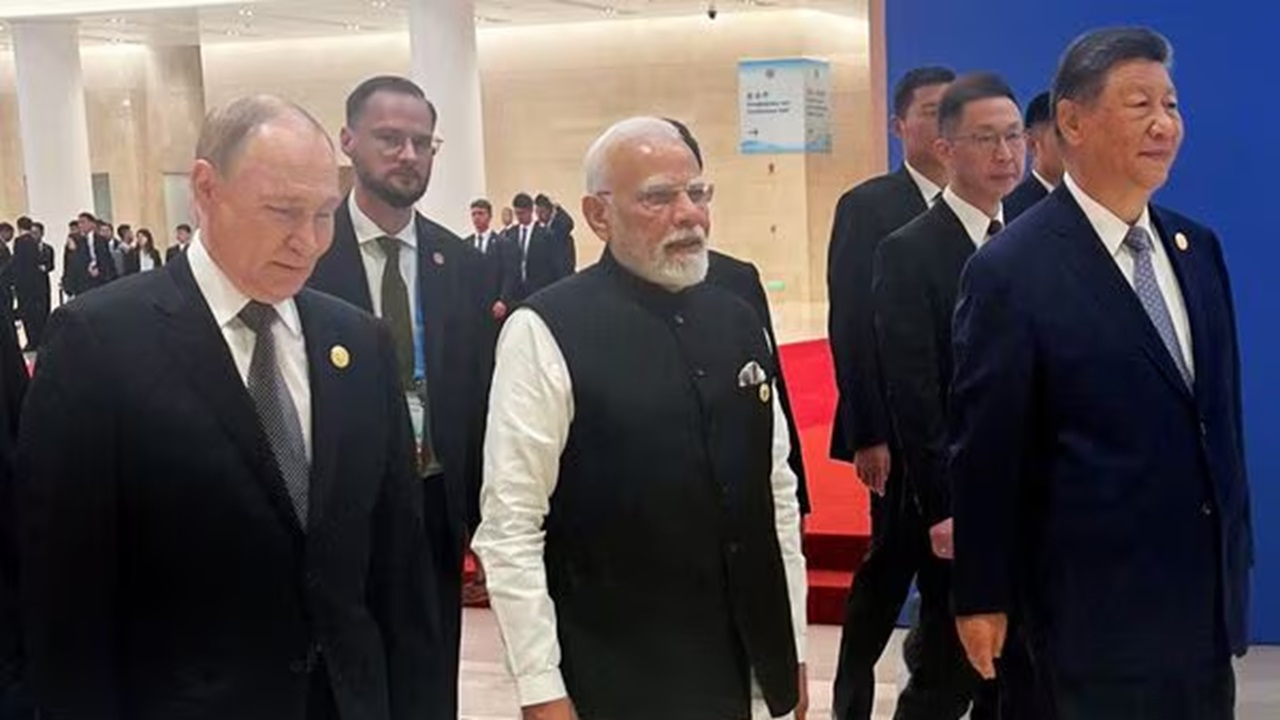
India Takes Center Stage at the SCO Summit
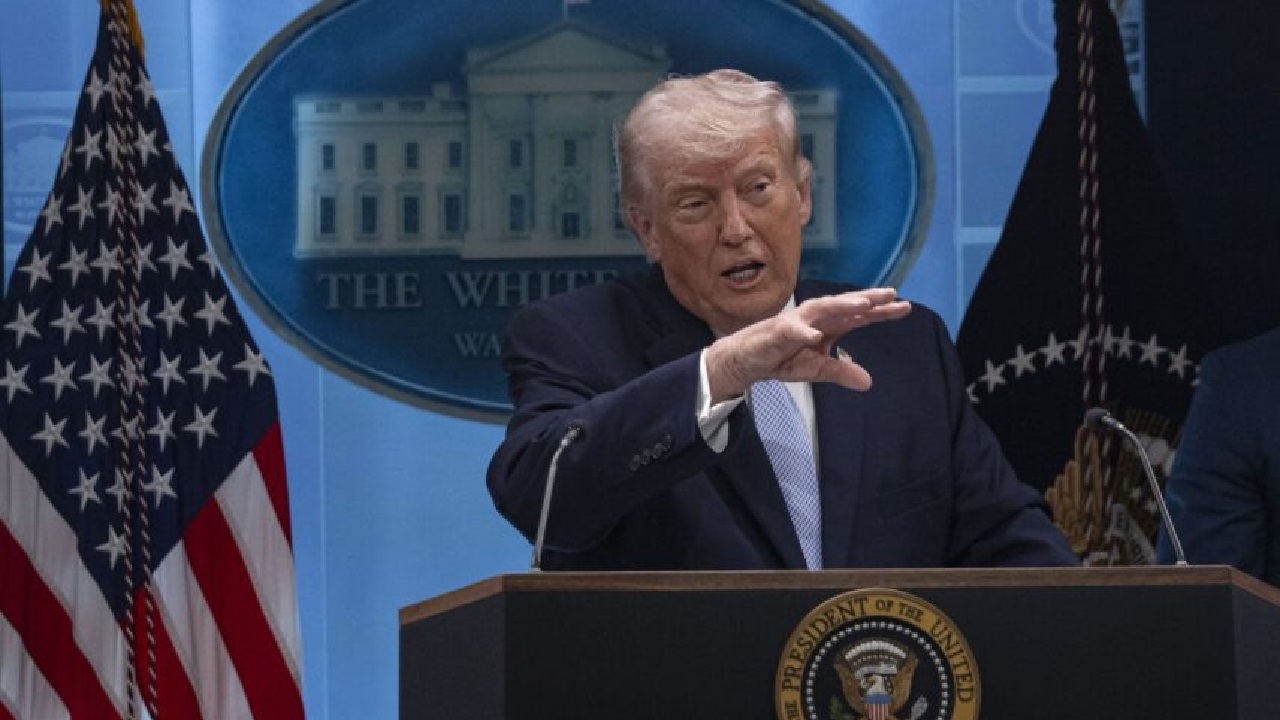
This year’s Shanghai Cooperation Organisation (SCO) summit placed India firmly in the international spotlight. Prime Minister Narendra Modi’s meetings with Russian President Vladimir Putin and Chinese President Xi Jinping attracted attention far beyond the borders of Eurasia. For Washington, however, the optics of New Delhi’s engagement with Moscow and Beijing set off alarm bells. Former White House trade adviser Peter Navarro—long known for his hard-hitting remarks on global trade and geopolitics—criticized Modi’s outreach to the leaders of Russia and China, framing it as a misstep at a moment of heightened global tension.
Navarro’s Sharp Rebuke
Navarro did not mince words. He described Modi’s interaction with Putin and Xi as “a shame,” insisting that India should align itself with the United States rather than stand beside Russia. According to him, New Delhi’s purchase of discounted Russian crude effectively channels funds into Moscow’s war chest, prolonging the Ukraine conflict. “It is a shame to see Modi getting in bed with Xi Jinping and Putin. I’m not sure what he’s thinking,” Navarro declared, while urging India to “be with us and not Russia.”
His comments echoed a longstanding grievance in Washington: that India’s pursuit of energy security through Russian oil undermines Western attempts to isolate the Kremlin.
The “Maharaja of Tariffs” Label
Navarro’s critique was not confined to geopolitics. He also revisited a familiar economic theme, branding India the “Maharaja of tariffs.” In his view, India’s trade regime ranks among the world’s most restrictive, disadvantageous American exporters. Navarro alleged that New Delhi’s insistence on buying Russian oil compounded this problem, creating what he called a “two-pronged issue”—unfair trade practices and geopolitical alignment with Moscow.
He accused Indian officials of “denial” about the scale of their imports from Russia, claiming that the facts are indisputable. This pointed language reflects Washington’s growing frustration with New Delhi’s balancing act between East and West.
Targeting India’s Domestic Dynamics
Navarro went further, venturing into contentious territory by invoking caste-based rhetoric. He claimed that “Brahmins are profiteering at the expense of ordinary Indians” through discounted Russian oil purchases—a statement that not only deepened his critique but also stirred sensitivities within India’s social fabric.
By linking domestic inequities to foreign policy choices, Navarro aimed to question both the ethics and legitimacy of India’s energy strategy. Such remarks, however, risk being viewed as overreach, blending international criticism with commentary on internal matters.
Accusations of Becoming a “Kremlin Laundromat”
In one of his harshest allegations, Navarro branded India a “laundromat for the Kremlin.” He charged Indian refiners with purchasing cheap Russian crude, refining it, and reselling it to global markets at a profit. In his telling, this not only benefits India economically but also indirectly finances the war in Ukraine. “It kills Ukrainians,” Navarro lamented, arguing that U.S. taxpayers are left footing the bill to counter Moscow’s military advances.
This framing casts India not just as a passive buyer but as an active facilitator of Russian revenues, a narrative Washington may increasingly use to justify economic pressure.
India’s Perspective: Energy Security First
New Delhi, for its part, has consistently defended its oil imports from Russia. Officials stress that the purchases are essential for stabilizing domestic energy prices, shielding its population from the global volatility triggered by the Ukraine war. Moreover, India argues that its transactions are in line with international mechanisms such as the G7’s price cap, which explicitly allows continued Russian exports at discounted rates.
Historically, India sourced most of its oil from the Middle East, with Russia playing only a marginal role. That changed dramatically after 2022, when the Ukraine invasion reshaped global energy flows. The West’s restrictions on Moscow inadvertently opened space for India to secure affordable supplies. U.S. officials themselves have acknowledged that this outcome was built into the sanctions architecture, even if it complicates Washington’s diplomatic messaging today.
Washington’s Uneasy Double Standard
Critics in New Delhi point out a striking inconsistency: despite China’s far greater role as a buyer of Russian crude, it is India that has borne the brunt of American “secondary tariffs” under the Trump administration. Many in India interpret this as unfair targeting, particularly given that Washington continues to trade extensively with other nations that maintain ties with Moscow.
The sense of being singled out has only strengthened India’s determination to defend its policies as pragmatic, not ideological.
The Road Ahead for India’s Balancing Act
Navarro’s blistering critique underscores the widening rift between U.S. expectations and India’s strategic calculations. For Washington, the demand is clear—India must choose sides in a conflict that defines the global order. For New Delhi, however, the priority remains equally clear—safeguarding national interests in energy and trade while avoiding entanglement in power blocs.
As India’s stature rises on the world stage, it will increasingly face pressure from competing poles of power. The SCO summit was a vivid reminder that India’s partnerships stretch both East and West. Whether New Delhi can continue to walk this tightrope without alienating key allies will shape not only its future foreign policy but also the trajectory of the international balance in the years ahead.
(With agency inputs)