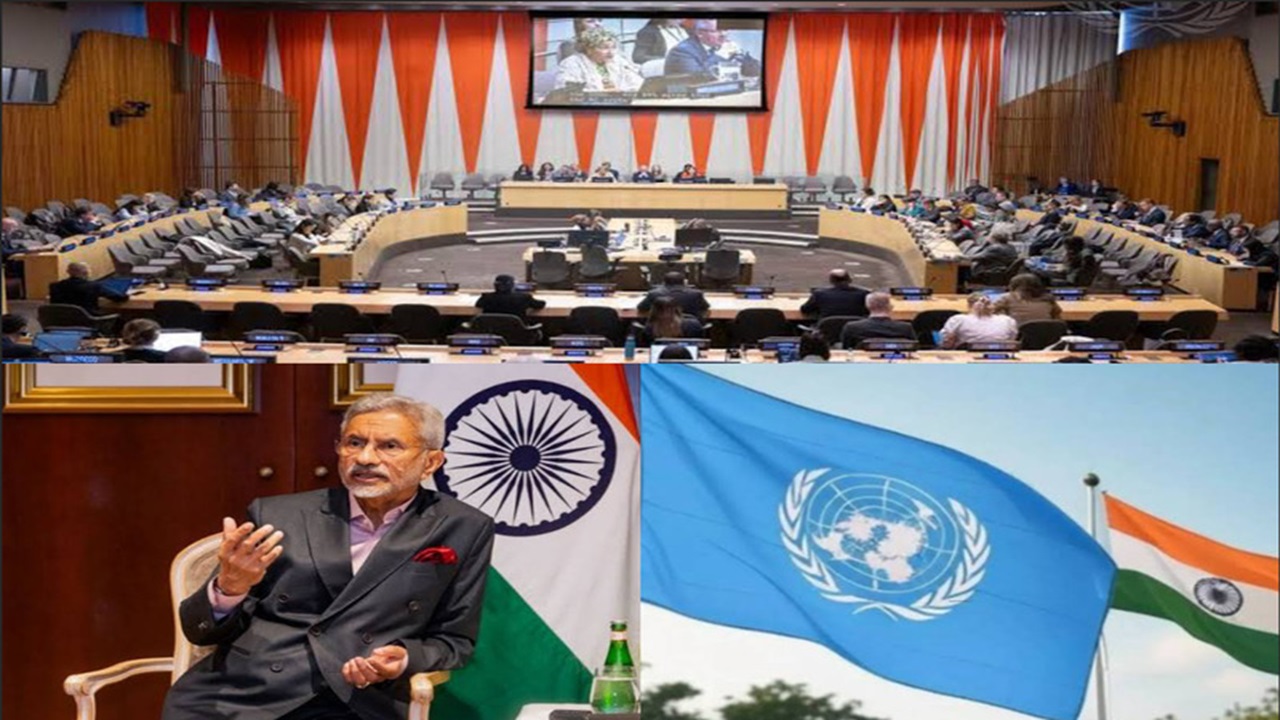
India has secured an unopposed victory across multiple United Nations bodies linked to the United Nations Economic and Social Council, marking a significant diplomatic milestone. In elections held in New York, India was elected by acclamation to key committees, while senior diplomat Preeti Saran was re-elected to a major human rights body. The uncontested nature of these wins highlights growing global acceptance of India’s role in shaping international development and governance frameworks.
Understanding ECOSOC: The UN’s Development Engine
The United Nations Economic and Social Council (ECOSOC) is one of the principal organs of the UN, responsible for coordinating global efforts on economic, social, and environmental issues. It serves as a central platform where member states deliberate on policies related to sustainable development, human rights, and international cooperation.
ECOSOC operates through a network of functional commissions and committees that address specific thematic areas—from technology and development to civil society participation. Membership in these bodies allows countries to influence global norms, policy priorities, and institutional frameworks.
India’s Expanding Footprint in Key Committees
India’s recent success includes securing seats in the Commission on Science and Technology for Development, the Committee on Non-Governmental Organisations, and the Committee for Programme and Coordination. Each of these plays a critical role in shaping global governance.
The Committee on NGOs, in particular, is a powerful gatekeeping body that determines which civil society organisations gain consultative status with the UN. India’s presence here gives it a voice in shaping the participation and legitimacy of global non-governmental actors.
Similarly, the Commission on Science and Technology for Development aligns with India’s growing emphasis on digital innovation, technology transfer, and sustainable growth, allowing it to contribute to global conversations on the future of development.
Preeti Saran’s Re-election: Strengthening Human Rights Influence
A key highlight of the sweep is the re-election of Preeti Saran to the Committee on Economic, Social and Cultural Rights. This 18-member body monitors how countries implement the International Covenant on Economic, Social and Cultural Rights.
Saran’s extensive diplomatic experience—spanning postings in multiple global capitals and multilateral institutions—adds weight to India’s role in shaping discussions on human development, labour rights, and social equity. Her prior leadership within the committee further strengthens India’s credibility in navigating complex rights-based debates.
Diplomatic Strategy: Consensus Over Confrontation
India’s unopposed election across these bodies reflects a broader diplomatic strategy centred on consensus-building rather than confrontation. By focusing on issues like climate action, digital development, and inclusive growth, India has positioned itself as a constructive and balanced voice within the UN system.
This approach has helped New Delhi gain acceptance even among countries with differing geopolitical interests. Rather than being seen as a disruptive force, India is increasingly viewed as a stabilising participant in multilateral forums.
A Quiet but Significant Global Shift
India’s clean sweep in ECOSOC-linked bodies is more than a symbolic victory—it represents a steady expansion of its influence in shaping global governance. By securing roles across key committees, India is positioning itself at the intersection of development policy, human rights, and institutional decision-making.
As global challenges grow more complex, such multilateral engagement will be crucial. India’s success underscores the power of sustained, issue-based diplomacy in building credibility and influence on the world stage.
(With agency inputs)