The “Chicken’s Neck” That Holds India Together
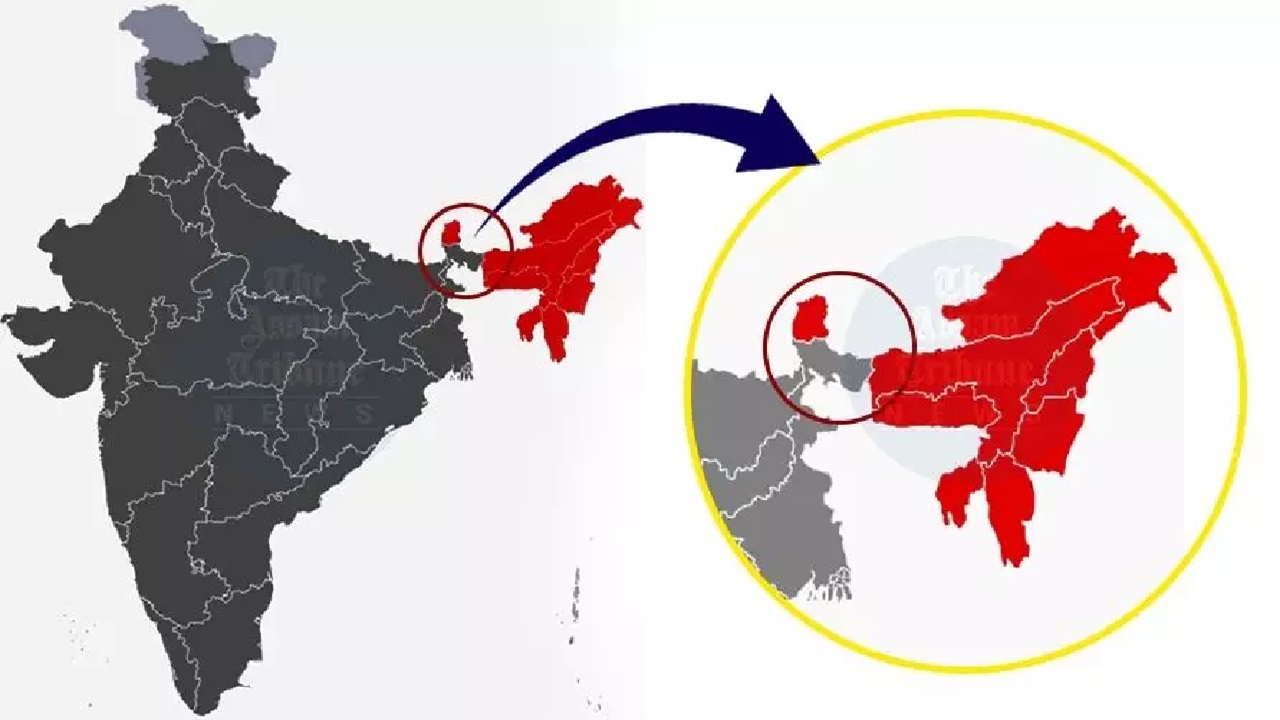
Nestled in North Bengal, the Siliguri Corridor—famously known as the “Chicken’s Neck”—is one of India’s most strategically sensitive and geopolitically significant stretches of land. Barely 20–22 kilometers wide at its narrowest point, this corridor connects mainland India to its eight northeastern states—a region rich in natural resources, biodiversity, and cultural heritage.
Flanked by Nepal to the northwest, Bangladesh to the southwest, Bhutan to the north, and China’s Chumbi Valley to the northeast, this slender strip is India’s only overland link to its northeast. Its significance cannot be overstated: the corridor is both a vital lifeline and a potential choke point that could determine India’s connectivity, defense capability, and national security in times of conflict or crisis.
Strategic Importance: The Artery of India’s Northeast
The Siliguri Corridor serves as the sole passage for goods, military logistics, and civilian movement between mainland India and the northeast. Highways, railways, and air routes passing through this narrow stretch ensure the uninterrupted flow of supplies, energy, and defense reinforcements.
In the event of any disruption—natural or man-made—the entire northeastern region could be isolated from the rest of the country, leading to logistical paralysis, trade stagnation, and strategic vulnerability. For the Indian Armed Forces, control of the corridor is essential to maintaining operational readiness, especially amid growing tensions along the India-China border in Arunachal Pradesh and Sikkim.
Simply put, if the “Chicken’s Neck” is cut off, India’s northeast risks being geopolitically severed.
Defense and Security Considerations
Recognizing its vulnerability, India has fortified the corridor with troop deployments, surveillance infrastructure, and rapid-response units. The region is under constant watch from radar systems, drones, and satellite monitoring, ensuring real-time intelligence in case of any threat.
Its proximity to China’s Chumbi Valley—a tri-junction near Bhutan and Sikkim—adds to the strategic tension. A potential military advance from China through this area could threaten the corridor directly, making it a focal point in India’s defense doctrine.
Additionally, the corridor’s location near the India-Bangladesh and India-Nepal borders makes it equally sensitive from a cross-border infiltration and smuggling perspective. Maintaining internal security within this narrow land link remains a delicate balance of military vigilance and civilian cooperation.
Emerging Threats: A Geopolitical Tightrope
1. From the Bangladesh Side
The India-Bangladesh border, which runs close to the corridor, faces challenges such as illegal migration, smuggling, and cross-border extremism. Unregulated movement of goods and people risk funding insurgent networks in India’s northeast and altering local demographics.
Although India and Bangladesh share strong diplomatic and trade ties, Chinese investments in Bangladesh’s ports and infrastructure have raised strategic concerns for India’s eastern flank.
2. The China-Pakistan Axis
China’s rapid military build-up near the Tibetan border and its strategic partnership with Pakistan—through projects like the China-Pakistan Economic Corridor (CPEC)—have intensified India’s security pressures. In a conflict scenario, coordinated pressure from both the western and eastern fronts could strain India’s ability to safeguard the corridor and ensure uninterrupted connectivity to the northeast.
Moreover, the growing nexus between Beijing and Dhaka, coupled with Pakistan’s proxy activities, adds layers of complexity to India’s strategic calculus. The corridor could become a flashpoint in a larger power contest across South Asia.
Why the Corridor Is Vulnerable
The Siliguri Corridor’s geography is both its strength and weakness. Its slender shape makes it easy to monitor yet equally easy to target. Any military blockade or natural disaster could effectively sever India’s northeast from the mainland.
The increasing alignment of China, Pakistan, and Bangladesh’s strategic interests, along with regional instability, underscores the need for India to adopt a multi-dimensional security framework—combining military readiness, infrastructure development, and diplomatic engagement.
Without robust contingency planning and local resilience, the corridor remains India’s Achilles’ heel in its otherwise vast geopolitical landscape.
Strengthening the Corridor: Steps Forward
To mitigate risks and strengthen the Siliguri Corridor, India must:
· Enhance border infrastructure and surveillance by deploying drones, motion sensors, and fencing along the Bangladesh border.
· Expand joint security mechanisms between the Border Security Force (BSF) and Bangladesh’s BGB, ensuring intelligence sharing and coordinated patrols.
· Invest in development and community engagement to reduce reliance on illicit trade and promote local employment.
· Accelerate regional infrastructure projects like rail links, highways, and tunnels to establish alternate connectivity routes in case of emergencies.
· Reinforce diplomatic cooperation with Bangladesh, Bhutan, and Nepal to promote regional stability and discourage external influence.
Guarding the Neck That Connects a Nation
The Siliguri Corridor is far more than a narrow strip of land—it is India’s strategic lifeline, binding the northeast to the rest of the nation. Its vulnerability makes it a symbol of both India’s unity and fragility.
In an era of shifting geopolitics, safeguarding this corridor requires a blend of hard power, smart diplomacy, and local empowerment. By fortifying infrastructure, deepening regional partnerships, and fostering resilient communities, India can transform the “Chicken’s Neck” from a point of weakness into a pillar of strength.
The future of India’s northeastern integration—and perhaps its eastern security frontier—depends on how strongly the Siliguri Corridor is protected, developed, and respected.
(With agency inputs)