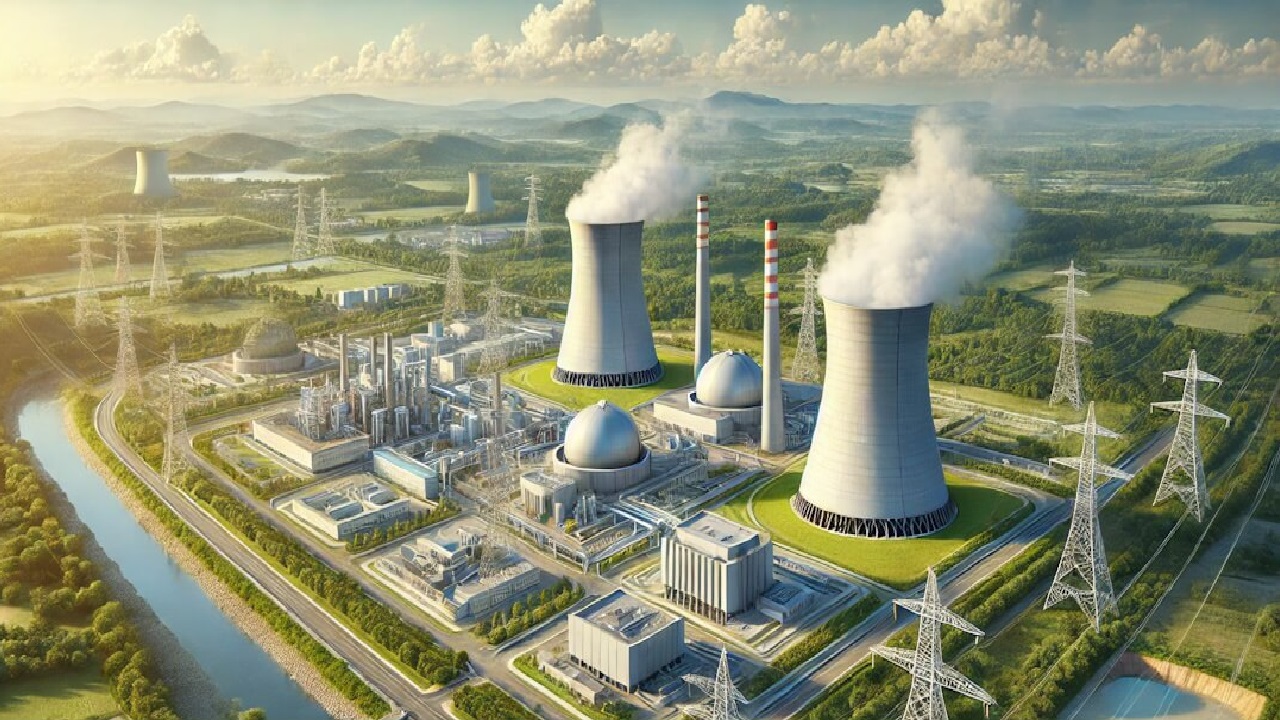
India has witnessed a remarkable expansion in its nuclear power sector over the past decade. With a strong commitment to clean and sustainable energy, the Indian government has significantly increased investment, enhanced safety measures, and encouraged private sector participation. Union Minister for Atomic Energy Dr. Jitendra Singh recently highlighted these achievements in the Lok Sabha, underlining the country’s strategic vision for nuclear energy development.
Background and History of Indian Nuclear Power
India’s journey in nuclear energy began in the 1940s, with the establishment of the Atomic Energy Commission in 1948. The country adopted a three-stage nuclear programme, focusing on pressurized heavy water reactors (PHWRs), fast breeder reactors (FBRs), and thorium-based reactors. Over the years, nuclear power has played a crucial role in India’s energy mix, reducing dependence on fossil fuels and bolstering energy security.
Doubling of Nuclear Power Capacity
Dr. Jitendra Singh informed Parliament that India’s installed nuclear power capacity has doubled in the past decade. The capacity increased from 4,780 MW in 2014 to 8,880 MW at present, while overall power generation capacity surged from 22,480 MW to 35,333 MW. This expansion has been driven by increased investments, technological advancements, and the commissioning of new reactors across the country.
Enhanced Budgetary Support
The Union Budget has played a crucial role in strengthening India’s nuclear sector. Before 2014, the Department of Atomic Energy had a budget of Rs 13,879 crore. This has now increased to Rs 37,483 crore, marking a 170% rise. The increased funding has facilitated infrastructure expansion, research, and development of advanced nuclear technologies.
Rajasthan’s Key Contribution
Rajasthan has emerged as a significant contributor to India’s nuclear energy sector, hosting seven of the country’s 25 operational reactors. Dr. Jitendra Singh noted that a previously non-functional unit in Rajasthan has been revived, boosting the state’s nuclear power generation capacity. Additionally, the discovery of uranium reserves in Rajasthan could further enhance India’s nuclear fuel resources once environmental clearances are obtained.
Strengthening Safety Measures
Ensuring safety remains a top priority in India’s nuclear energy policy. Dr. Jitendra Singh emphasized that India follows a rigorous “safety first, production later” approach. Safety protocols include:
· Periodic monitoring every three months during construction
· Biennial operational checks
· Comprehensive safety reviews every five years. He reassured that stringent measures are in place to protect workers and communities around nuclear plants.
Geographical Expansion: New Reactor in Haryana
To diversify nuclear infrastructure beyond traditional locations such as Tamil Nadu, Andhra Pradesh, Maharashtra, and Gujarat, the government has announced a new reactor in Gorakhnagar, Haryana. This initiative aligns with India’s goal of widespread access to nuclear energy and regional energy security.
Increasing Private Sector Participation
A key policy shift is the increased role of the private sector in India’s nuclear energy development. Prime Minister Narendra Modi’s government has opened up the sector to private enterprises, enabling faster growth, technological innovation, and reduced dependence on public funding. This move aligns with global best practices, fostering a more dynamic and competitive nuclear industry.
Addressing Nuclear Waste Management Concerns
Concerns regarding nuclear waste disposal were addressed by Dr. Jitendra Singh, who assured that India adheres to global best practices. Key measures include:
· Initial on-site storage for 5–7 years
· Transfer to ‘Away from Reactor’ (AFR) facilities for long-term storage and reuse
He also dispelled misconceptions about Koodankulam and Kalpakkam being central nuclear waste dumps, reiterating that each facility efficiently manages its waste.
Radiation Level Reduction at Key Facilities
India has made significant progress in reducing radiation levels at nuclear plants. The radiation level at the Koodankulam plant has decreased from 0.081 micro-sieverts in 2014 to 0.002% today. Similarly, the Kalpakkam plant has seen a reduction from 23.140 micro-sieverts to 15.96 micro-sieverts, ensuring enhanced safety and compliance with international standards.
India’s nuclear power sector has witnessed unprecedented growth over the past decade, backed by increased budgetary support, safety enhancements, geographical expansion, and private sector involvement. With Rajasthan’s growing role in uranium supply and new reactor installations, India is poised to strengthen its position as a global nuclear power leader. Moving forward, the government’s commitment to sustainable nuclear energy will be instrumental in meeting the country’s growing electricity demands while ensuring environmental and safety standards.
(With inputs from agencies)