Setting the Stage at the UN
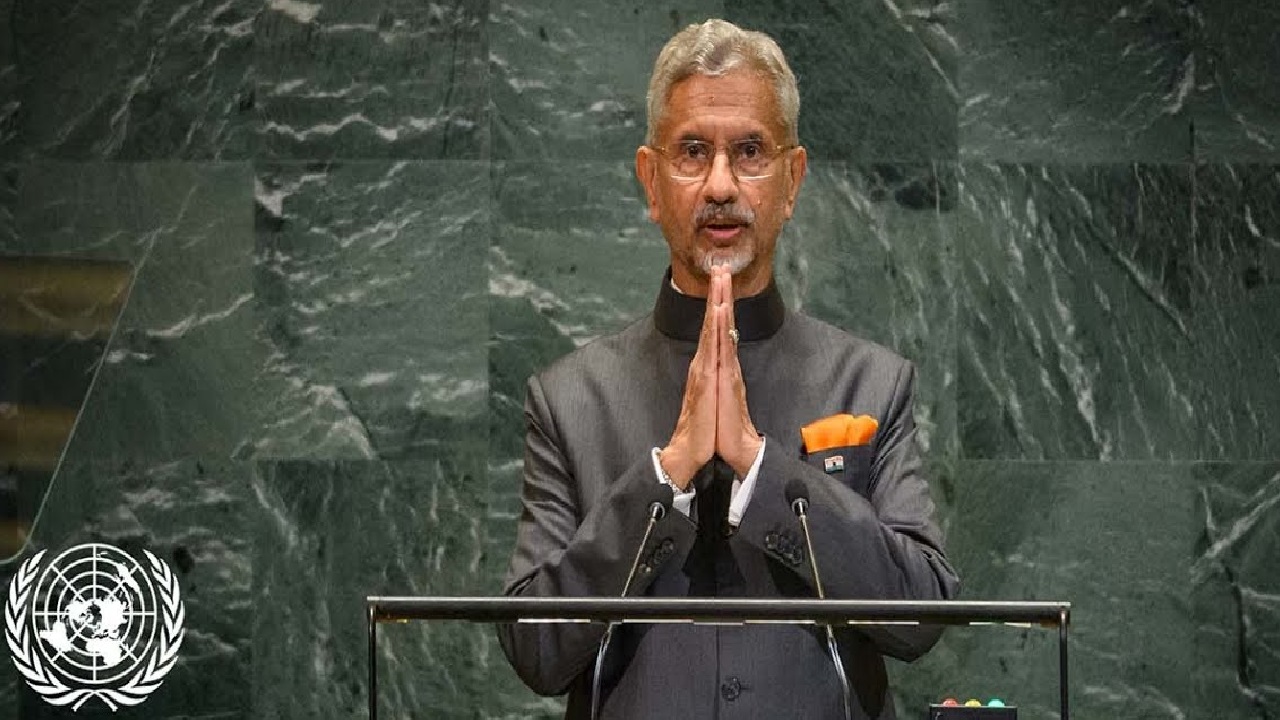
At the 80th high-level session of the UN General Assembly in New York, External Affairs Minister S. Jaishankar delivered a speech that resonated well beyond the hall. Opening with a warm “Namaskar from the people of Bharat,” he outlined India’s vision for navigating today’s fractured global landscape. His message was firm yet forward-looking: Bharat will preserve its freedom of choice, guided by principles of self-reliance, self-defence, and self-confidence.
The Three Pillars: Self-Reliance, Self-Defence, Self-Confidence
Jaishankar framed India’s global outlook around three Sanskrit-derived ideas—atmanirbharta (self-reliance), atmaraksha (self-defence), and atmavishwas (self-confidence).
· Atmanirbharta is about building capabilities from within—expanding manufacturing, advancing in space exploration, leading in pharmaceuticals, and driving digital innovation. These efforts, he stressed, are not just for India but contribute to global progress.
· Atmaraksha reflects New Delhi’s determination to shield its people and interests—whether through zero tolerance for terrorism, strengthening borders, or extending support to Indian communities abroad.
· Atmavishwas captures India’s growing confidence as the world’s most populous nation and a rapidly expanding economy. As Jaishankar put it, Bharat knows who it is and what it aspires to be, and will remain a voice for the Global South.
A World in Turmoil
Turning to international conflicts, Jaishankar pointedly asked whether the UN has lived up to its mandate. With wars raging in Ukraine and Gaza, and countless other crises overlooked, the global body’s credibility stands questioned. He urged countries capable of engaging all sides to step up in mediation, and reiterated India’s call for an end to hostilities.
The minister underlined how conflict has disrupted energy and food security worldwide, with vulnerable nations left scrambling while wealthier societies shielded themselves. “Resource-stressed states were left to survive, only to hear sanctimonious lectures later,” he observed, hinting at inequities in global governance.
Trade, Technology, and Supply Chains
Jaishankar also drew attention to the fragility of global economic systems. Non-market practices, arbitrary tariffs, and restricted market access, he argued, have exposed vulnerabilities in global trade. This was an implicit reference to Washington’s heavy tariffs on Indian goods and oil imports, which have strained economic ties.
He noted that economic competition is no longer confined to trade—control over technology, critical minerals, and supply chains has emerged as a new battleground. Protecting sea lanes and ensuring fair connectivity, he said, are now essential for a stable world order.
Reform or Risk Irrelevance
A major theme of his speech was the urgent need for UN reform. With conflicts unresolved and credibility eroding, Jaishankar called for expansion of both permanent and non-permanent seats on the Security Council. He emphasised correcting historical injustices, especially the lack of African representation, and affirmed India’s readiness to shoulder greater global responsibility.
“Most members desire change,” he warned, “but the process is being weaponised to block outcomes. Cynicism cannot be allowed to defeat reform.” His words echoed long-standing frustration that outdated power structures have prevented the UN from reflecting 21st-century realities.
India’s Global Role in Action
Beyond rhetoric, Jaishankar highlighted India’s tangible contributions to global well-being. From peacekeepers in conflict zones to sailors safeguarding maritime trade, from doctors and teachers aiding development abroad to affordable medicines and digital innovations, India’s footprint, he argued, is evident worldwide. These, he said, are the living expressions of India’s foreign policy.
Unity in Diversity, Respect in Practice
Acknowledging the diversity of the UN’s 193 member states, Jaishankar stressed the need for mutual respect, free of prejudice and double standards. “Pluralism must be genuinely appreciated,” he noted, pointing out that interference, political pressure, and biased narratives undermine international cooperation.
Standing Firm Amid Turbulence
Jaishankar’s address was both a defense of India’s sovereign choices and a call for collective action in turbulent times. He underscored that prosperity cannot exist in silos while conflict engulfs much of the world. International collaboration, empathy, and reform are the only paths to a just global order.
For Bharat, the message was unmistakable: it will remain independent in its decisions, confident in its identity, and steadfast in its global responsibilities. By standing for self-reliance, self-defence, and self-confidence, India seeks not just to shape its own destiny but to contribute meaningfully to a more equitable and inclusive world.
(With agency inputs)