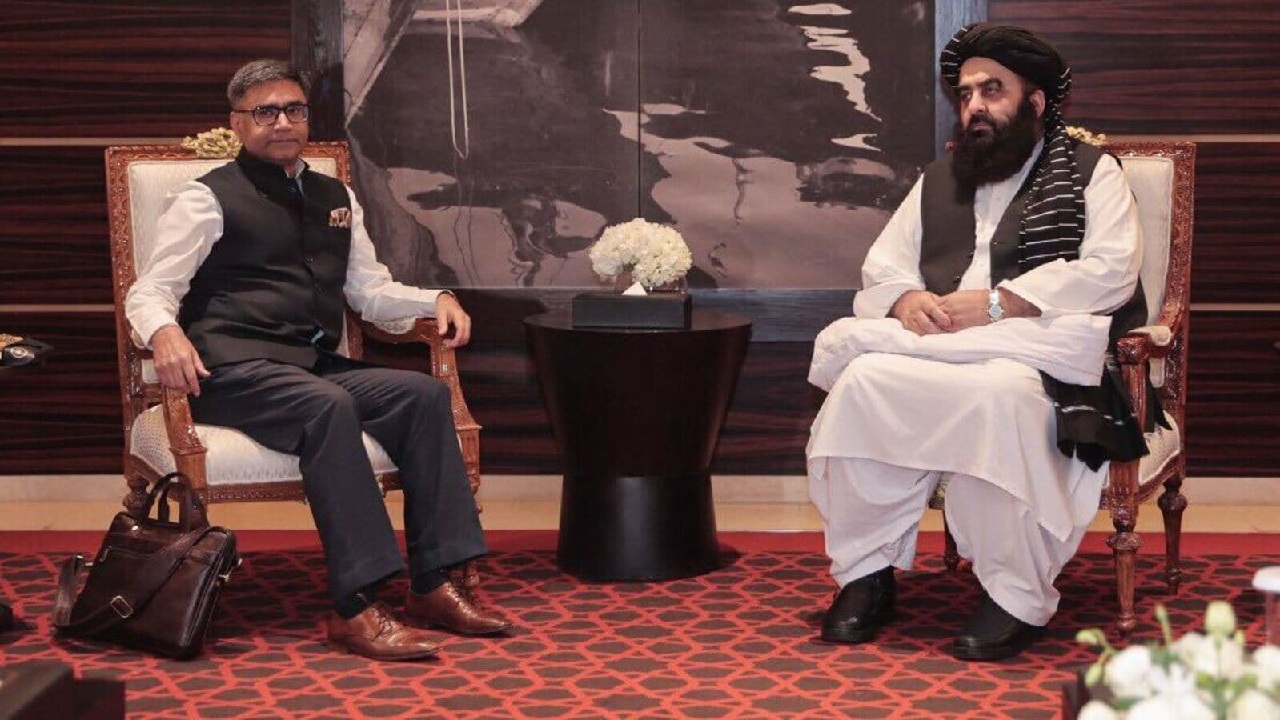
A Shift in the Winds of Diplomacy
Afghanistan’s rugged frontiers have long shaped South Asia’s security and political equations, and India has historically stood at a cautious distance from the Taliban. For decades, New Delhi resisted engagement with the group, considering it an extension of Pakistan’s influence and a destabilizing force in the region. Yet, the geopolitical chessboard has shifted since the Taliban’s return to power in 2021. This week, a dramatic new chapter begins as Afghan Foreign Minister Amir Khan Muttaqi lands in India, marking the first high-level visit from Kabul since the takeover. His presence raises a compelling question: Is India rethinking its stance on the Taliban?
The Visit: A Rare Exemption for Dialogue
Muttaqi’s trip, scheduled from October 9 to 16, 2025, is only possible because the UN Security Council’s Taliban Sanctions Committee granted him a rare waiver from the travel ban imposed under sanctions dating back to 2001. The exemption underscores the visit’s diplomatic weight.
Reports suggest the discussions will focus on developmental aid for Afghanistan, which continues to face shortages of medicines and agricultural supplies. The agenda may also touch upon India’s use of Iran’s Chabahar port, a vital gateway to Central Asia, and strategic issues like the Bagram air base. Importantly, Kabul is expected to push for the appointment of more Taliban diplomats at the Afghan Embassy in New Delhi and its consulates in Mumbai and Hyderabad.
A Visit Years in the Making
This is not the first time Muttaqi sought to come to India. His earlier attempt in September 2025 was blocked at the UN, reportedly due to US and Pakistani objections. According to media reports, Islamabad in particular opposed his trip, fearing a potential diplomatic breakthrough between Delhi and Kabul.
The groundwork for this visit has been under way for some time. Indian officials, including Foreign Secretary Vikram Misri and senior diplomat JP Singh, have quietly held meetings with Taliban representatives in neutral locations such as Dubai. External Affairs Minister S. Jaishankar even confirmed earlier this year that he had spoken to Muttaqi, noting the Taliban’s condemnation of terror attacks in Kashmir and appreciation of India’s development role in Afghanistan.
India and the Taliban: From Opposition to Engagement
For decades, India’s foreign policy was firmly anti-Taliban. New Delhi refused to recognize the group during its first rule in the 1990s and was wary again after their resurgence in 2021, suspending its own embassy operations in Kabul in 2023. Yet, practical considerations are pushing a shift.
First, the Taliban’s relationship with Pakistan has fractured. Despite being long seen as Islamabad’s ally, the Taliban has not curbed the Tehreek-e-Taliban Pakistan (TTP), whose attacks inside Pakistan have escalated since 2021. This breakdown has loosened the traditional Taliban-Pakistan alignment, opening space for India to engage.
Second, there is the China factor. Beijing has been actively wooing the Taliban, investing in Afghanistan’s mineral wealth and positioning itself as a key player in the region. India, wary of losing strategic depth, sees dialogue with Kabul as a way to counterbalance Chinese influence.
Third, India’s access to Central Asian markets depends heavily on stable ties with Afghanistan. Without Taliban cooperation, Delhi’s vision of regional connectivity and energy partnerships remains incomplete.
Strategic and Economic Stakes
Muttaqi’s visit is therefore not just symbolic but also practical. India has invested billions in Afghanistan’s infrastructure projects, from roads to the Parliament building, and wishes to safeguard its assets. At the same time, the Taliban needs international partners to address its economic isolation and humanitarian crises.
Both sides have incentives to recalibrate relations. For India, re-establishing presence in Kabul means protecting national security, ensuring stability on its western flank, and keeping alive its long-term economic interests. For the Taliban, engaging with India adds legitimacy and diversifies partnerships beyond China, Russia, and Pakistan.
Challenges Ahead
Despite the diplomatic thaw, obstacles remain. India has still not formally recognized the Taliban regime, and concerns about human rights, women’s rights, and the suppression of minorities continue to shadow any engagement. There is also the risk that too close a relationship with Kabul could backfire if the Taliban reverts to supporting extremist networks hostile to India.
Moreover, the UN sanctions framework means that every high-level interaction requires international approval, keeping Taliban outreach under global scrutiny.
A Calculated Opening, Not an Endorsement
Amir Khan Muttaqi’s arrival in New Delhi signals a pragmatic recalibration, not a wholesale shift in India’s foreign policy. By hosting the Taliban foreign minister, India is acknowledging ground realities—that the Taliban is entrenched in power, Pakistan’s influence over them has waned, and China is seeking to expand its footprint in Kabul.
For India, the challenge is to balance principle with pragmatism: engaging the Taliban without endorsing its governance model, protecting its strategic interests without alienating global partners, and ensuring that Afghan soil is never again used for terror against India.
The visit will be closely watched not just in Delhi and Kabul, but across Washington, Beijing, and Islamabad. Whether it becomes a turning point in South Asian geopolitics or a cautious diplomatic experiment will depend on what both sides can extract from this unprecedented dialogue.
(With agency inputs)