


UNSC Flashpoint: Kashmir and Indus Waters
At a United Nations Security Council open debate on “Leadership for Peace,” Pakistan once again raised the Kashmir dispute and the suspension of the Indus Waters Treaty (IWT). India responded forcefully. Its Permanent Representative to the UN, Parvathaneni Harish, categorically rejected Pakistan’s claims, asserting that Jammu and Kashmir and Ladakh are “integral and inalienable” parts of India. He warned that India “will counter Pakistan-sponsored terrorism in all its forms and manifestations with all its might,” framing Islamabad’s statements as diversionary and disingenuous.
Background to a Familiar Dispute
Pakistan’s decision to invoke Kashmir and the IWT at a multilateral forum follows a well-worn diplomatic pattern. Whenever tensions rise or domestic pressures mount, Islamabad seeks to internationalise Kashmir despite India’s consistent position that the matter is bilateral. The added reference to the Indus Waters Treaty reflects a newer line of attack after India placed aspects of the treaty in abeyance in 2025 following major terror incidents.
India, for its part, has increasingly linked cross-border terrorism with broader bilateral arrangements, arguing that cooperation cannot coexist with sustained violence emanating from Pakistani territory.
Pakistan’s Claims at the UNSC
At the UNSC, Pakistan advanced two core arguments—one political, the other legal-economic.
On Kashmir, Pakistan described the region as the world body’s “oldest unresolved dispute,” invoking UN resolutions from 1948 that called for a plebiscite. It alleged that India’s 2019 revocation of Article 370 and the reorganisation of the former state violated international commitments and amounted to an “occupation.” Pakistan also accused India of systemic human rights violations, portraying recent counterterror operations as repression of Kashmiri Muslims.
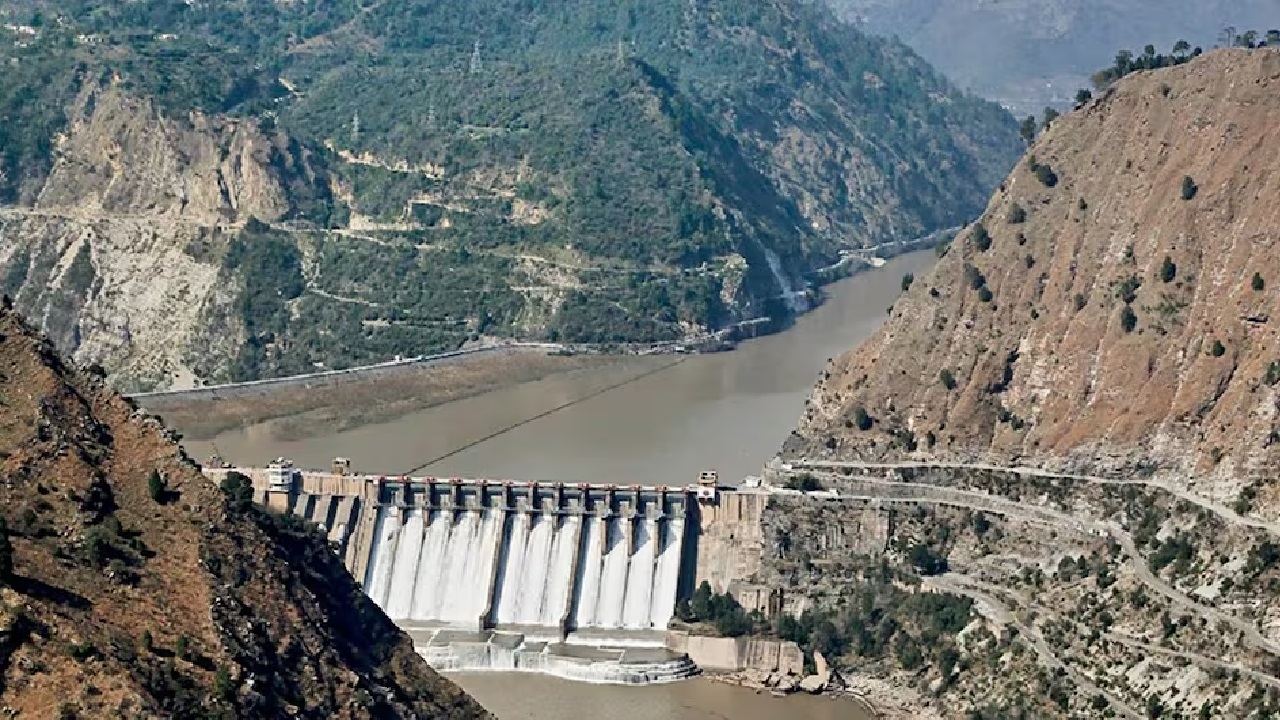
On the Indus Waters Treaty, Pakistan argued that India’s decision to place the agreement in abeyance undermines the “letter and spirit” of the 1960 treaty, which was designed to survive political and military conflicts. Islamabad claimed that disruptions to data sharing and dispute-resolution mechanisms threaten water, food, and energy security for a population heavily dependent on the Indus, Jhelum, and Chenab rivers. Framing water as an existential issue, Pakistan warned of humanitarian consequences under climate stress.
India’s Legal and Diplomatic Rebuttal
India’s response rested on law, precedent, and security realities. On Kashmir, New Delhi cited the Instrument of Accession signed on October 26, 1947, by Maharaja Hari Singh, through which Jammu and Kashmir legally acceded to India following a Pakistan-backed tribal invasion. This accession, India argues, was unconditional and final under the legal framework of the time.
India further pointed to the 1972 Simla Agreement, which converted all outstanding issues—including Kashmir—into strictly bilateral matters, explicitly ruling out third-party mediation. Domestically, the Jammu and Kashmir Constitution of 1956 declared the region an integral part of India, while the Supreme Court’s 2023 verdict upheld the constitutional validity of the 2019 reorganisation and abrogation of Article 370.
On the IWT, India maintained that repeated wars, terror attacks, and Pakistan’s continued support for militancy violate the treaty’s underlying spirit of good faith. New Delhi argued that cooperation on shared resources cannot be insulated indefinitely from security considerations.
Diplomacy Amid Entrenched Positions
The UNSC exchange underscored how entrenched India–Pakistan positions remain, despite shifting regional and global dynamics. Pakistan continues to seek international attention on Kashmir and water security, while India firmly anchors its stance in legal finality and bilateralism. With the Security Council unlikely to intervene decisively, the stalemate persists—raising risks of escalation without dialogue. For now, India’s message is clear: terrorism and diplomacy cannot run on parallel tracks, and neither history nor international forums will dilute its claims over Jammu and Kashmir.
(With agency inputs)