


Star Power Meets Tradition
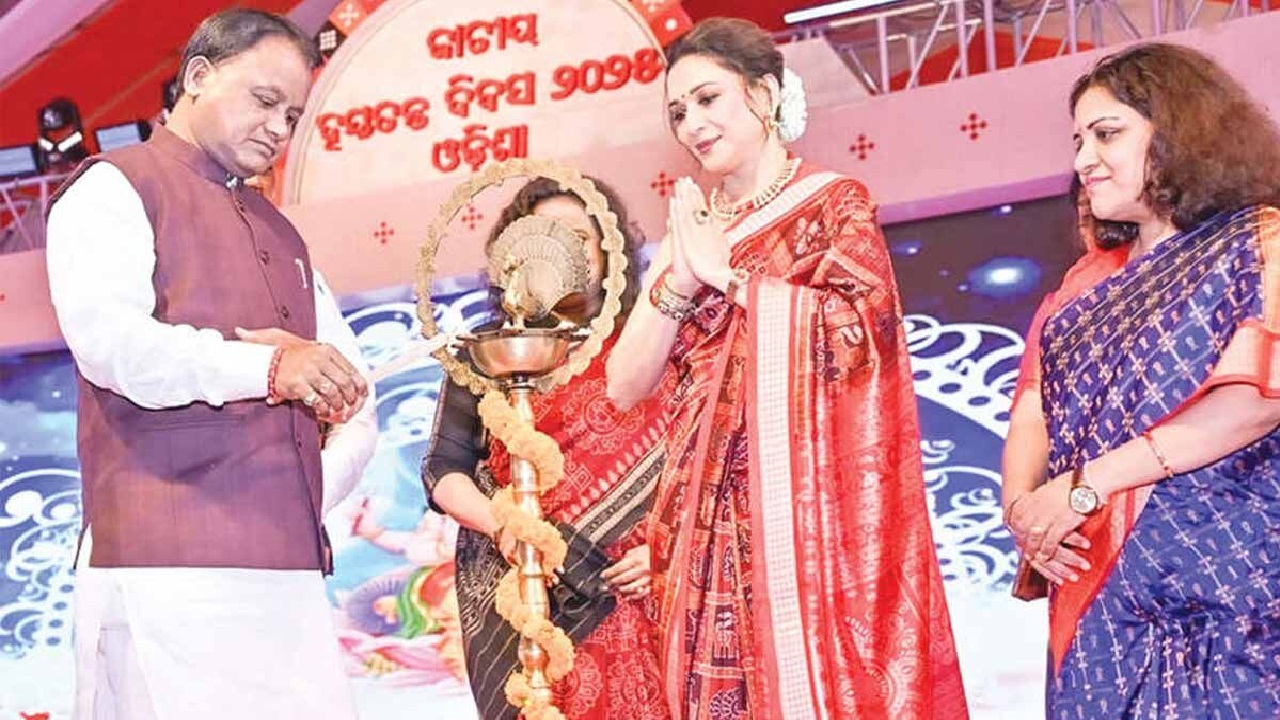
Bollywood icon Madhuri Dixit has been named Odisha’s handloom brand ambassador, with the government reportedly spending ₹1.6 crore on the initiative. Announced during Odisha TEX 2025 and National Handloom Day in Bhubaneswar, the one-year ambassadorship aims to elevate Odisha’s handloom sector—home to over 1.3 lakh weavers—onto national and global fashion stages. The move coincides with a broader textile push, including 33 MoUs worth ₹7,808 crore, six planned textile parks, and enhanced employment subsidies, signaling a shift from craft preservation to strategic industrial branding.
The Rationale Behind the Celebrity Spend
The ₹1.6 crore allocation covers Madhuri Dixit’s fee, promotional campaigns, and marketing logistics. Government officials argue that leveraging a recognizable, cross-generational celebrity could propel Odisha’s iconic weaves—Sambalpuri, Bomkai, Kotpad—beyond niche craft markets, creating visibility in fashion, e-commerce, and exports. If successful, even a modest increase in domestic and international demand could offset the celebrity investment, enhancing price realization for weavers and stabilizing incomes.
The campaign is integrated with EKTA (Exhibition-cum-Knowledge Sharing for Textile Advantage), designed to improve market access, design support, and financial linkages for artisans. Complementary measures include subsidies, new textile parks, and curbs on counterfeit handloom-like products, emphasizing a coordinated approach rather than a purely image-driven exercise.
Potential Economic Impact
Odisha’s handloom exports remain modest. In 2021–22, pure handloom exports were around ₹2.02 crore, compared with India’s total handloom exports of ₹1,693 crore. Recent statistics combining handloom and textile products suggest Odisha’s export basket has risen to ₹60–80 crore, though genuine handloom still forms a small portion.
If the branding push and policy support elevate handloom exports by ₹20 crore annually, the direct impact on weavers could be significant. Spread across 1.3 lakh artisans and allied workers, an additional ₹20 crore in revenue translates to roughly ₹15,000 per person per year, even before factoring in margins. Assuming partial pass-through, each weaver could still see an extra ₹7,500 annually—material in a low-income craft sector.
Export-oriented products typically command higher unit values, benefiting weavers without extending work hours. Research indicates that premium sarees, stoles, and yardage achieve better price realization than domestic mass-market sales, magnifying the welfare effect of every additional crore earned through exports.
Wider Spillovers and Sustainability
Boosting exports generates ancillary benefits:
· Greater order stability and improved credit terms for cooperatives and producer companies.
· Incentives to invest in design, technology, and quality upgrades, which spill over into domestic markets.
· Enhanced international recognition, allowing Odisha’s handlooms to capitalize on India’s broader reputation in global textile markets.
Even a conservative uplift of ₹20–30 crore annually in exports could materially increase weaver incomes, improve livelihoods, and support generational continuity of craft traditions.
High-Visibility Investment in Craft Economy
Madhuri Dixit’s ambassadorship is more than a celebrity endorsement; it represents a strategic, high-visibility bet to reposition Odisha’s handloom sector in global fashion and trade. While ₹1.6 crore may invite scrutiny, the potential payoff—both economic and reputational—could far exceed the initial spend, provided the campaign integrates sustained policy support, market access, and direct benefits to weavers. With careful execution, Odisha could transform a centuries-old craft into a scalable, export-driven growth engine.
(With agency inputs)