Another Name Change in a Long Political Line
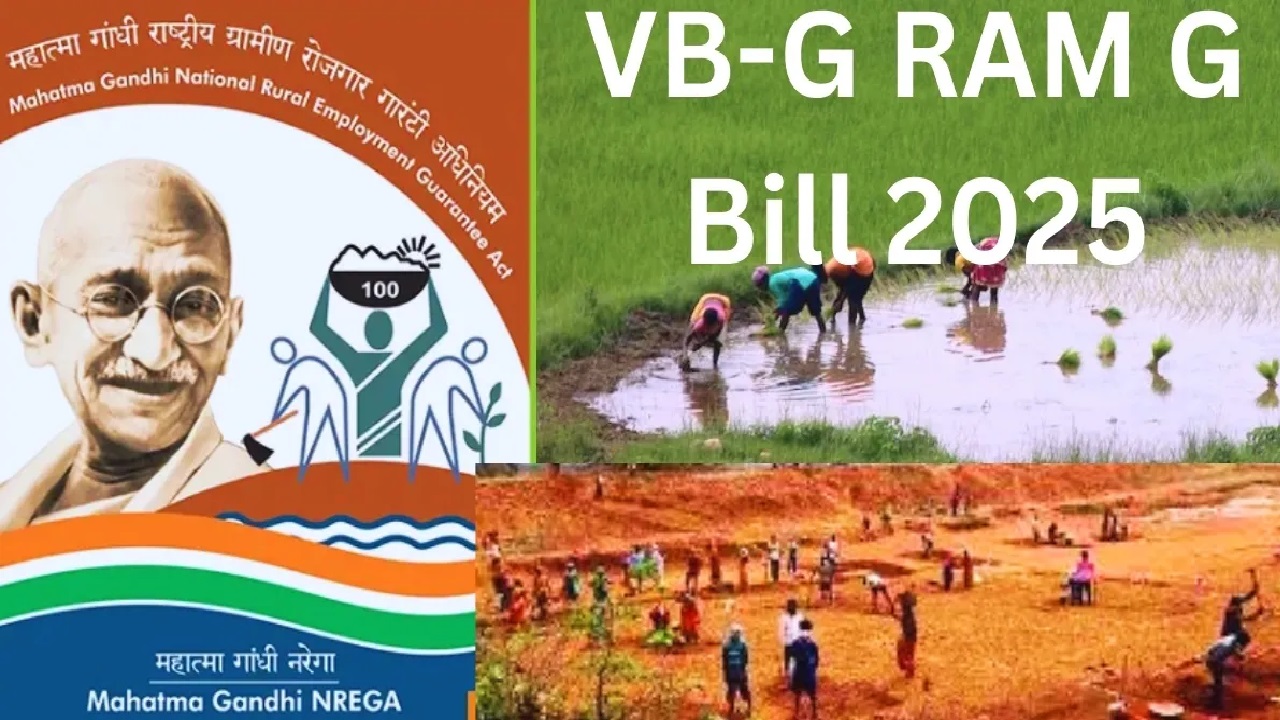
India’s rural employment guarantee framework is poised for its most dramatic transformation in two decades. The Union government has introduced the Viksit Bharat Guarantee for Rozgar and Ajeevika Mission (Gramin) Bill, 2025—shortened to VB-G RAM G—seeking to repeal the Mahatma Gandhi National Rural Employment Guarantee Act (MGNREGA). Presented in Parliament during the Winter Session, the proposal is being framed by the government as a forward-looking reform aligned with the “Viksit Bharat@2047” vision. Critics, however, see it as yet another instance of renaming a legacy scheme while altering its core philosophy.
What the New Bill Proposes
MGNREGA, enacted in 2005, guarantees rural households up to 100 days of wage employment on demand, making it one of the world’s largest rights-based social security programmes. The VB-G RAM G Bill promises to expand the annual work guarantee to 125 days per household, a headline-grabbing enhancement.
Yet the expansion comes with structural shifts. The proposed scheme introduces a fixed, centrally determined allocation framework, replacing MGNREGA’s open-ended demand-driven model. Funding would move to a 60:40 Centre–state ratio, with a 90:10 formula for hill states and the Northeast. The bill also allows temporary suspension of works during peak agricultural seasons and reorganises projects into themed verticals such as water security, infrastructure, livelihoods, and climate resilience.
MGNREGA vs. VB-G RAM G: Key Differences
The most significant departure lies in the nature of entitlement. MGNREGA legally guarantees employment on demand, with compensation if work is not provided within 15 days. VB-G RAM G, while increasing notional workdays, places an overall cap on funds and work approvals, potentially limiting access when demand surges during droughts or economic stress.
Funding responsibility is another flashpoint. Under MGNREGA, the Centre largely bore wage costs, cushioning poorer states. The revised cost-sharing model shifts a greater fiscal burden onto states, raising concerns that cash-strapped or opposition-ruled states may struggle to sustain full implementation.
Operationally, the new scheme promises faster weekly wage payments and tighter technological monitoring. Supporters argue this will improve efficiency and asset quality; critics warn that centralised controls could dilute local flexibility and the social audit-driven transparency that defined MGNREGA.
What Opposition Parties Are Demanding
Opposition parties, led by the Congress, have reacted sharply. Their first demand is procedural: the bill should be referred to a Parliamentary Standing Committee for detailed scrutiny and wider consultation. They argue that replacing a foundational welfare law cannot be rushed through amid a packed legislative calendar.
Substantively, the opposition insists that the “right to work” must remain legally enforceable, not subject to budgetary ceilings. They also object strongly to dropping Mahatma Gandhi’s name, calling it an ideological attempt to erase historical and moral symbolism. Parties such as the TMC and DMK have flagged the increased financial burden on states, warning it could weaken rural safety nets rather than strengthen them.
Reform, Renaming, or Retreat?
The VB-G RAM G Bill sits at the intersection of reform and rebranding. While the promise of more workdays and streamlined delivery addresses real gaps, the shift away from a demand-driven rights framework raises fundamental questions about rural welfare. Whether this transition modernises MGNREGA or quietly hollows it out will depend on parliamentary scrutiny, state capacity, and political will. For now, the debate reflects a larger struggle over the future of India’s social contract—and who controls its terms.
(With agency inputs)