


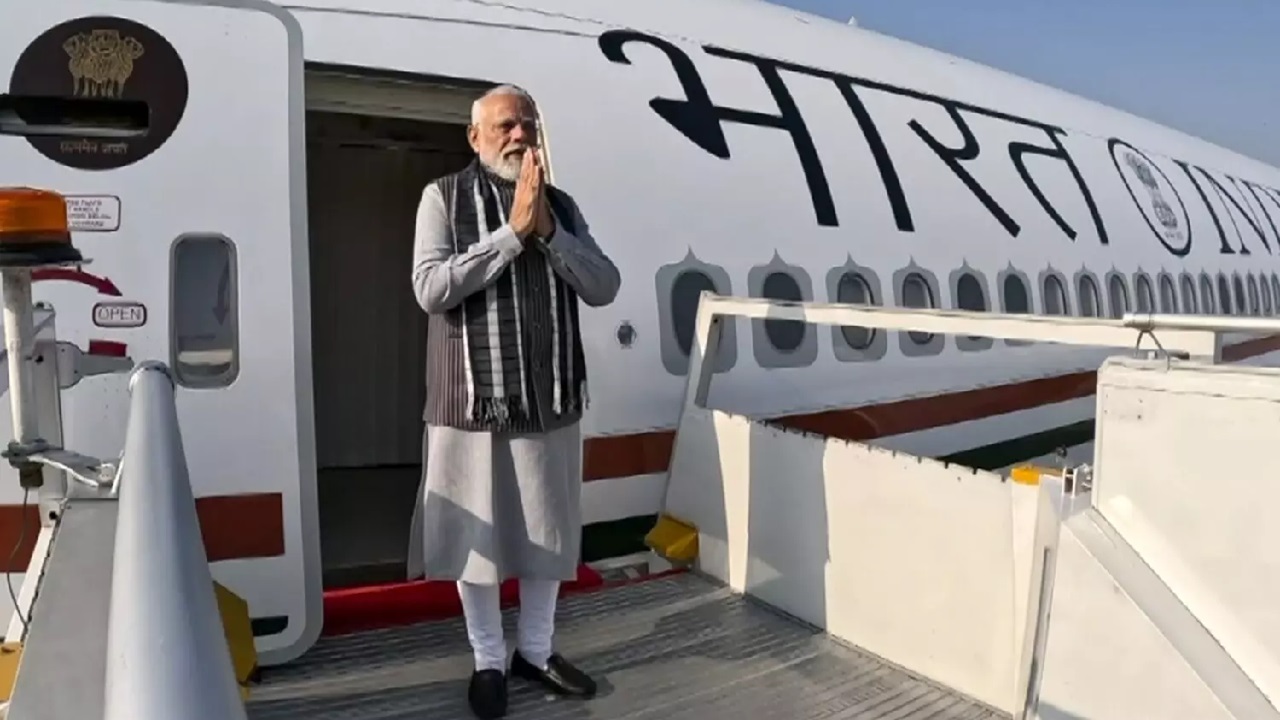
Prime Minister Narendra Modi’s two-day state visit to Israel, beginning February 25, 2026, has unfolded with unmistakable symbolism and strategic weight. Splashed across the front page of The Jerusalem Post with the headline “Welcome, Modi,” the visit signals the maturing of a partnership once cautious but now unapologetically robust. Israeli Prime Minister Benjamin Netanyahu, addressing his cabinet, described Modi as a “dear friend” and the visit as “historic,” underscoring the warmth and political investment on both sides.
This is Modi’s second trip to Israel since his groundbreaking 2017 visit—the first ever by an Indian prime minister—cementing what both governments now describe as a comprehensive strategic partnership.
A Packed Agenda: Diplomacy, Defense and Deep Symbolism
Modi’s itinerary reflects both high politics and deep symbolism. Upon arrival in Tel Aviv, he is scheduled for delegation-level talks with Netanyahu to review the India–Israel Strategic Partnership across science and technology, innovation, defense, agriculture, water management, trade, and people-to-people exchanges.
A key highlight is Modi’s address to the Knesset, making him the first Indian prime minister to speak before Israel’s parliament. The speech is expected to outline India’s vision for deeper technological and security cooperation in a rapidly shifting geopolitical landscape. Modi will also meet President Isaac Herzog and visit Yad Vashem, the Holocaust memorial, reinforcing India’s solidarity with Jewish history while signaling moral alignment.
Though no agreements had been formally confirmed for signing at the time of arrival, officials expect several memoranda of understanding in areas such as artificial intelligence, cybersecurity, agriculture technology, water management, and defense collaboration. The talks are also likely to advance negotiations on the proposed India–Israel Free Trade Agreement (FTA), aimed at expanding trade volumes and integrating supply chains.
Strategic Significance: Technology Meets Scale
The significance of this visit lies in the structural complementarity between the two nations. Israel’s cutting-edge innovation ecosystem—spanning AI, quantum computing, cybersecurity, and defense technology—aligns closely with India’s scale, manufacturing ambitions, and digital expansion.
India remains Israel’s largest arms buyer, and defense co-production has become a cornerstone of bilateral ties. As India navigates persistent border tensions and seeks greater self-reliance in advanced military systems, Israeli technology offers a critical edge. For Israel, India represents not only a vast market but also strategic diversification beyond its traditional Western partnerships.
Netanyahu’s broader geopolitical vision reportedly includes closer coordination among Israel, India, Greece, and Cyprus to counter regional instability. Shared concerns over terrorism and regional security threats have fostered greater intelligence and counter-terrorism cooperation.
However, the growing warmth also carries diplomatic complexity. Critics point to ideological parallels between Modi’s Bharatiya Janata Party and Netanyahu’s political orientation, suggesting possible friction with India’s historically strong support for the Palestinian cause. Yet New Delhi’s policy of “de-hyphenation”—engaging Israel and Arab nations independently—has allowed it to deepen ties with Israel without abandoning its broader West Asian diplomacy.
Broader Implications: A Multipolar Calculation
Beyond bilateral agreements, the visit carries geopolitical implications. Modi’s engagement in Jerusalem reinforces India’s expanding footprint in West Asia at a time when global alignments are fluid. Economically, accelerating the FTA and joint ventures could strengthen innovation-driven sectors critical to India’s growth. For Israel, closer ties with a leading Global South power provide diplomatic legitimacy amid global scrutiny.
Strategically, the partnership also intersects with efforts to counterbalance emerging China-Pakistan alignments and to build resilient corridors linking the Indo-Pacific and the Middle East.
From Symbolism to Strategic Depth
Prime Minister Modi’s 2026 Israel visit marks more than ceremonial diplomacy—it reflects a recalibrated, interest-driven partnership rooted in technology, defense, and geopolitical pragmatism. While specific agreements may crystallize after formal talks, the direction is unmistakable: India and Israel are institutionalizing a relationship that has moved beyond symbolism to strategic depth. In a multipolar world defined by shifting alliances and technological competition, this embrace signals enduring alignment—and a partnership poised to shape regional and global equations for years to come.
(With agency inputs)