A Visit with Symbolism and Substance
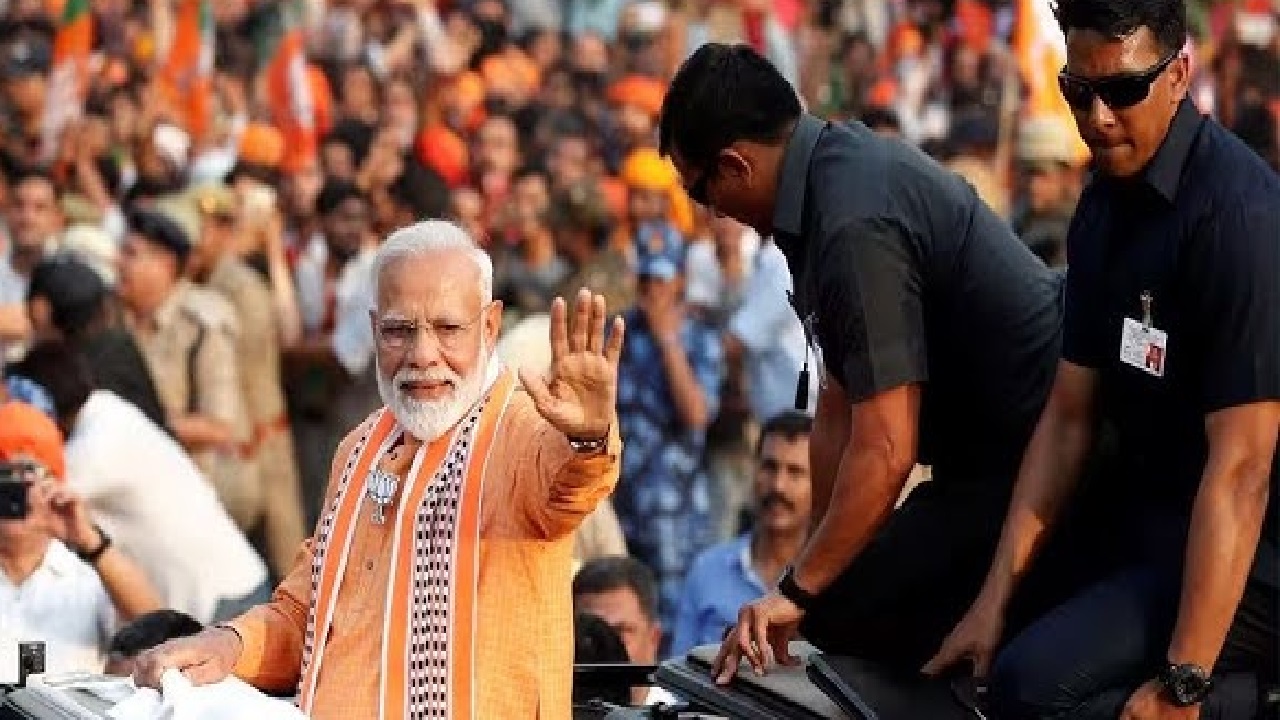
Prime Minister Narendra Modi’s latest visit to Jharsuguda, Odisha, was more than just a political address—it was a blend of sharp criticism of Congress’ economic policies and a showcase of India’s technological and developmental strides. Speaking at the ‘Namo Yuva Samabesh,’ Modi accused the Congress party of decades of exploitation, even taxing low-income citizens, while his government has expanded economic relief and opportunity. Alongside his fiery political remarks, the Prime Minister inaugurated a slew of projects worth over ₹60,000 crore, underscoring Odisha’s transformation under what he calls the “double engine” government—BJP at both the Centre and in the state.
Congress under Fire: “Economic Exploitation”
Modi’s sharpest attack was directed at the Congress, which he accused of systematically burdening ordinary Indians. He reminded the audience that earlier governments levied income tax on citizens earning as little as ₹2 lakh annually. In contrast, the BJP-led government raised the exemption threshold above ₹12 lakh, easing financial pressure on the middle class. The Prime Minister urged the people of Odisha to remain cautious, alleging that Congress and its allies continue to “loot and exploit” the masses in the guise of governance.
GST Reforms and State-Level Resistance
Turning to taxation reforms, Modi highlighted the Goods and Services Tax (GST) as one of his government’s most impactful measures. Designed to streamline the tax regime and reduce costs for common people, GST implementation was often met with resistance in Congress-ruled states. He cited Himachal Pradesh’s imposition of an additional tax on cement as a prime example of how local decisions can undo central relief. For Modi, this demonstrated the contrast between a Centre working to lighten citizens’ burdens and opposition states adding to them.
Odisha’s Leap: From Poverty to Promise
Modi praised Odisha’s rapid progress, crediting it to the synergy between the Centre and state under BJP leadership. He stressed that marginalized groups—Dalits, tribals, and the poor—are finally seeing opportunities after years of neglect. Announcing approval for two semiconductor units in Odisha, he placed the state at the center of India’s technological future. This, he argued, marks Odisha’s shift from being associated with deprivation to emerging as a hub of growth and innovation.
BSNL’s Indigenous 4G: A National Milestone
The Prime Minister’s visit also coincided with a historic achievement in India’s telecom sector—the launch of BSNL’s indigenously developed 4G network. Marking BSNL’s silver jubilee, Modi commissioned over 97,500 mobile towers built at a cost of nearly ₹37,000 crore using homegrown technology. With this rollout, India joined an elite group of nations, such as South Korea and Sweden, that manufacture their own telecom equipment.
More than just an infrastructure project, the network symbolizes India’s quest for self-reliance. Modi emphasized that the transition to 5G and beyond will now be seamless, strengthening both national security and digital inclusion.
Bridging the Digital Divide
The telecom expansion is set to connect over 26,700 previously unserved villages, including 2,472 in Odisha alone. Many of these areas are in border regions or affected by left-wing extremism. Powered by solar energy, these towers form the nation’s largest cluster of green telecom infrastructure. The initiative will serve over 20 lakh new subscribers, opening the door to education, commerce, and governance through digital access. For Modi, this was not just a connectivity project but a tool for empowerment—aligning with his vision of a truly “Digital India.”
Infrastructure, Healthcare, and Education Push
Alongside telecom, Modi inaugurated development projects worth ₹60,000 crore across Odisha, spanning railways, education, healthcare, housing, and skill development. Railway initiatives included doubling of the Koraput–Baiguda line, a flyover at Sambalpur-Sarla, and the launch of the Amrit Bharat Express between Berhampur and Udhna, improving both passenger comfort and freight efficiency.
Healthcare projects focused on upgrading medical colleges into advanced super-speciality hospitals with expanded maternal and child care services. In higher education, foundation stones were laid for the expansion of eight IITs, set to add capacity for 10,000 students over the next four years. Complementary skill development programs aim to equip Odisha’s youth for emerging industries.
A Vision of Self-Reliance and Sustainability
The Prime Minister framed these initiatives within the broader goal of Atmanirbhar Bharat. From semiconductors to shipbuilding and telecom to renewable-powered infrastructure, Modi presented a roadmap of India as a nation capable of producing its own critical technologies while ensuring sustainability. Odisha, in this narrative, is positioned not just as a beneficiary but as an engine of national progress.
Cultural Acknowledgment and Community Spirit
Amidst the policy announcements, Modi paid respects to Odisha’s cultural roots, offering prayers to Maa Samalei and Maa Ramachandi Devi during the Navratri festivities. He reminded the crowd that India’s development is as much about preserving cultural heritage as it is about embracing modernity.
Politics Meets Progress
Modi’s Odisha visit was deliberately multi-layered: a sharp indictment of Congress’ legacy of taxation and resistance, coupled with a grand unveiling of infrastructure, digital, and social projects. By combining political attack with developmental optimism, the Prime Minister sought to draw a clear contrast—between an opposition accused of exploitation and a government presenting tangible growth.
The day’s events underscored a central theme: India’s path forward hinges on self-reliance, technological innovation, and inclusive growth. Odisha, once synonymous with poverty, is now showcased as a symbol of this transformation. The message from Jharsuguda was unmistakable—economic justice and national pride will define the future, and for Modi, both require a rejection of old exploitative politics in favor of new models of empowerment and self-reliance.
(With agency inputs)