A Symbolic Gesture at a Sensitive Moment
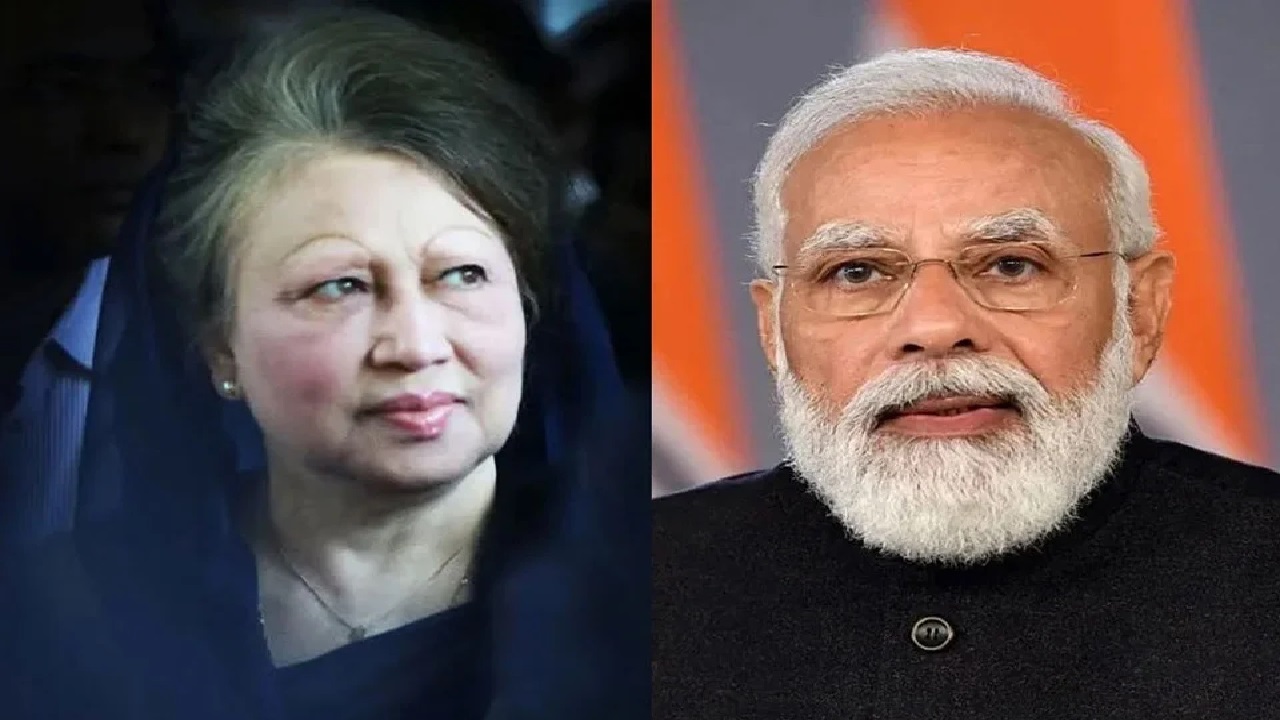
Prime Minister Narendra Modi’s condolence message on the passing of former Bangladeshi Prime Minister Khaleda Zia was more than a personal tribute—it was a carefully calibrated diplomatic signal. In his message, conveyed to the Bangladesh Nationalist Party (BNP) leadership and delivered during Zia’s funeral in Dhaka, Modi described her as a leader of exceptional resolve whose death created a profound void. Coming at a time of political transition and uncertainty in Bangladesh, the gesture resonated well beyond ceremonial protocol.
Remembering a Contested but Consequential Leader
Khaleda Zia remains one of South Asia’s most influential and debated political figures. As Bangladesh’s first woman prime minister and a two-term leader, she shaped the country’s domestic and foreign policies during critical post–Cold War decades. While often contrasted with her rival Sheikh Hasina, Zia’s approach toward India was neither uniformly hostile nor unequivocally warm. Instead, it reflected a blend of pragmatism, nationalism, and strategic balancing—an approach that continues to inform India’s reading of Bangladesh’s political future.
Engagement and Cooperation: The Pragmatic Dimension
Despite nationalist rhetoric, Zia’s governments pursued several practical avenues of cooperation with India. During her first term in the early 1990s, groundwork was laid for improved water-sharing arrangements, culminating in the Ganges Water Treaty of 1996, which stabilized a long-standing bilateral dispute. Trade relations expanded steadily, with bilateral commerce tripling over her combined tenures, supported by improved connectivity and people-to-people exchanges.
Zia also demonstrated regional engagement by hosting Indian Prime Minister Atal Bihari Vajpayee during the 2001 SAARC summit in Dhaka. That visit reinvigorated the regional bloc and produced commitments on counterterrorism cooperation. Over time, Dhaka took steps—albeit inconsistently—to address Indian concerns over insurgent groups operating near the border, signaling a willingness to prevent Bangladesh from becoming a security liability for India.
Friction and Nationalist Posturing
At the same time, Zia’s India policy was marked by visible points of tension. Her resistance to granting transit rights to India’s northeastern states was framed domestically as a defense of sovereignty. She opposed extending earlier friendship treaties, portraying them as unequal arrangements, and cultivated an image of the BNP as a counterweight to what was often depicted as the Awami League’s excessive closeness to New Delhi.
Strategically, Zia also diversified Bangladesh’s external partnerships, particularly with China, including defense procurements that unsettled Indian policymakers. Episodes such as allegations of militant sanctuaries and arms smuggling strained trust and reinforced perceptions in New Delhi that cooperation under Zia was conditional and politically constrained.
Strategic Logic Behind the Balancing Act
Zia’s foreign policy toward India cannot be separated from Bangladesh’s domestic political realities. Emerging from years of military rule, she relied on nationalist sentiment and alliances with Islamist parties to consolidate power. This necessitated rhetorical distance from India, even as economic and security pragmatism compelled selective engagement. Former diplomats have often described the relationship during her tenure as complex—periodically strained, yet rarely broken.
A Legacy Revisited Through Diplomacy
Modi’s tribute to Khaleda Zia reflects an acknowledgment of this layered legacy. By emphasizing her contributions to democracy and bilateral ties, India signals openness to engaging all major political forces in Bangladesh amid ongoing flux. Zia’s record illustrates that even amid ideological divergence, space for cooperation endured. As Bangladesh navigates its next political chapter, her nuanced approach toward India—balancing autonomy with engagement—offers lessons that remain relevant for both sides of the border.