A Life Lost in Protest
On July 14, a 20-year-old B. Ed student from Fakir Mohan Autonomous College in Balasore, Odisha, died at AIIMS Bhubaneswar. She had suffered 95% burns after setting herself on fire in front of her college principal’s office just two days earlier. Her desperate act of protest followed weeks of alleged sexual harassment by her department head, and repeated pleas to the college and police that seemingly went unheard.
“She was declared clinically dead at 11:46 PM,” the hospital confirmed. Her story has ignited a wave of national outrage, forced arrests, and spurred top leaders — including the President of India — to take note. But beneath the tragedy lies a sobering truth: this was not just a failure of one man, but of an entire system meant to protect her.
The Harassment, the Warnings, the Ignored Cries for Help
The victim, a second-year B.Ed student, had been reportedly enduring sustained sexual harassment from Sameer Kumar Sahoo, the Head of the Integrated B.Ed Department. According to her classmates, Sahoo repeatedly demanded sexual favours, threatening to sabotage her academic future if she did not comply.
Despite formally complaining to both the college principal and local police, no meaningful action was taken. While the Internal Complaints Committee (ICC) was convened, it reportedly made no tangible progress. A letter written by the student on July 1, accessed by the media, painted a grim picture: she had lost her mental peace and directly warned authorities that she would take her life if nothing was done.
“In the future, if the college authority does not take any action, I will commit suicide, and the HoD and the college authority will be responsible,” she wrote.
Tragically, those words became prophecy. On July 12, amid a protest outside the college, she suddenly broke away, ran to the corridor near the principal’s office, and set herself on fire. A male student who rushed to save her also sustained burns.
Medical Battle Lost: A Nation in Shock
She was first taken to Balasore District Hospital, then urgently transferred to AIIMS Bhubaneswar. There, she received every form of critical care: mechanical ventilation, antibiotics, IV fluids, and renal therapy. But her injuries were too extensive.
Her father, devastated and furious, shared that he couldn’t even recognize his daughter. He also alleged that the college principal and the ICC pressured the family to withdraw the complaint. “They said an FIR would be filed against me and that I would be arrested,” he told reporters.
Her body was brought back to her village in Palasia, Balasore, for the final rites. What remained was grief, anger — and a call for justice.
Arrests, Accountability, and a Political Firestorm
As public outrage surged, Odisha Police arrested Sameer Kumar Sahoo, and the college principal, Dilip Ghosh, was suspended and later taken into custody. The incident, caught on CCTV, has made it impossible to dismiss or ignore.
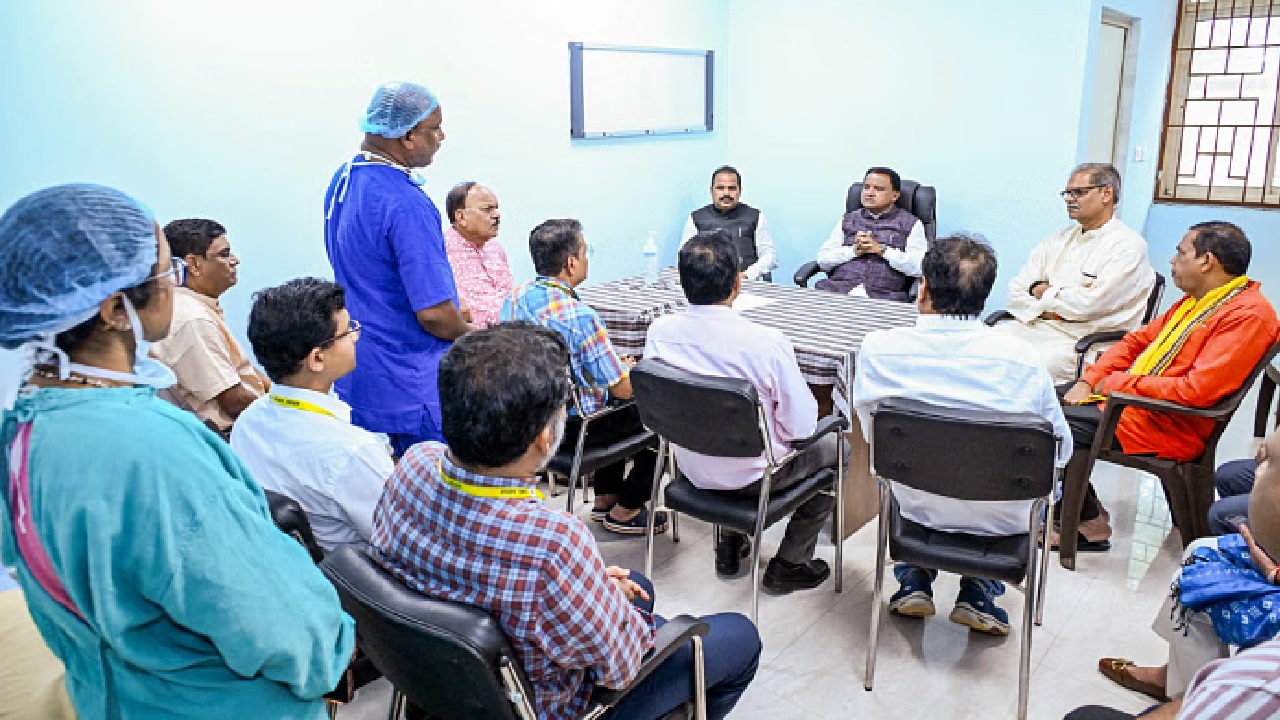
Odisha Chief Minister Mohan Charan Majhi issued a statement pledging the “strictest punishment” for all those involved. He expressed condolences and directed senior officials to ensure action. Deputy Chief Minister Pravati Parida and President Droupadi Murmu visited AIIMS Bhubaneswar to meet the grieving family.
AIIMS Executive Director Asutosh Biswas confirmed the President’s personal interest in the case, including her discussions with doctors on the girl’s condition and potential treatments.
A Political and Institutional Reckoning
The tragedy has turned political. Opposition parties including BJD and Congress have launched protests and blamed the BJP-led state government for failing to act swiftly. Former CM Naveen Patnaik accused the government of “institutional betrayal” and “planned injustice.”
These charges aren’t without basis. The student had done everything the system requires: filed complaints, submitted written testimony, and even joined peaceful protests. Yet, she was met with silence — until her act of self-immolation forced the state and nation to look.
The National Human Rights Commission (NHRC) has also taken cognizance of the matter, issuing a notice to the Odisha government demanding a detailed report.
A Mirror to Our Failures
This is not merely the story of a student’s tragic death — it is an indictment of how institutions designed to protect the vulnerable often become complicit through apathy, delay, or coercion. When a young woman sees no path to justice but fire, the system has already failed her — irrevocably.
The incident at Fakir Mohan Autonomous College should serve as a national wake-up call. Internal Complaints Committees must be independent, swift, and empowered — not token panels ticking boxes. Colleges should have zero tolerance for harassment, with direct accountability mechanisms. And when complaints are made, police and administrative action must follow without delay or pressure on the victims.
This death, harrowing as it is, must not be in vain. If the system does not reform now, it may again become complicit in future tragedies — silent when it should act, absent when it should stand firm.
The girl from Odisha asked for justice. She gave her warnings. And in the end, her silence screams louder than all of us.
(With agency inputs)