A Shock to the Alliance System
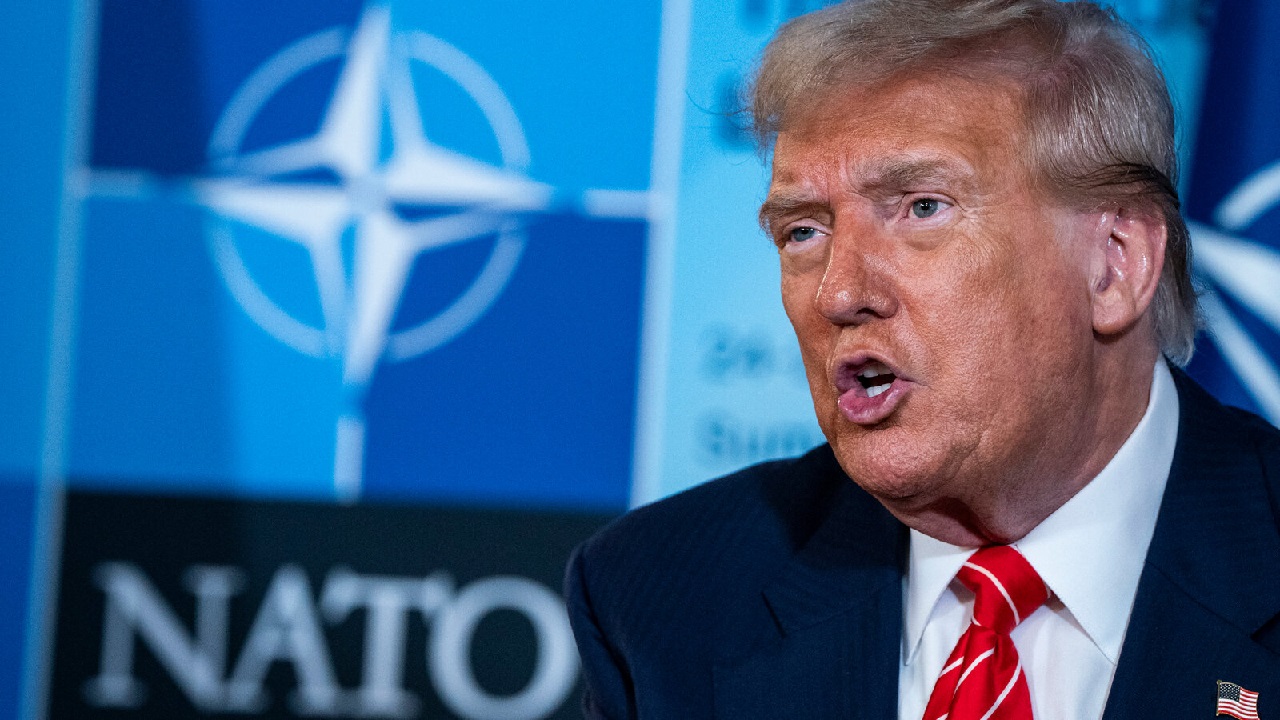
US President Donald Trump has reignited global debate by saying the United States is “strongly considering” leaving NATO, once again dismissing the alliance as a “paper tiger.” The remarks come amid disagreements over the Iran conflict, with several allies refusing to back US military action. The statement has amplified concerns about the future of NATO and the broader stability of Western alliances.
Trump’s Case Against NATO
Trump’s criticism is rooted in long-standing grievances over burden-sharing and alliance reliability. By linking NATO’s relevance to its willingness to support US-led operations—such as reopening the Strait of Hormuz—he is reframing the alliance as transactional rather than strategic.
This approach has three immediate consequences.
· First, it weakens deterrence by casting doubt on NATO’s core principle of collective defence.
· Second, it escalates internal tensions by turning policy disagreements into existential threats to the alliance.
· Third, it sends a signal to rivals like Russia and China that Western unity may be more fragile than it appears.
A Divided Western Response
While Washington leans toward unilateral action, the United Kingdom under Keir Starmer has adopted a more cautious stance. Declaring the Iran conflict “not our war,” the UK has avoided direct military involvement while positioning itself as a diplomatic coordinator.
By hosting a summit on the Strait of Hormuz, London is attempting to lead a coalition-based response focused on maritime security and de-escalation. This reflects a broader divergence: the US prioritising rapid, decisive action, while European allies emphasize multilateralism and risk containment.
Is NATO Headed for Collapse?
Despite the dramatic rhetoric, a full US withdrawal from NATO remains unlikely in the near term due to legal and political constraints. However, the greater danger lies in the erosion of trust. NATO’s strength has always depended as much on perception as on military capability. If member states begin to doubt US commitment, the alliance’s credibility could weaken even without formal dissolution.
This psychological shift could trigger strategic hedging. European nations may accelerate independent defence initiatives or form smaller regional coalitions. Such fragmentation would dilute NATO’s coherence and reduce its ability to respond collectively to crises.
At the same time, adversaries could exploit these divisions. A perceived weakening of NATO may encourage more assertive actions in regions like Eastern Europe or the Middle East, testing the alliance’s resolve.
Broader Strategic Implications
The current moment reflects a deeper transformation in global order. The US appears increasingly willing to act alone and reassess long-standing commitments, while allies seek to balance cooperation with autonomy. This divergence complicates crisis management, especially in interconnected conflicts like those involving Iran and global energy routes.
For countries outside the alliance system, including India, this uncertainty reinforces the need for flexible, multi-aligned strategies rather than reliance on any single bloc.
Strain, Not Collapse—Yet
NATO is not on the brink of immediate collapse, but it is undeniably under strain. Trump’s rhetoric has exposed underlying fractures that could reshape the alliance’s future. The real risk is not a sudden exit, but a gradual weakening of trust and cohesion. Whether NATO adapts or fragments will depend on how its members navigate this moment—balancing national interests with the collective security that has defined the alliance for decades.
(With agency inputs)