India’s Semiconductor Push Gains Momentum
India’s semiconductor mission has rapidly emerged as one of the nation’s most ambitious technology programs, aimed at reducing reliance on imports and establishing a resilient ecosystem for the digital age. Against this backdrop, Semicon India 2025—the country’s flagship semiconductor conference—has become the focal point for showcasing achievements, attracting global partnerships, and defining the roadmap for chip design and manufacturing. The latest edition of the event, inaugurated in New Delhi, witnessed a historic moment as the first batch of fully designed ‘Made in India’ chips was unveiled, signaling a leap in indigenous innovation.
Odisha Steps into the Spotlight
Among the many contributions highlighted at the conference, Odisha stole the show with three chip designs originating from its academic institutions. Two of these innovations—the VG Amplifier and Sensor Circuit and the Present Encryption Core—were developed at the National Institute of Technology (NIT), Rourkela. The third, a High-Performance Multiplier IC-C2S0061, was created by Parala Maharaja Engineering College (PMEC), Berhampur.
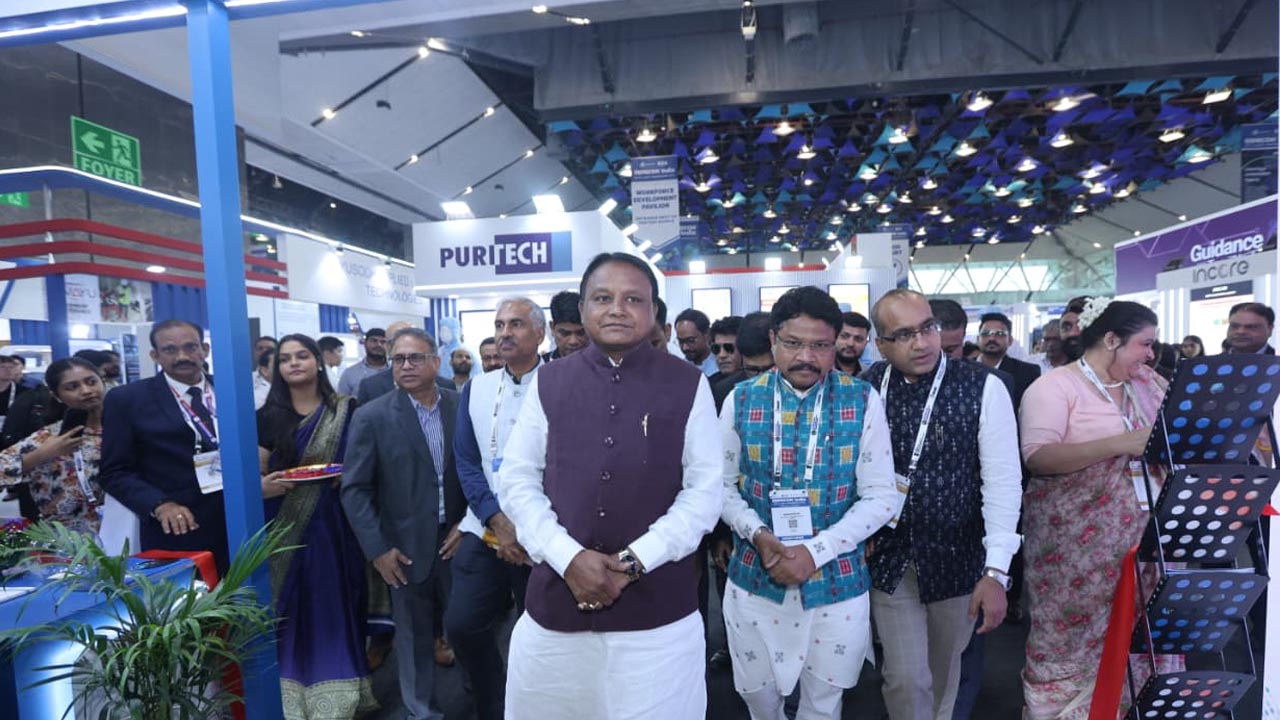
Chief Minister Mohan Charan Majhi hailed this breakthrough as a moment of pride for Odisha, calling it proof of the state’s growing role in shaping India’s semiconductor future. He noted that the accomplishments reaffirm Odisha’s capacity to nurture advanced technological research through its universities and technical institutions.
National Milestone with Global Resonance
The chips were formally presented by Union Electronics and IT Minister Ashwini Vaishnaw to Prime Minister Narendra Modi during the inaugural session. PM Modi lauded the achievement, framing it as part of a larger narrative of India’s rise in the global semiconductor sector. He highlighted that $18 billion in investments have already been committed to ten projects since 2021, spanning fabs, design centers, and advanced packaging facilities.
“If the last century was defined by oil,” the Prime Minister declared, “the coming century will be defined by chips.” His words underscored India’s ambition to become a central player in an industry projected to grow from its current $600 billion value to more than $1 trillion in the near future.
Building an Integrated Semiconductor Ecosystem
While India’s early focus has been on attracting global manufacturers, the Prime Minister stressed that the nation’s strategy goes beyond fabrication. Advanced design hubs in Noida and Bengaluru are already producing next-generation solutions, signaling that India’s ecosystem will cover the entire spectrum—design, testing, packaging, and eventual large-scale manufacturing.
By blending foreign investment with indigenous talent, India hopes to establish itself as a competitive, self-reliant semiconductor hub. Odisha’s contributions, therefore, symbolize the way regional players can directly fuel this national aspiration.
Economic Resilience and Investor Confidence
The timing of these developments could not be more favorable. Despite global headwinds, India posted a 7.8 percent GDP growth in the April–June quarter, outpacing expectations and reaffirming its role as a safe and attractive destination for high-tech investments. This macroeconomic resilience adds weight to India’s semiconductor mission, convincing global firms that the country can provide both talent and market stability.
For Odisha, the recognition at Semicon India 2025 strengthens its position as a rising technology hub. The state’s Skill Development and Technical Education Department emphasized that these chip designs are not isolated successes but part of a broader transformation toward innovation-driven growth.
Odisha’s Expanding Role
With CM Majhi attending the conference and engaging with industry leaders, Odisha is actively positioning itself as a partner in India’s semiconductor roadmap. Beyond celebrating the achievements of its institutions, the state is expected to leverage this recognition to attract further research investments, encourage public-private partnerships, and create specialized training ecosystems to expand its semiconductor capabilities.
This year’s Semicon discussions are covering critical areas such as semiconductor fabs, AI-driven research, advanced manufacturing, and state-level policy support—domains where Odisha could emerge as a serious contender in the years ahead.
A New Era of Technological Self-Reliance
The unveiling of India’s first indigenous chips at Semicon India 2025 is more than a ceremonial milestone—it is a signal of the nation’s readiness to compete in one of the world’s most strategic industries. Odisha’s role, through NIT Rourkela and PMEC Berhampur, demonstrates how regional innovation can power national transformation.
As the global chip industry heads toward the trillion-dollar mark, India’s challenge will be to sustain momentum, scale up design into production, and foster an ecosystem where talent, infrastructure, and industry converge. For Odisha, the journey has just begun, but its early success positions it as a promising contributor to India’s semiconductor revolution—an achievement that blends state pride with national progress.
(With agency inputs)