Progressive Finances, Strategic Choices
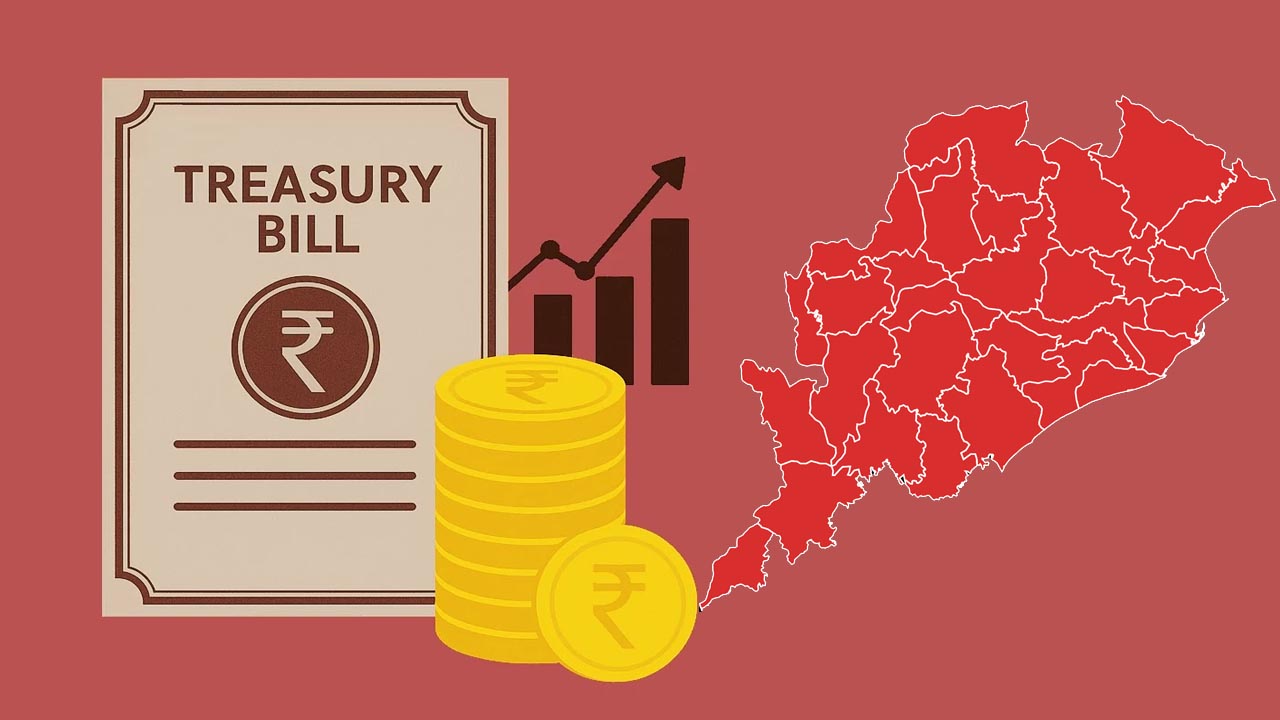
Odisha has long been regarded as one of India’s more fiscally disciplined states, balancing welfare initiatives with infrastructure investment. Its progressive approach to financial management has now drawn national attention, with Treasury Bill (T-Bill) holdings tripling in just a quarter, making Odisha the second-largest state investor in these secure, short-term instruments. For a state known for cautious budgeting and growing developmental ambitions, this surge underscores both prudence and foresight in handling temporary cash surpluses.
Sharp Rise in Holdings
According to recent Reserve Bank of India (RBI) data, Odisha’s T-Bill exposure climbed from ₹4,285 crore in April to ₹8,258 crore in May, and further to ₹12,236 crore in June. This marks a threefold increase in just two months. While Karnataka retained the top position with holdings of over ₹70,000 crore by June, Odisha’s leap highlights its proactive treasury management. Even smaller states like Arunachal Pradesh expanded their placements, albeit on a smaller base, from ₹1,800 crore in April to ₹3,400 crore in June.
Why States Choose T-Bills
Experts explain that states typically experience uneven cash flows. Inflows from tax devolution and central transfers often arrive in bulk, while expenditure on salaries, subsidies, and development projects is staggered through the year. The gap creates temporary surpluses, which treasuries prefer to invest in T-Bills—low-risk, highly liquid securities issued by the Centre.
“T-Bills provide both safety and immediate access to funds,” said Venkatakrishnan Srinivasan, Managing Partner at Rockfort Fincap LLP, noting that rising exposure reflects a conservative yet efficient approach to treasury management. Unlike bank balances, T-Bills offer market-linked returns while preserving principal, with the added benefit of same-day liquidity through RBI auctions.
Odisha’s Strategy: Liquidity First
For Odisha, the move is significant at a time when the state is scaling up capital expenditure. By holding large volumes of T-Bills, the treasury ensures that resources remain available for near-term outlays while also earning modest returns. This reduces the opportunity cost of idle funds without compromising flexibility.
The month-wise increase—from April to June—also reflects how Odisha’s receipts accumulated in the early fiscal quarter. As central transfers were credited, the treasury parked surpluses in liquid securities, awaiting project execution and scheme disbursals scheduled for the later half of the year. This pattern shows a deliberate effort to bridge the timing mismatch between inflows and expenditure.
Broader National Trend
Odisha’s trajectory mirrors a broader trend across states. Karnataka’s consistent lead demonstrates the scale of its surpluses, while Arunachal Pradesh’s gradual increase reflects even smaller states adopting more structured cash management. Analysts argue that the preference for T-Bills over conventional bank deposits signals growing sophistication in state treasuries, as transparent pricing and zero credit risk make these securities more attractive.
Importantly, larger T-Bill books should not be mistaken for fiscal stress. Rating agencies often view them as a sign of prudent liquidity management, provided these holdings unwind naturally as development spending accelerates.
Outlook: Balancing Caution with Growth
Whether Odisha sustains its June-level T-Bill holdings will depend on how quickly infrastructure projects, welfare schemes, and capital works gather momentum in the second half of the fiscal year. Typically, state spending intensifies later in the cycle, which could see these balances being drawn down.
Nonetheless, the current trajectory demonstrates Odisha’s commitment to safeguarding its financial base while keeping cash accessible for urgent priorities. By combining conservative treasury practices with ambitious developmental goals, the state is reinforcing its reputation as a careful yet forward-looking financial manager.
A Model for Fiscal Governance
Odisha’s surge in T-Bill holdings is more than a technical treasury decision—it is a reflection of the state’s evolving fiscal discipline. By prioritizing safety, liquidity, and flexibility, the government has positioned itself to meet upcoming expenditure needs without straining resources.
As capital projects roll out and welfare obligations expand, Odisha’s ability to maintain this balance will define its next phase of growth. If managed well, the state could emerge not just as a model of financial prudence but also as a benchmark for how strategic cash management can strengthen development outcomes.
(With agency inputs)