



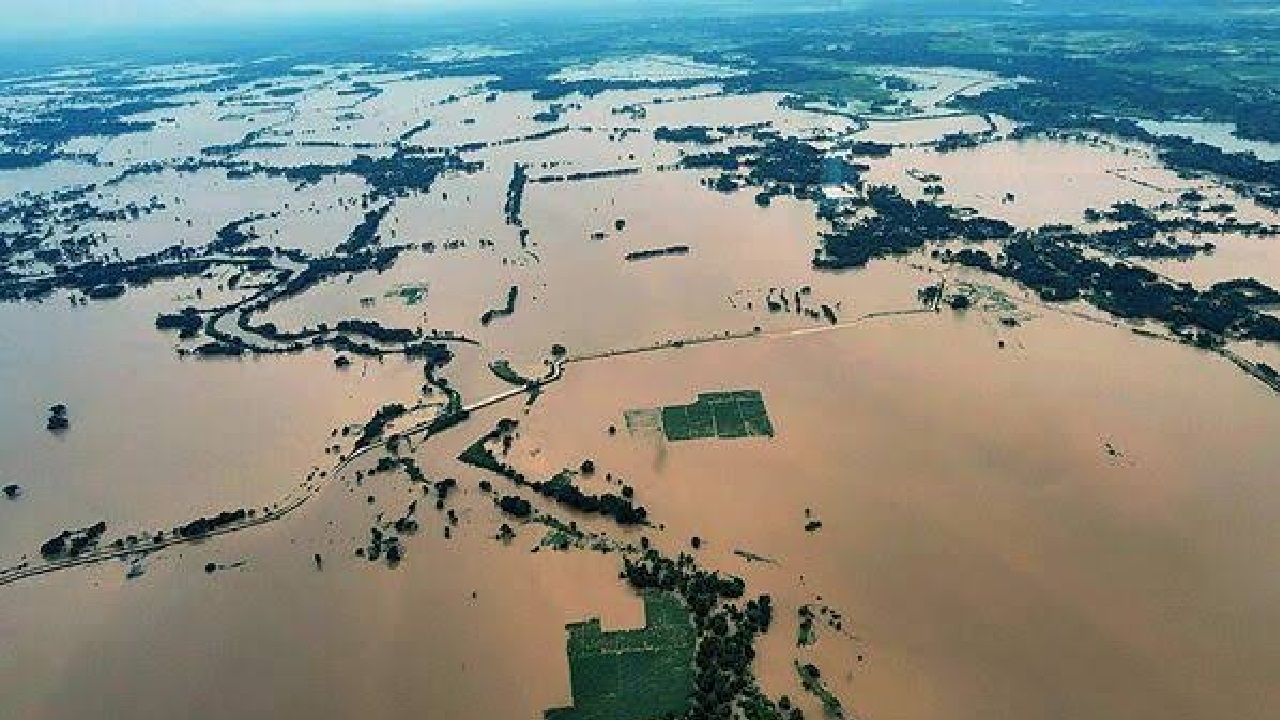
Odisha’s Annual Flood Challenge
Every year, Odisha faces the looming threat of floods due to its geographical location, monsoon intensity, and upstream rainfall in neighboring states like Jharkhand and West Bengal. The state, however, has developed a robust disaster management system over time—marked by early warnings, rapid response teams, and proactive relief efforts. The latest episode in Balasore and Mayurbhanj districts once again put these preparedness mechanisms to the test.
Rising River Levels Raise Alarm
The Odisha government has placed Balasore and Mayurbhanj districts on high alert after continuous rainfall in Jharkhand’s catchment areas led to a sharp rise in water levels of the Subarnarekha, Budhabalang, and Jalaka rivers. The Subarnarekha River at Rajghat in Balasore has breached the danger mark, reaching 11.52 meters against the danger level of 10.36 meters.
Similarly, the Jalaka River at Mathani recorded a level of 6.84 meters—just above its danger mark of 6.50 meters. Although the Budhabalang River’s level at NH-5 is currently below the danger mark (7.20 meters compared to the danger mark of 8.13), its proximity to the threshold has officials on high alert.
Government Assures Situation Under Control
Despite the rising levels, Odisha’s Revenue and Disaster Management Minister, Suresh Pujari, assured the public that the overall flood situation remains under control. “We are in constant touch with the Jharkhand government, particularly about incomplete dams like Chandil which impact the water inflow,” he said.
He added that while the Budhabalang River’s level is beginning to decline, the Subarnarekha continues to rise. With no current rainfall, the outlook remains stable, but the government anticipates more rain in the coming days that could temporarily affect vulnerable areas such as Jaleswar.
Proactive Measures and Relief Operations
In anticipation of worsening conditions, the Odisha government has already deployed a multi-layered response. ODRAF (Odisha Disaster Rapid Action Force) teams have been stationed in Keonjhar, Mayurbhanj, and Balasore. Additionally, two more teams from Cuttack are being dispatched to reinforce operations in Balasore.
Minister Pujari noted that the Central Range Revenue Divisional Commissioner and other senior officials are actively coordinating ground-level monitoring. Fire Services personnel, equipped with advanced tools, are also involved in rescue operations. Relief efforts include the distribution of cooked and dry food to affected populations, ensuring no family is left stranded.
Weather Forecast Still a Concern
The India Meteorological Department (IMD) has issued a red alert for Mayurbhanj district, indicating the likelihood of further heavy rainfall. This could exacerbate conditions in already saturated river basins and low-lying regions downstream. Authorities continue to monitor the situation closely and are prepared to act swiftly if conditions worsen.
Favorable sea conditions are currently aiding the discharge of water from swelling rivers, providing some relief to both residents and emergency teams working on the ground.
Preparedness Keeps Crisis in Check
Odisha’s ability to manage the current flood threat reflects the efficiency of its disaster preparedness and governance. Despite the immediate risks posed by rising river levels, timely intervention, inter-state coordination, and on-ground readiness have helped contain the situation.
As weather patterns grow increasingly unpredictable due to climate change, Odisha’s experience reinforces the need for constant vigilance, regional cooperation, and infrastructure investment to mitigate the annual monsoon threat. For now, the state remains alert—but steady.
(With agency inputs)