A Robust Agricultural Backbone
Odisha, a state traditionally rooted in agriculture, has steadily transformed its farming landscape into one of India’s most dynamic and progressive sectors. With nearly 49% of its workforce employed in agriculture and allied sectors, the state relies heavily on rural livelihoods and food production. Contributing about 19% to the Gross State Value Added (GSVA) during 2024–25, agriculture remains the backbone of Odisha’s economy. Strategic investments, climate-resilient practices, and technological modernisation have elevated its position nationally.
National Recognition for Agricultural Leadership
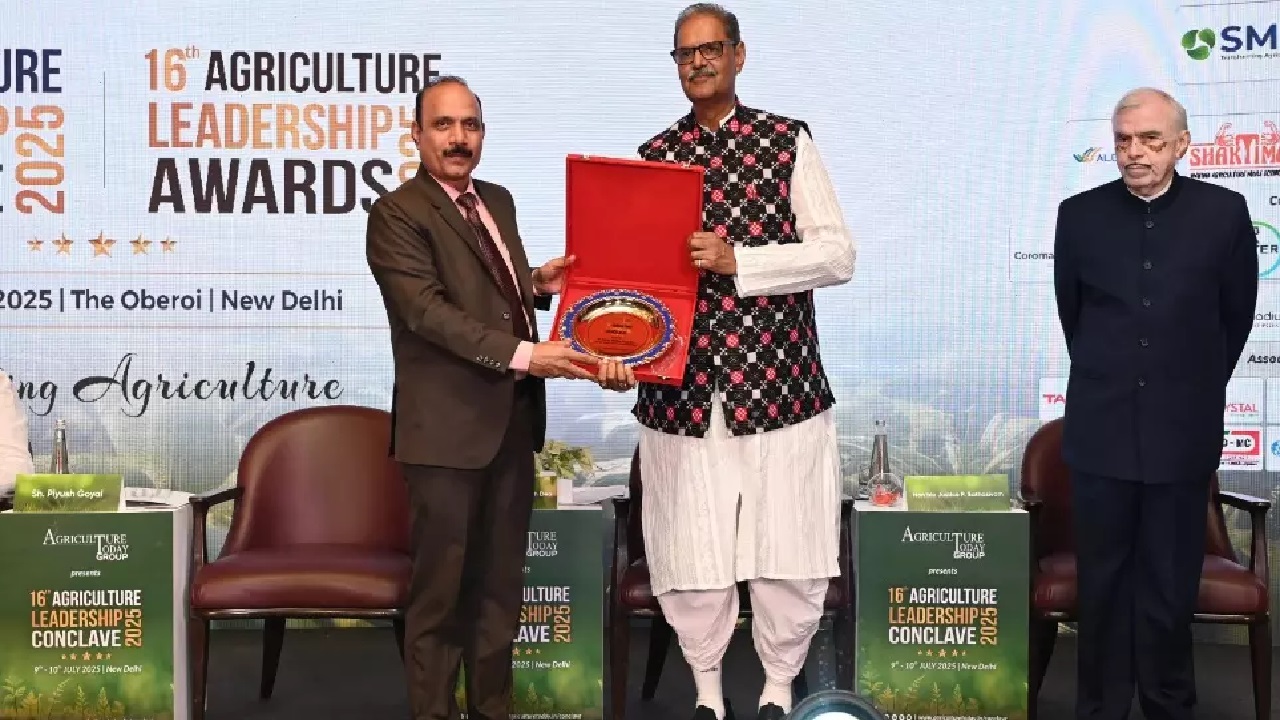
Odisha’s consistent performance in agriculture was recognised at the 16th Agriculture Leadership Conclave in New Delhi, where it received the Best State Award for Agriculture Leadership. Instituted by the Agriculture Today Group, this prestigious national honour celebrates innovation, inclusivity, and sustainability in farming practices.
The award was received by Deputy Chief Minister and Minister for Agriculture & Farmers’ Empowerment, Kanak Vardhan Singh Deo, in the presence of Union Minister Piyush Goyal, former Chief Justice of India Justice P Sathasivam, and other dignitaries. Singh Deo lauded the dedication of Odisha’s farmers, stating, “This award is a testament to the innovation and hard work of the farmers of Odisha… dedicated to our annadatas.”
Growth Rooted in Policy and Infrastructure
Odisha’s agricultural transformation is underpinned by progressive policy support and rural infrastructure development. The government’s encouragement of crop diversification and climate-resilient farming techniques has strengthened the state’s food security and economic resilience.
In the 2023–24 fiscal year, Odisha produced 115.39 lakh metric tonnes of rice, equivalent to 174.83 lakh metric tonnes of paddy, making it the fourth-largest rice supplier to the Food Corporation of India (FCI). Beyond rice, Odisha has excelled in horticulture and vegetable production, contributing significantly to both domestic and international markets.
Mechanisation, Training, and Technological Leap
Odisha’s focus on modernising agriculture through farm mechanisation and technology adoption has led to notable outcomes. The state recorded the highest sale of tractors in India last year and achieved a farm power input of 2.60 kW per hectare in 2024–25, with a target of 3.5 kW per hectare by 2036.
Farmer training programs and value chain development have contributed to increased rural incomes, higher productivity, and improved food security. These initiatives are helping Odisha build a future-ready agricultural economy.
A Global Presence in Agri-Exports
Odisha is also making its mark globally. In 2024–25, the state exported 121.82 metric tonnes of horticultural produce, including dragon fruit, cashew nuts, mangoes, and vegetables, to countries across Europe and the Middle East. These exports were facilitated through major airports in Bhubaneswar and Kolkata, reflecting the state’s growing agricultural supply chain integration.
Leading in Crop Diversification and Output
Odisha ranks impressively across various agricultural outputs:
· 1st in sweet potato and paddy straw mushroom production
· 2nd in all fruit production and brinjal, cabbage output
· 3rd in cashew nut production
· 5th in watermelon, tomato, cauliflower, okra, lemon, and coconut
Such diversity in output underscores Odisha’s successful move away from mono-cropping to a more diversified and market-responsive agricultural model.
A Model for Sustainable Growth
Odisha’s recognition as the Best State in Agriculture Leadership is not just a ceremonial accolade—it represents years of strategic investment, policy foresight, and the relentless efforts of its farming community. With a balance of technology, inclusivity, export orientation, and ecological sustainability, Odisha has emerged as a model for agricultural transformation in India. Other states now look to Odisha as a benchmark in achieving food security, economic empowerment, and climate-smart agriculture.
(With agency inputs)