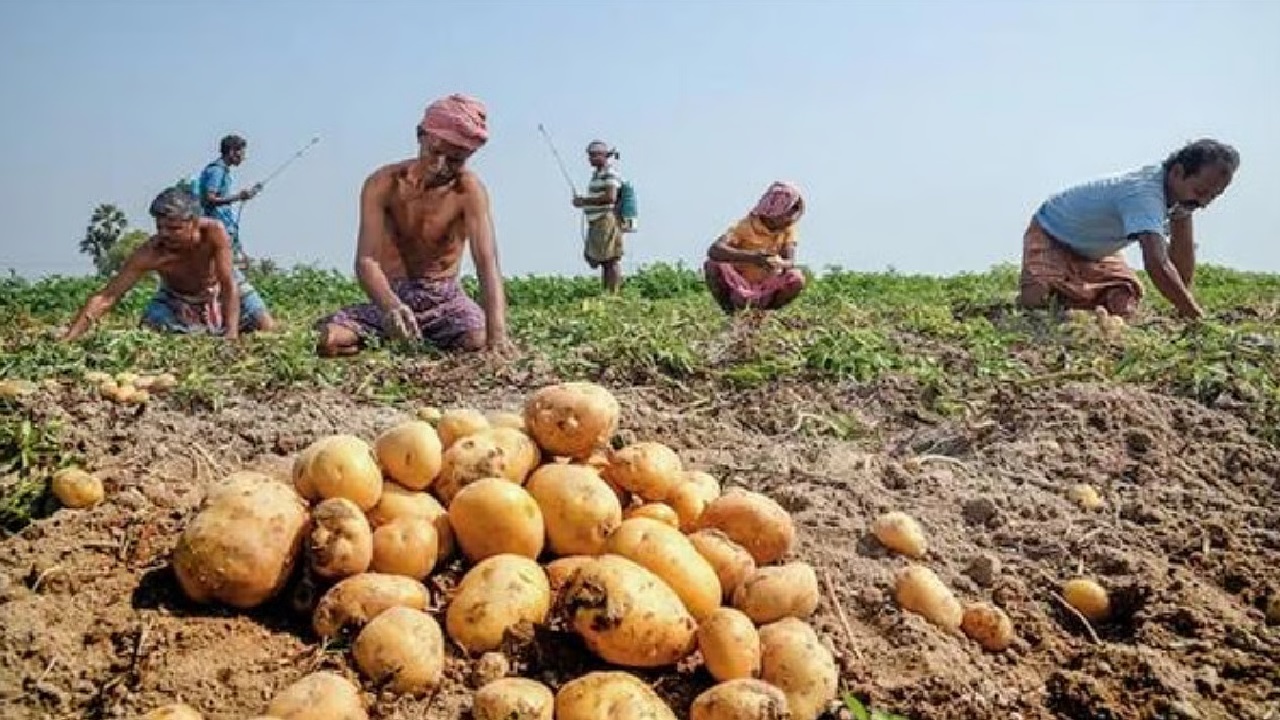
A Strategic Push for Agricultural Independence
The Odisha government has unveiled an ambitious initiative to cultivate potatoes on 50,000 acres of farmland in the upcoming rabi season, signalling a decisive step toward agricultural self-reliance. The plan, finalized at a high-level meeting chaired by Deputy Chief Minister Kanak Vardhan Singh Deo in Bhubaneswar, seeks to reduce the state’s dependency on potato imports from neighbouring states and strengthen its food security framework.
Officials from the Agriculture and Horticulture Departments presented a comprehensive roadmap for large-scale seed distribution, farmer support, and technical assistance, forming part of the renewed Odisha Potato Mission — a project designed to stabilise supply, improve farmer incomes, and prevent market volatility.
The Implementation Blueprint
Under the new plan, the government will distribute nearly three lakh quintals of certified potato seeds beginning the first week of November, ensuring farmers can complete sowing within the optimal window. These seeds, sourced from the Odisha State Seeds Corporation, will be delivered block-wise to match regional demand.
Deputy Chief Minister Singh Deo emphasized the importance of coordination and timely action:
“Odisha must transition from dependency to self-sufficiency. With the right seeds, irrigation, and scientific guidance, our farmers can achieve record productivity this season.”
Complementing this initiative, the government has launched multi-crop drives to promote onion, chilli, and garlic cultivation across 7,000 hectares combined. District-level agricultural officers have been tasked with ensuring seed quality and providing hands-on training to farmers on efficient irrigation, pest control, and nutrient management practices.
Odisha’s Longstanding Potato Deficit
Despite having vast tracts of arable land, Odisha currently meets only 30% of its annual potato demand, estimated at around 10 lakh tonnes. The state relies heavily on imports from West Bengal and Bihar, making it vulnerable to price fluctuations and logistical challenges during transport delays or regional crop failures.
In recent years, supply disruptions from Bengal have led to steep retail price surges, underlining the urgency of local production. According to the Agriculture Department’s 2024 data, Odisha cultivates potatoes over about 28,000–30,000 acres, yielding just 3.5 lakh tonnes annually.
An earlier attempt to close this gap — the 2015 Odisha Potato Mission — faltered due to inadequate cold storage, poor farmer participation, and weak marketing channels. The new initiative aims to correct those shortcomings with modern infrastructure and stronger public-private partnerships.
Empowering Farmers and Strengthening Food Security
The state government’s renewed focus aligns with Chief Minister Mohan Charan Majhi’s “Atmanirbhar Krishi” (Self-Reliant Agriculture) vision. By expanding cultivation to 50,000 acres, officials project Odisha could meet up to 65% of its domestic potato requirement within three years.
To ensure long-term sustainability, farmers will be encouraged to adopt climate-resilient varieties, drip irrigation, and modern farming practices. Extension officers under the Krushi Odisha platform will conduct training programs to familiarise cultivators with advanced cultivation techniques.
In collaboration with the ICAR–Central Potato Research Institute, Shimla, the government also plans to introduce disease-free seed tubers and leverage biotechnology to enhance yield quality and resistance to pests.
Challenges and the Road Ahead
While agricultural experts have welcomed the initiative, they caution that success will hinge on post-harvest infrastructure and market integration. Odisha currently operates around 70 cold storage facilities, mostly in coastal districts — far below the state’s requirement. Without adequate storage, farmers risk post-harvest losses and distress sales, negating productivity gains.
However, with plans to expand cold-chain networks and promote cooperative storage models, the state appears poised to tackle these challenges head-on.
A Step Toward Self-Sufficiency
Odisha’s 50,000-acre potato cultivation plan represents more than an agricultural expansion — it’s a blueprint for economic empowerment, food resilience, and rural revitalisation. By coupling modern technology with institutional support, the government aims to end decades of dependency and make Odisha self-sufficient in one of its staple food items.
If executed effectively, this initiative could become a model for other Indian states striving to balance productivity with sustainability — ensuring that Odisha’s farmers, not import trucks, feed the state’s kitchens.
(With agency inputs)