



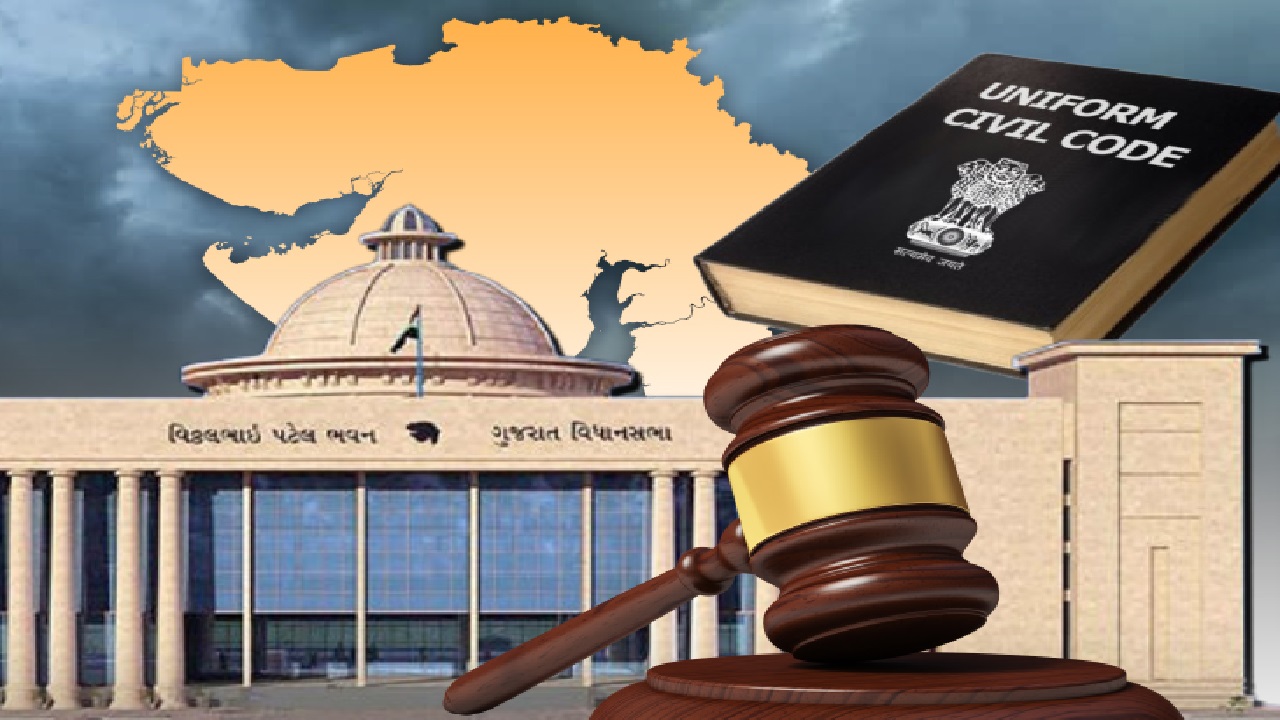
A Landmark Move in Gujarat
The Gujarat Assembly has passed the Uniform Civil Code (UCC) Bill, marking a significant step in India’s evolving legal and political landscape. Chief Minister Bhupendra Patel has positioned the legislation as a move toward equality and justice, asserting that a single legal framework for all citizens—irrespective of religion or caste—will strengthen individual rights. With this, Gujarat joins a small but growing group of states attempting to operationalise the long-debated idea of a uniform civil code.
What is the Uniform Civil Code (UCC)?
The UCC refers to a common set of laws governing personal matters such as marriage, divorce, inheritance, and adoption, replacing religion-based personal laws. Envisioned under Article 44 of the Constitution, it aims to ensure that all citizens are treated equally under a single legal framework in civil matters. Currently, different communities in India follow distinct personal laws—for instance, Hindu, Muslim, and Christian family laws—leading to legal diversity but also debates over equality and gender justice.
Key Provisions of the Gujarat UCC
The Gujarat Bill introduces several structural reforms to standardise personal laws:
· Mandatory registration of marriages and live-in relationships
· Uniform procedures and grounds for divorce and maintenance
· Equal inheritance rights for sons and daughters
· Legal enforceability with penalties for non-compliance
These provisions seek to bring informal or religious unions into a regulated framework while addressing long-standing gender disparities, particularly in inheritance and marital rights.
Other States and the Expanding Debate
Gujarat is not alone in pursuing UCC-like reforms. Uttarakhand has already taken steps toward implementing a UCC, becoming the first state to formally adopt such a framework. Discussions and committees have also been initiated in states like Assam, indicating a broader political momentum.
At the national level, Union Home Minister Amit Shah has endorsed such efforts, framing them as essential to ensuring “equal laws for all citizens.” The push reflects a shift toward uniformity in governance, moving away from community-specific legal systems.
Why the Opposition?
Despite its stated goals, the UCC continues to face strong opposition from several political leaders and groups. Critics argue that the code risks undermining India’s cultural and religious diversity by imposing a uniform framework on deeply rooted personal practices. Some opposition leaders contend that the timing and framing of the law suggest political motivations rather than purely reformist intent.
Concerns have also been raised about federal overreach and the possibility of marginalising minority communities. For many, the debate is not just about legal uniformity but about balancing equality with the right to preserve distinct cultural identities. Questions around implementation, social acceptance, and legal clarity further complicate the discourse.
Reform or Rift?
The passage of the UCC Bill in Gujarat represents a pivotal moment in India’s legal evolution. While it promises greater uniformity and gender justice, it also opens up complex questions about diversity, federalism, and political intent. As more states explore similar reforms, the UCC debate is likely to intensify, shaping the future of personal law in India. Ultimately, its success will depend not just on legislation, but on building consensus in a country defined by its plurality.