A Pattern of Embarrassment
Pakistan’s leadership has often attracted international headlines, but rarely for statesmanship or strategic vision. Instead, awkward blunders and tone-deaf remarks by top figures have repeatedly left the country red-faced on global platforms. Prime Minister Shehbaz Sharif’s latest gaffe with earphones in front of Russian President Vladimir Putin, paired with Defence Minister Khawaja Asif’s bizarre suggestion that devastating floods should be treated as a “blessing,” paint a troubling picture of a nation undermined by its own representatives.
Earphones at the SCO: Déjà Vu for Shehbaz Sharif
At the recent Shanghai Cooperation Organisation (SCO) summit in Beijing, Shehbaz Sharif once again found himself the subject of ridicule. As he prepared for a meeting with Putin, cameras captured him fumbling with translation earphones. Despite repeated attempts, the headset kept slipping, prompting Putin himself to smile and demonstrate how to wear it properly.
This was not Sharif’s first such stumble. In 2020 at the Uzbekistan SCO summit, he had faced the exact same issue, struggling to keep his earpiece on while officials hovered around to help. Videos of both incidents went viral, with social media users and international commentators quick to lampoon the Pakistani leader. Late-night host Jimmy Fallon even joked about how such a spectacle could involve the leader of a nation of over 220 million people.
From Summit to Snub: A Leader on the Sidelines
The Beijing summit brought further embarrassment for Sharif. A widely circulated video showed him standing awkwardly in the background as Indian Prime Minister Narendra Modi walked alongside Putin, underscoring Pakistan’s diplomatic isolation.
Adding to the discomfort, the SCO issued a collective condemnation of the Pahalgam terror attack in India while Sharif sat among the attendees. For many observers, it was a stark reminder of how far Pakistan’s global standing has declined, with its leader increasingly reduced to a spectator at international gatherings.
Diplomatic Posturing Amid Embarrassment
Despite the awkward optics, Sharif sought to emphasize Pakistan’s desire for stronger ties with Russia. During his meeting with Putin, he praised Moscow’s “balancing act” in Asia and expressed Islamabad’s respect for Russia’s ties with India. He framed Pakistan’s relationship with Russia as “supplementary and complementary,” signaling a willingness to cooperate without undermining existing Moscow-New Delhi relations.
However, such assurances risk being overshadowed by recurring personal blunders and the perception that Pakistan’s leadership lacks the gravitas needed to command respect in high-level diplomacy.
A Flood Crisis Framed as a ‘Blessing’
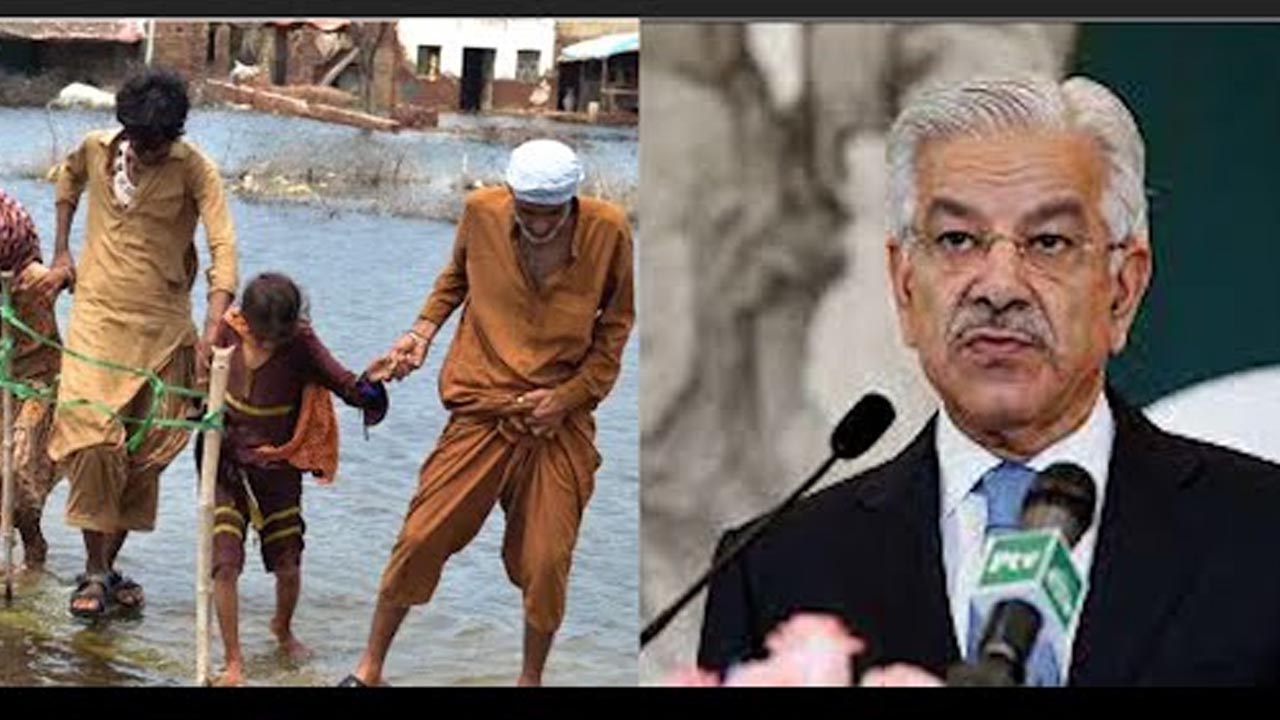
If Sharif’s summit slip-ups symbolized incompetence abroad, Defence Minister Khawaja Asif’s remarks highlighted insensitivity at home. As record-breaking monsoon floods inundated Punjab province—submerging over a thousand villages and affecting more than 2.4 million people—Asif suggested citizens in low-lying areas should store floodwater in tubs and treat it as a “blessing.”
“People who are protesting against the flood-like situation should take the flood waters home,” he said during a television interview, arguing that water should not be “wasted” by flowing into drains. He further proposed constructing small dams instead of waiting years for mega projects.
The comments came as the death toll reached 854, with more than 1,100 injured and warnings of rising river levels threatening Multan and beyond. Relief operations already strained by continuous rains faced further disruption, while the United Nations cautioned about looming food shortages due to submerged farmland and destroyed crops.
Experts See a Leadership Deficit
Taken together, these episodes illustrate more than isolated gaffes—they point to a deeper credibility crisis within Pakistan’s leadership. While citizens endure severe flooding, soaring inflation, and political uncertainty, their leaders are remembered internationally for clumsy gestures and poorly judged statements.
Rossow and other regional analysts argue that such optics weaken Pakistan’s diplomatic leverage, especially at a time when it seeks stronger relations with Russia, China, and regional partners through platforms like the SCO. Instead of demonstrating resilience and vision, Islamabad often appears distracted and ill-prepared.
The Cost of Self-Inflicted Humiliation
Every nation faces crises, but the true measure of leadership lies in how those crises are communicated and managed. Pakistan’s prime minister repeatedly struggling with earphones before world leaders and its defence minister trivializing deadly floods as a “blessing” are not merely embarrassing moments—they are reflections of poor judgment at the highest levels.
For Pakistan to regain international credibility and effectively address its domestic challenges, its leaders must move beyond optics of incompetence and embrace a culture of preparedness, sensitivity, and seriousness. Until then, the country risks being defined less by its potential and more by the follies of those who govern it.
(With agency inputs)