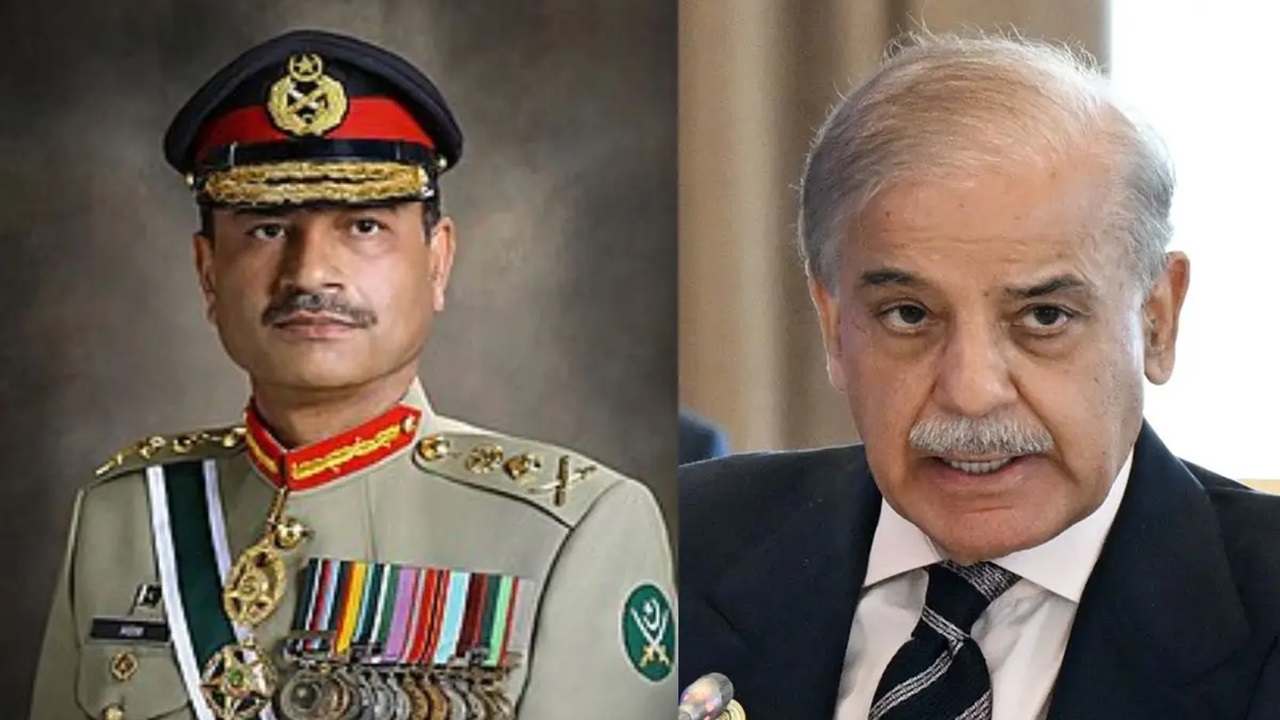
A Turning Point in Civil-Military Relations
Pakistan stands on the brink of a historic political transformation. The country’s Parliament is poised to pass the 27th Constitutional Amendment, a move that could permanently redefine the balance between civilian and military power. For decades, the Pakistan Army’s influence over national governance has thrived in the shadows—unofficial yet omnipresent. Now, through this amendment, that informal control threatens to become an official, constitutional reality.
If enacted, the 27th Amendment would formalize the role of Field Marshal Asim Munir, effectively placing him—and the military establishment he represents—at the apex of Pakistan’s political and administrative hierarchy. What has long been whispered as “the establishment’s rule” may soon be inscribed in the nation’s founding law.
Institutionalising the Army’s Control
At the heart of the amendment lies a structural redesign of Pakistan’s power architecture. The bill proposes the formal creation of the office of Field Marshal of Pakistan, endowed with a renewable five-year tenure, mirroring that of the prime minister and president. This role would not merely be ceremonial; it would wield command over the army, navy, air force, and even the Inter-Services Intelligence (ISI).
The amendment reworks Article 243, historically the clause that vested command of the armed forces in the federal government. Under the proposed changes, the Field Marshal becomes the Commander-in-Chief, capable of appointing service chiefs and intelligence heads—powers once exercised by the president and cabinet. In effect, Pakistan’s power pyramid would be turned on its head, with the Field Marshal sitting above all elected offices in matters of national defense and security.
Erosion of Civilian and Provincial Powers
Beyond military command, the amendment threatens to roll back the hard-won gains of civilian and provincial autonomy. Decision-making on foreign policy, national security, and major appointments would shift decisively to Rawalpindi’s control.
More alarmingly, the government is reportedly considering recentralizing key policy areas, including education and population planning—fields devolved to the provinces under the 18th Amendment of 2010. Critics warn that this would effectively reverse a decade of decentralization, weakening Pakistan’s fragile federalism. Judicial independence, already under strain, may face further erosion if the military’s influence is formally legitimized through constitutional means.
Asim Munir: The New Czar
At the center of this power consolidation is General Syed Asim Munir, recently elevated to the rank of Field Marshal for alleged operational achievements. Originally set to retire in November 2025, Munir now stands to extend his authority indefinitely. His rise echoes that of Ayub Khan, who in 1959 crowned himself Field Marshal and entrenched the army’s political dominance.
Munir’s growing visibility at international forums—often seated beside or in place of the prime minister—has already blurred the line between soldier and statesman. The 27th Amendment would make that blurring permanent, turning de facto control into de jure supremacy.
Democracy Unravelled?
The Shehbaz Sharif government and its coalition partners appear confident of passing the amendment, but opposition parties and civil society are sounding alarms. Activists warn that it could institutionalize military rule, roll back democratic checks, and reduce Parliament to a symbolic body. The specter of past authoritarian eras—Ayub, Zia, Musharraf—looms large, but this time the military’s dominance would carry the seal of constitutional legitimacy.
A Nation at a Crossroads
The 27th Amendment represents more than a legislative change—it is a constitutional coup in plain sight. By codifying the military’s supremacy, Pakistan risks erasing the very boundary between civilian and khaki power that its democracy depends on. Should the amendment pass, the nation may enter a new epoch of institutionalized authoritarianism, where the Field Marshal’s word outweighs the will of the people.
In its 77th year, Pakistan faces a defining question: will it remain a democracy in spirit, or surrender to the uniform it never truly escaped?
(With agency inputs)