Recognition for a Lifetime of Craft
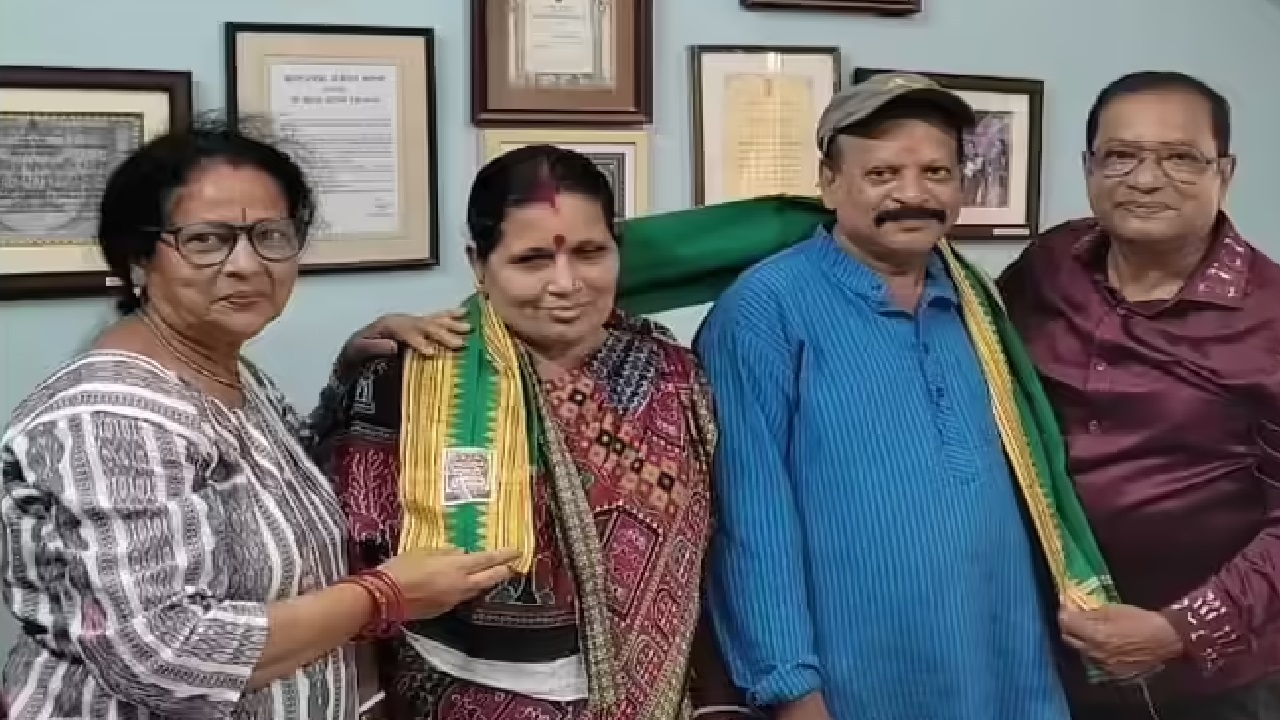
A distinguished Pattachitra artisan couple from Odisha—Sudhir Kumar Maharana and Urbashee Maharana—is set to be honoured in New Delhi on December 9, 2025. Sudhir will receive the Shilp Guru Award, one of India’s highest recognitions for master craftspersons, while Urbashee will be conferred the National Award in Handicrafts. Presented by the Ministry of Textiles, these accolades celebrate not only individual mastery but also the enduring resilience of Odisha’s traditional craft communities who safeguard centuries-old artistic knowledge.
A Visual Chronicle of Eastern India
Pattachitra, combining the Sanskrit words patta (cloth) and chitra (painting), is among India’s oldest artistic traditions, emerging in the cultural orbit of the 12th-century Jagannath Temple in Puri. Originally created as ritual scrolls for temple ceremonies and pilgrim offerings, the art form is deeply woven into Odisha’s religious iconography and Vaishnava storytelling.
Artists work on cloth or palm leaves prepared with layers of natural adhesives and chalk, achieving a leathery, durable surface. Using pigments derived from stones, conch shells, and plant extracts, Pattachitra depicts Hindu epics—Krishna’s childhood, episodes from the Ramayana, the tales of Shakti, and most prominently the Jagannath triad. The large, expressive eyes, bold borders, and saturated reds, yellows, and blues distinguish this style from other Indian folk arts, placing it at the heart of Odisha’s cultural identity.
Devotion Rendered Through Discipline
Producing a Pattachitra panel is a slow, ritualised process. The cloth is cured with a rice-and-tamarind mixture, dried for days, and coated with gesso before any drawing begins. Artisans sketch the composition freehand, without erasures—any mistake requires starting over. Floral borders inspired by the Konark Sun Temple and symbolic motifs complete the piece. Palm-leaf versions, known as Tala Pattachitra, involve etching designs with a metal stylus and rubbing charcoal to reveal the imagery.
This method, handed down across generations of Chitrakars and Maharana families, is both a spiritual discipline and a medium of livelihood.
The Maharana Couple: Custodians of a Fragile Heritage
Sudhir and Urbashee Maharana exemplify the continuity of this lineage. Hailing from the renowned craft village of Raghurajpur, they grew up surrounded by scroll painters, dancers, and mask-makers. Sudhir, trained from childhood, is known for his precision in mythological narratives and revival of ancient pigment techniques. His work on large ceremonial scrolls—often commissioned for temple functions—has established him as a mentor to younger artisans.
Urbashee, representing a new generation of women Pattachitra artists, has expanded the craft’s reach through innovative themes, including environmental storytelling and reinterpretations of tribal myths. Her mastery of palm-leaf etching has earned national recognition and provided vital income to local women’s collectives. Together, their workshop trains dozens of artisans, strengthening the ecosystem around Odisha’s GI-tagged craft.
Preserving Art in a Rapidly Changing World
The recognition bestowed on the Maharana couple underscores more than individual excellence—it affirms Pattachitra as a living heritage that continues to evolve. At a time when mass-produced prints and commercial imitations threaten traditional crafts, such awards reinforce cultural pride, sustain rural livelihoods, and ensure that ancient visual languages remain relevant. The Maharana couple’s journey illustrates how dedication, community training, and creative adaptation can keep a millennium-old tradition thriving in contemporary India.
(With agency inputs)