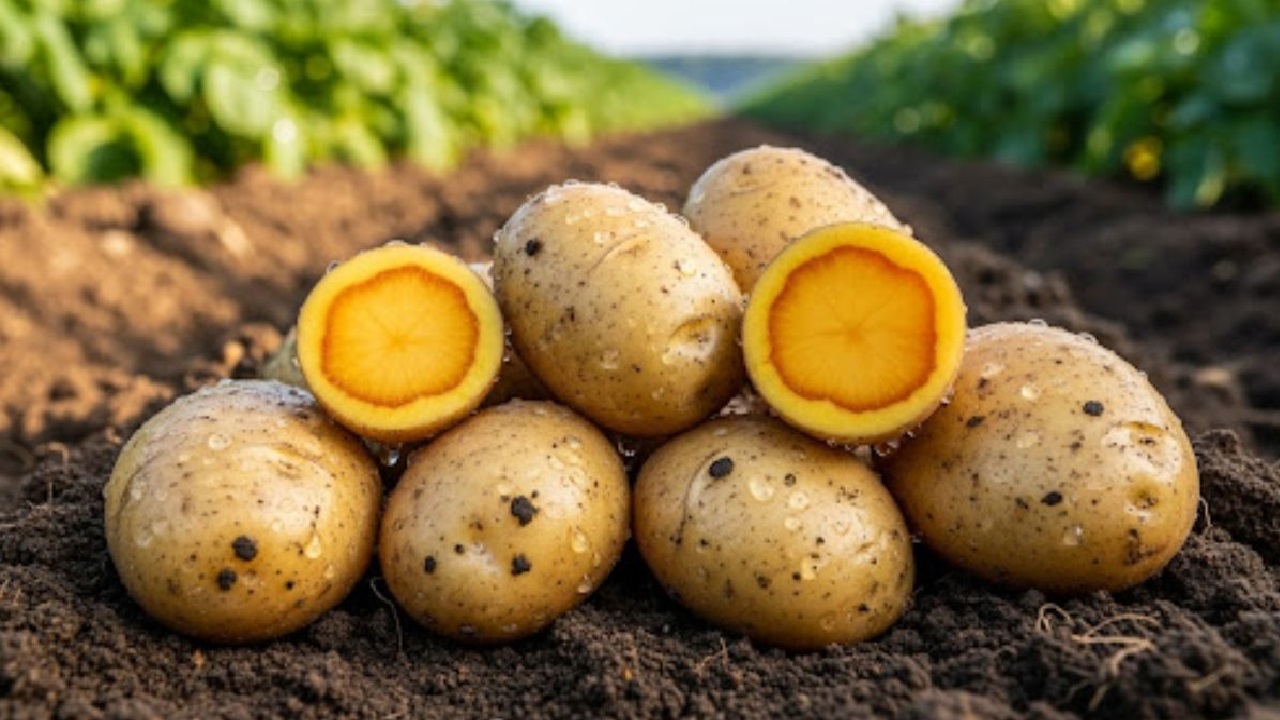
India’s Potato Power Meets a Nutritional Mission
India stands among the top global producers of potatoes, a staple in Indian kitchens and a key crop for millions of farmers. With record-high production in recent years, the country is exploring new ways to make this humble tuber more beneficial—especially in addressing nutritional deficiencies. A new opportunity has emerged through collaboration with Peru, where the International Potato Center (CIP) has developed a nutrient-rich, iron-fortified potato variety that could soon become part of India’s fight against anaemia and malnutrition.
Why Peru, and Why Now?
Peru, the birthplace of the potato, is also home to CIP, a global leader in potato research and innovation. CIP has spent over 16 years developing biofortified potatoes aimed at improving public health through better nutrition. Their iron-rich variety, originally cultivated to address iron deficiency in the Peruvian highlands, has been highly successful there.
Recognizing its potential, CIP has transferred the germplasm—carrying the complete genetic blueprint—of this fortified potato to the Indian Council of Agricultural Research’s (ICAR) Central Potato Research Institute (CPRI) in Shimla. This move marks the start of efforts to adapt the variety for Indian soil and climatic conditions.
Customizing for Indian Conditions
According to Simon Heck, Director-General of CIP, the potato’s nutritional impact in Peru laid the foundation for its international expansion. In India, ICAR scientists are now working to modify the genetic material to suit local agro-climatic conditions. Once optimized, initial field trials will be carried out with selected farmers across small regions before a nationwide rollout.
An ICAR official emphasized that the testing phase is critical: “We’ll begin with limited distribution, analyze its performance, and scale it up gradually.”
The Biofortification Advantage
Biofortification refers to the process of breeding crops with enhanced nutritional content, either through selective breeding or genetic modification. The iron-rich potato developed by CIP contains between 40–80% more iron than traditional varieties commonly consumed in Latin America.
CIP’s later-generation potatoes have not only improved iron and zinc content, but also demonstrate better resistance to diseases like late blight and viruses. These varieties are also more resilient to drought and heat, making them highly suited to India’s diverse climatic zones.
As part of its global distribution, CIP has already sent over 50 promising potato clones to partners in Africa and Asia. A few of these are now under evaluation for adaptation in India.
India’s Broader Push for Biofortification
India has already embraced biofortified crops, with close to 100 improved varieties developed by domestic institutions to combat hidden hunger. The success of CIP’s vitamin A-rich sweet potato, grown widely in states like Odisha and Karnataka, underscores the potential of fortified crops in India’s food systems.
Trilochan Mohapatra, renowned geneticist and former ICAR chief, highlighted the importance of this innovation: “Malnutrition remains a significant challenge in India. Biofortified crops are a practical and sustainable way to address it.”
Addressing Anaemia Head-On
The iron-rich potato arrives at a time when anaemia remains a pressing concern. According to India’s National Family Health Survey (2019–2021), nearly 57% of Indian women aged 15–49 suffer from anaemia. Without aggressive nutritional intervention, the numbers are projected to rise.
A 2023 study published in The Journal of Nutrition found that women who consumed iron-biofortified potatoes absorbed nearly 46% more iron than those who ate regular varieties, confirming its health potential.
A Nutritional Upgrade to a National Staple
With its high nutritional value and adaptability, Peru’s iron-rich potato offers a promising new tool in India’s public health arsenal. By combining advanced agricultural research with practical solutions for everyday diets, India is poised to redefine how staple crops can contribute to national nutrition goals. If successful, this potato may do more than fill plates—it could help bridge the country’s micronutrient gap and improve the well-being of millions.
(With agency inputs)