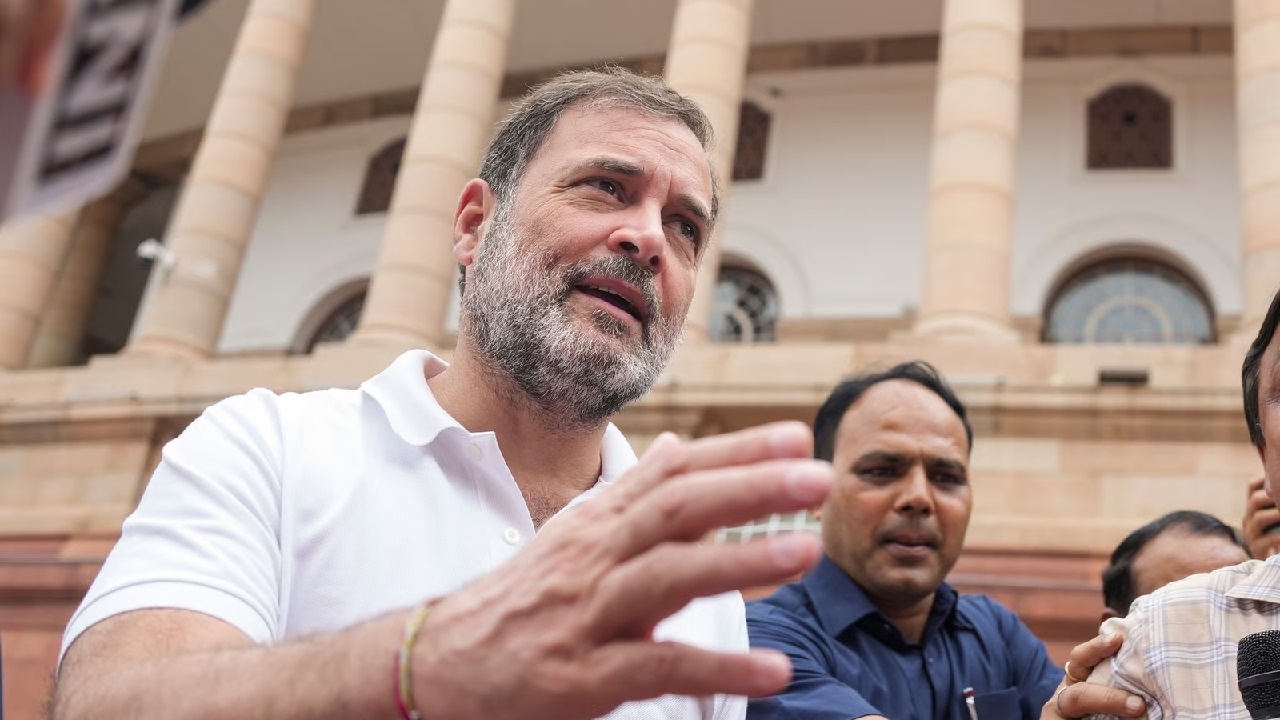
Rahul Gandhi Raises Alarm Over Alleged Electoral Manipulation
In a striking accusation that has reignited tensions across India’s political spectrum, Congress leader and Lok Sabha Leader of Opposition Rahul Gandhi has alleged large-scale voter manipulation in the 2024 general elections. Backed by what he claims is “concrete evidence” from months of data analysis, Gandhi accused the Election Commission of India (ECI) of conspiring with the Bharatiya Janata Party (BJP) to “steal elections”—a charge he described as a crime against the Constitution. The Congress leader asserted that unless the ECI provides machine-readable data and CCTV footage from polling stations spanning 10–15 years, it is complicit in what he deemed “vote chori” (vote theft).
Rahul Gandhi’s Allegations: A Deepening Narrative
Rahul Gandhi doubled down on his claims in a follow-up statement the next day, releasing a video on social media accusing the ECI and BJP of collusion. Citing irregularities in Uttarakhand as a fresh example—on top of earlier claims involving Karnataka, Maharashtra, and Haryana—Gandhi maintained that the electoral integrity of the country is under siege.
He argued that the alleged discrepancies were not isolated incidents but rather part of a wider pattern of tampering with voter rolls, disenfranchisement of eligible citizens, and manipulation through electronic means. According to Gandhi, a dedicated Congress team spent six months collecting verifiable evidence from specific Lok Sabha constituencies, which he plans to submit for judicial scrutiny.
“This is no longer just about election malpractice; this is about saving democracy,” Gandhi emphasized, demanding judicial intervention to uphold constitutional sanctity.
Election Commission’s Response: Formal Requests for Evidence
The Election Commission, through its state CEOs, swiftly issued formal letters to Rahul Gandhi following his public remarks. In both Karnataka and Maharashtra, the Chief Electoral Officers requested Gandhi to provide the names of alleged ineligible and excluded electors along with a signed declaration under Rule 20(3)(b) of the Registration of Electors Rules, 1960.
The letters signaled that the ECI was open to examining specific complaints but sought concrete details to initiate formal proceedings. The tone of the responses indicated procedural compliance, though critics argue the ECI stopped short of addressing the broader issues raised by the Congress.
BJP Retaliation: Fadnavis Dismisses Claims with Satire
On the other end of the political spectrum, BJP leaders responded with scorn and sarcasm. Maharashtra Deputy Chief Minister Devendra Fadnavis launched a biting attack on Rahul Gandhi, mocking his mental faculties. “Either his brain has been stolen, or the chip in his head is malfunctioning,” Fadnavis remarked, suggesting that Gandhi’s accusations were a product of delusion rather than substance.
He dismissed the claims of electoral fraud in the Maharashtra Assembly elections as baseless and politically motivated, accusing the Congress of undermining democratic institutions for electoral gains.
Opposition Backing: Kharge and Tharoor Rally Behind Gandhi
Despite internal fractures within the Congress party, Gandhi’s allegations found strong backing from party president Mallikarjun Kharge. Emphasizing the urgency of “saving the Constitution,” Kharge lamented that the Election Commission, once held in global regard for conducting fair elections, now behaves like “an arm of the ruling party.” He criticized the ECI for failing to respond with dignity and transparency when confronted by opposition voices.
Notably, senior Congress leader Shashi Tharoor, who has often diverged from the party line and publicly praised Prime Minister Narendra Modi in the past, stood firmly behind Gandhi this time. Labeling the accusations as “serious” and “worrying,” Tharoor urged the ECI to address them transparently and keep the public informed.
“Our democracy is too fragile to risk being damaged by carelessness—or worse, manipulation. This deserves immediate attention,” Tharoor posted on X, aligning himself with Gandhi’s stance for the first time in a significant while.
Internal Dynamics: A Moment of Unity in Congress?
Tharoor’s endorsement carries weight given his past differences with the party leadership. His previous remarks praising Modi’s handling of Operation Sindoor and foreign diplomacy had drawn sharp rebukes from within the Congress, casting him as a contrarian voice within the fold.
However, his alignment with Gandhi on this issue may signal a turning point, offering the Congress a brief window of internal solidarity. Whether this momentary unity translates into strategic coherence remains to be seen, but the party appears determined to escalate the narrative around electoral fairness heading into state elections.
A Test for Democracy, Time for Accountability
Rahul Gandhi’s accusations have triggered a political storm with far-reaching implications—not just for the 2024 elections but for the democratic processes themselves. The seriousness of the charges warrants more than counter-attacks or bureaucratic deflections. The Election Commission must proactively engage with all stakeholders, establish transparent mechanisms for addressing grievances, and consider opening its data for independent audit.
Similarly, the judiciary must rise to the occasion if the integrity of India’s electoral democracy is at stake. A bipartisan parliamentary committee or a judicially monitored probe into the allegations could serve as a confidence-building measure.
At stake is not just an electoral outcome but the very trust of the Indian citizen in the democratic machinery. Without that trust, even the most legitimate victory risks becoming a pyrrhic one.
(With agency inputs)