


From WWII Triumph to Modern Might
Eighty years ago, China emerged from the devastation of the Second World War with a hard-earned victory over Japan. Though the nation bore immense suffering during the conflict, its resilience cemented a place among the world’s major powers. Fast-forward to today, Beijing seeks to remind the world of that legacy—while also showcasing its present capabilities. The latest military parade in the heart of Beijing was not just a commemoration of wartime sacrifice; it was a powerful statement that China sees itself as a dominant force capable of challenging global rivals, particularly the United States.
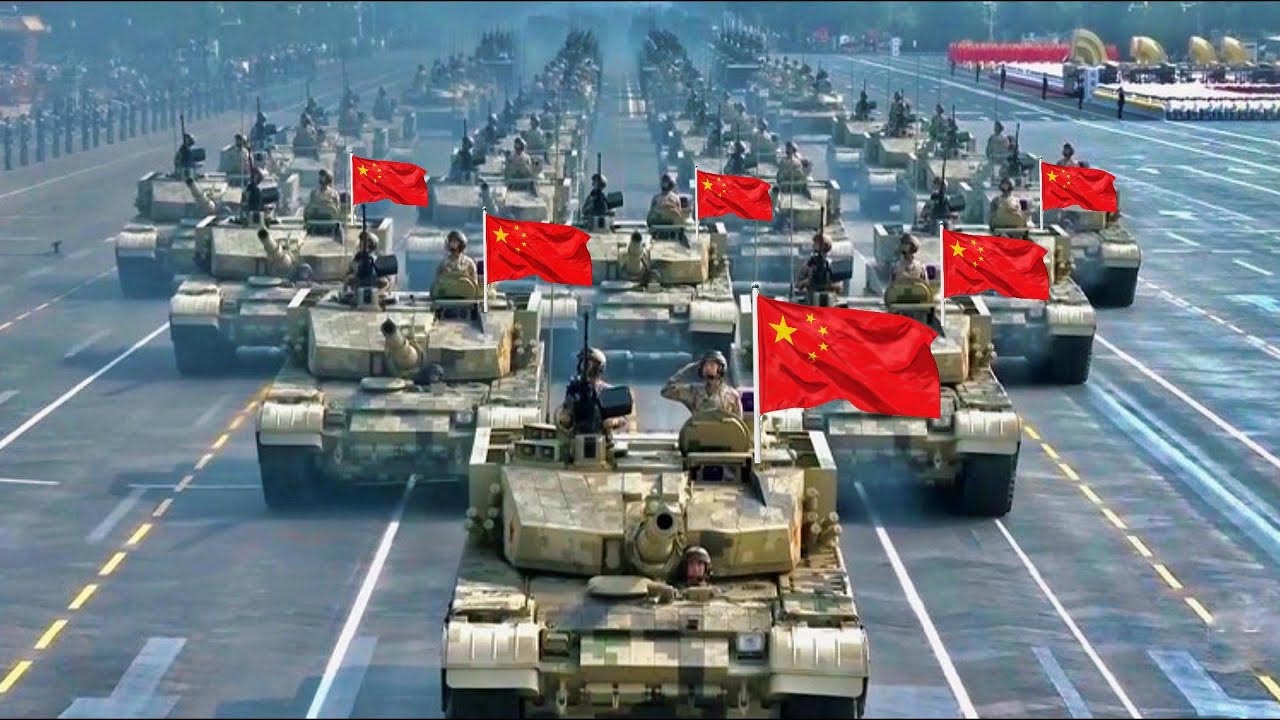
Tiananmen Square became the stage for this spectacle, witnessed by 50,000 spectators and dignitaries such as Russian President Vladimir Putin and North Korean leader Kim Jong Un. With meticulous choreography—down to banning cooking fires nearby to ensure a clear sky—China unveiled an arsenal that blended symbolism with cutting-edge weaponry.
Nuclear Deterrence on Wheels
At the heart of the parade were intercontinental ballistic missiles (ICBMs), a cornerstone of nuclear deterrence. The Dongfeng-5C (DF-5C), a silo-based missile capable of carrying multiple warheads, rolled past the crowds as a reminder of China’s long-range strike potential. With a reach of over 13,000 kilometers, it places cities in the continental United States and Western Europe well within range. Military experts argue that without the DF-5 program, China would never have gained recognition as a credible nuclear power.
Stealing some of the spotlight was the debut of the DF-61, believed to be one of the most advanced missiles in China’s arsenal. Mounted on a massive mobile launcher, it surprised many analysts who expected its development to remain secret. With an estimated range stretching up to 15,000 kilometers, it is designed to rival—and possibly surpass—the already formidable DF-41.
The “Guam Killer” and Regional Power Projection
Beyond global reach, China also emphasized its ability to dominate closer theatres. The DF-26D, nicknamed the “Guam Killer,” was revealed as a precision tool aimed at undermining American military presence in the Indo-Pacific. Capable of hitting U.S. bases on Guam from nearly 5,000 kilometers away, the missile integrates electronic countermeasures to evade interception by advanced defense systems like THAAD and Aegis. This weapon not only threatens American carriers but forces a recalibration of U.S. naval operations in the region.
Hypersonics and Anti-Ship Arsenal
The parade also highlighted the YJ-17, a missile armed with a hypersonic glide vehicle. Designed for deployment from aircraft, it allows strikes deep inside enemy defenses. Together with other anti-ship systems such as the YJ-19 and YJ-20, it strengthens Beijing’s message that U.S. carriers can no longer move unchallenged in Asian waters. Military commentators stressed its ability to bypass interceptors and neutralize high-value maritime assets, underscoring China’s determination to dominate sea lanes.
Steel Beasts and Ground Power
It was not only about rockets. On the ground, the imposing Type-99B main battle tanks rolled through Tiananmen Square, representing the peak of Chinese armored capability. Equipped with advanced active protection systems, these tanks exemplify the PLA’s modernization drive.
Alongside them came the PHL-16 multiple rocket launcher system, China’s answer to America’s HIMARS. Its modular design allows quick reconfiguration between different calibers of rockets and tactical missiles, extending strike ranges up to 500 kilometers. This adaptability provides commanders with flexible options for breaking fortified defenses or suppressing enemy concentrations in battle.
Lasers and Directed Energy Weapons
In a nod to future warfare, Beijing also revealed its advancements in directed energy. Two types of laser air-defense systems were presented, including a large model reportedly intended for naval deployment. Unlike traditional projectiles, these weapons disable enemy assets through heat or electronic disruption, targeting drones, missiles, and even sensors. Their inclusion signals China’s ambition to leap ahead in areas that could redefine modern combat.
Drones Below, Above, and Beyond
Unmanned systems took center stage, illustrating China’s push toward intelligent warfare. The AJX002, a massive undersea drone nearly 20 meters long, was believed by observers to be nuclear-capable, potentially serving as a stealthy deterrent beneath the waves. In the skies, the GJ-11 unmanned combat aircraft—dubbed a “loyal wingman”—was showcased. Designed to fly alongside piloted jets, it serves as both a sensor platform and a strike vehicle, effectively acting as an armed guardian for aircrews.
Perhaps most unusual were the “robot wolves,” unveiled as upgrades from earlier robot dogs. These quadruped machines are intended for reconnaissance, logistics, and even precision strikes. Chinese state media emphasized their role in reducing human casualties by replacing soldiers in dangerous environments, underlining a shift toward integrating robotics into frontline operations.
Symbolism and Spectacle
The event was not merely about weaponry. The grandiose display included 10,000 troops marching in flawless formation, the release of 80,000 pigeons, and the launch of 80,000 balloons to mark the anniversary. President Xi Jinping, wearing a Mao suit, declared China “unstoppable” and pledged defiance against foreign intimidation. Every element of the parade—from the security measures to the choreography—was designed to reinforce both national pride and international signaling.
A Message to the World
China’s latest military parade was more than a commemoration of World War II. It was a carefully orchestrated declaration of power, intended to remind the world that the nation has transformed from wartime victim to global contender. By presenting a wide range of advanced systems—from hypersonic missiles to undersea drones and robotic wolves—Beijing signaled its ambition to redefine the rules of modern warfare.
Yet the parade also carries a constructive lesson. Military might, while impressive, cannot exist in a vacuum. China’s rise brings opportunities for collaboration as well as risks of confrontation. For the international community, the challenge lies in balancing deterrence with dialogue, ensuring that the future is shaped not only by displays of strength but by efforts to preserve peace.
(With agency inputs)