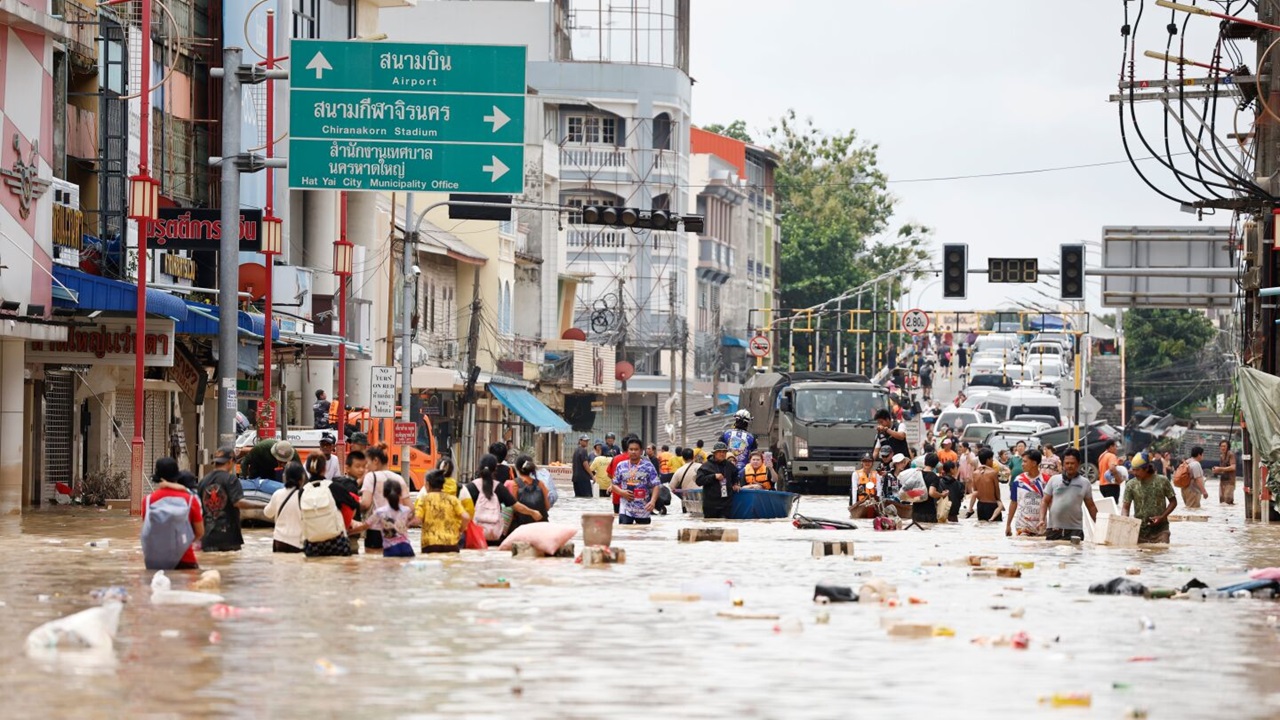
Catastrophic Floods Sweep Southern Thailand
Southern Thailand is reeling from unprecedented flooding caused by relentless heavy rains, claiming at least 145 lives across eight provinces as of November 28, 2025. Songkhla province, particularly its largest city Hat Yai, bore the brunt with over 110 fatalities. The Department of Disaster Prevention and Mitigation reports that more than 1.2 million households and 3.6 million people have been affected across 12 provinces, making this one of the region’s most severe disasters in decades. As floodwaters recede, rescue teams are gaining access to previously submerged areas, revealing widespread destruction to homes, roads, bridges, and public infrastructure.
Epicenter: Songkhla and Hat Yai
Songkhla experienced record rainfall of 335mm in a single day, the highest in three centuries, causing floodwaters up to two meters deep. Over 10,000 residents were evacuated, with university campuses repurposed as temporary shelters and streets transformed into murky rivers. Approximately 150,000 people were isolated in Hat Yai alone. Neighboring provinces—including Pattani, Yala, and Nakhon Si Thammarat—reported additional deaths from drowning, flash floods, and electrocution as waters surged unexpectedly. The full extent of the damage only became visible once flood levels receded, contributing to a rising death toll.
Rescue and Relief Operations
Authorities declared Songkhla a disaster zone, enabling rapid allocation of emergency funds. Over 500 firefighters are deployed alongside military helicopters, boats, and drones distributing food parcels—up to 20,000 daily—to stranded victims. Critical patients were airlifted from marooned hospitals, while 13,000 people found refuge in temporary shelters. Government spokesperson Siripong Angkasakulkiat emphasized that search and recovery efforts have improved with falling water levels, although intermittent thunderstorms continue to hamper operations. Early warning systems mitigated higher fatalities, but the sheer scale of inundation tested emergency preparedness.
Broader Impacts and Challenges
The floods have crippled tourism, agriculture, and transportation networks, particularly in flood-prone lowlands. Infrastructure damage and disrupted livelihoods exacerbate existing vulnerabilities, highlighting the urgent need for climate-resilient planning. Health concerns loom in displacement camps, where waterborne diseases can spread quickly. Authorities and NGOs are focusing on rebuilding, equitable aid distribution, and long-term preventive measures.
The disaster underscores southern Thailand’s susceptibility to monsoonal extremes, a pattern mirrored in parts of Malaysia and Indonesia. Climate change amplifies these events, pressing for stronger urban planning, sustainable flood defenses, and enhanced community preparedness to reduce future risks.
Lessons in Resilience and Preparedness
The southern Thailand floods of 2025 have exposed the region’s vulnerability to extreme weather events while highlighting the effectiveness of coordinated early warning and emergency response systems. Moving forward, resilient infrastructure, disaster-ready communities, and integrated climate planning are essential to mitigate the impact of future floods. As recovery continues, balancing immediate relief with long-term preparedness will determine the resilience of southern Thailand against escalating climatic challenges.
(With agency inputs)