A New Financial Orbit for Musk’s Space Empire
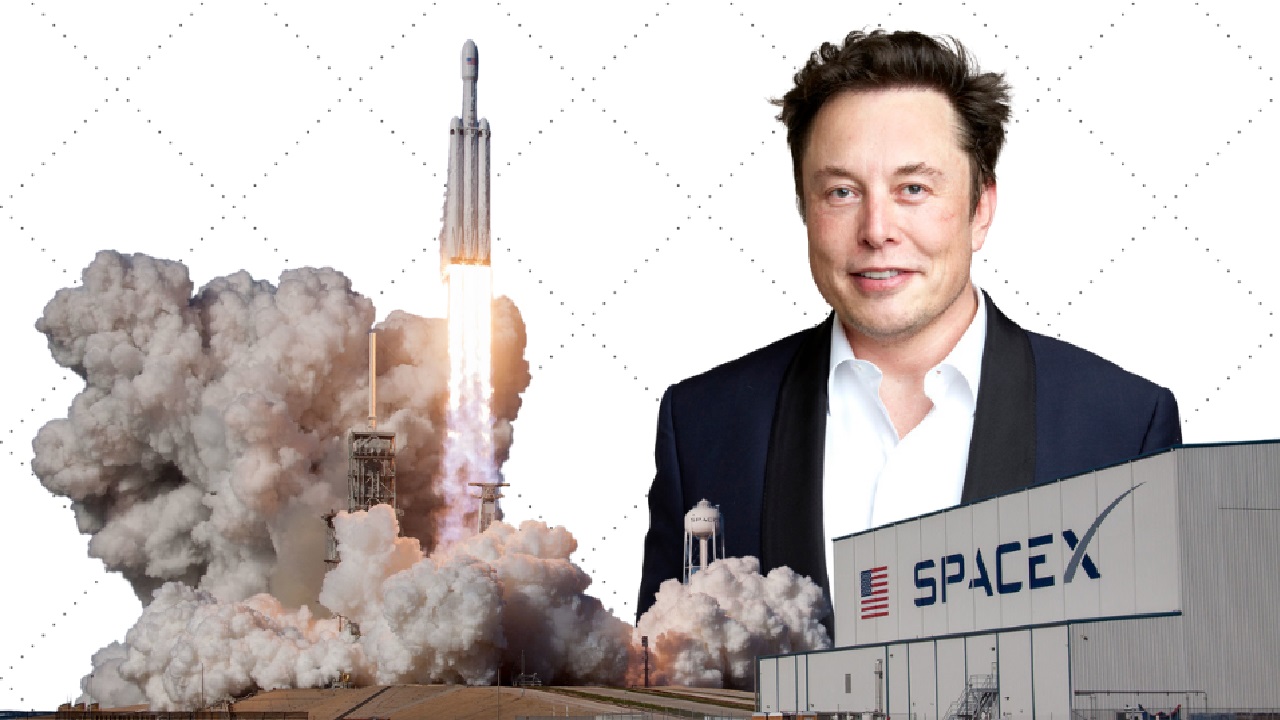
Elon Musk’s SpaceX is reportedly preparing a public listing of unprecedented scale, targeting more than $30 billion in fresh capital at a colossal $1.5 trillion valuation sometime in 2026–27. If executed, it could eclipse Saudi Aramco’s 2019 debut and instantly become the largest IPO in market history.
What began two decades ago as a high-risk experimental venture now stands on the brink of graduating into a global infrastructure behemoth—one that dominates launch services, operates a planet-spanning broadband constellation, and supplies critical space capabilities to governments and commercial players.
IPO Blueprint and Market Timing
Investor briefings suggest that SpaceX is working toward a mid- or late-2026 IPO, with flexibility to push the listing into 2027 depending on interest rates, geopolitical stability and equity-market liquidity.
Unlike earlier discussions focused on spinning off Starlink, the company is now said to favour listing the entire SpaceX ecosystem—launch, Starlink, deep-space services and space-infrastructure contracts—under one umbrella.
At a projected 1.5-trillion-dollar valuation with a 5–10% float, the proceeds could easily surpass the $30 billion mark, creating one of the most sought-after debuts for sovereign funds, pension giants, and global equity indices. A successful listing would immediately position SpaceX alongside or above Big Tech heavyweights in market capitalisation.
What Justifies the Trillion-Dollar Price Tag
Three pillars drive the ambitious valuation:
1. Launch Dominance
Falcon 9’s extraordinary cadence already gives SpaceX near-monopoly control of the commercial launch market. A scaled Starship—if successfully deployed—could slash launch costs and unlock entirely new commercial missions.
2. Starlink’s Revenue Engine
Starlink’s fast-expanding global footprint, recurring subscription base, and enterprise-grade connectivity business form the backbone of projected cash flows. Investors view it as the long-term monetisation engine.
3. Critical Space Infrastructure
NASA crew and cargo contracts, military partnerships, and future deep-space missions place SpaceX at the core of US space access for the next decade—effectively making it a national-critical asset.
Together, these businesses support the narrative that SpaceX could become a quasi-monopoly infrastructure provider in low-Earth orbit and satellite broadband.
Broader Impact on Capital Markets and Industry
A listing of this scale would be a watershed moment for global markets. Index providers would need to heavily rebalance toward space and satellite infrastructure. The IPO could also reopen investor appetite for “hard tech”—launch systems, advanced manufacturing, and space-based telecom—after years dominated by software and AI.
For the industry, a publicly traded SpaceX would create a definitive benchmark for rivals like Blue Origin, Rocket Lab and Kuiper, while regulators and space agencies would have to adapt to a shareholder-driven company with enormous strategic influence.
How a $1.5 Trillion Valuation Reshapes Existing Investors’ Fortunes
Massive Wealth Creation—and Diverging Outcomes
SpaceX’s last insider sale placed the company at around $800 billion, following earlier rounds valued near $350–400 billion. A jump to $1.5 trillion would:
· Double the value from recent secondary sales
· Quadruple early-investor valuations compared to 2024 levels
Early backers—VCs, Alphabet, Fidelity and strategic funds—would record some of the strongest returns in venture-capital history.
Liquidity and Exit Dynamics
Going public dramatically widens exit options:
· Major funds can finally trim positions in liquid markets
· Employees gain clearer price discovery and cash-out channels
· Secondary-market distortions disappear as public trading sets fair value
However, with only 5–10% float, most holders will still face lock-ups and remain exposed to post-listing volatility.
Musk’s Control—And Concentrated Power
Musk’s roughly 40% equity stake could be worth $600 billion+, cementing his position as the world’s richest person. Limited float means he would retain near-total strategic control through voting structures, despite public listing pressures.
Late vs Early Investors
Late-stage buyers at $800 billion valuations would see more modest gains and remain more vulnerable to post-IPO price corrections, while early investors could secure enormous multiples even with small sell-downs.
Volatility and Governance Risks
A sky-high valuation puts intense pressure on execution—especially Starship milestones and Starlink profitability. Any misstep could quickly erase paper wealth and trigger demand for stronger governance safeguards.
A Defining Test for SpaceX’s Next Era
A $1.5 trillion IPO would mark a historic shift—transforming SpaceX from a privately controlled engineering juggernaut into a publicly scrutinised strategic asset. For investors, it promises exceptional wealth creation but also exposes them to volatility and governance uncertainties. For markets and the space economy, it could reset expectations about what large-scale, capital-intensive technology businesses are worth.
If executed smoothly, the SpaceX IPO could become the flagship event that propels the global space sector into its next industrial phase—commercial, scalable, and deeply entwined with global financial systems.
(With agency inputs)