Sudan’s Descent into Darkness
Sudan stands on the edge of a catastrophe reminiscent of its darkest chapter. Since April 2023, the country has been consumed by a ruthless civil war between the Sudanese Armed Forces (SAF) and the Rapid Support Forces (RSF)—a paramilitary group with origins in the Janjaweed militias that once terrorized Darfur. What began as a power struggle for control of Khartoum has metastasized into a full-blown humanitarian nightmare, with El-Fasher, the historic capital of Darfur, now a symbol of mass suffering and destruction.
In just the past few weeks, more than 2,000 civilians have been killed in El-Fasher alone, amid mounting evidence of ethnic cleansing and mass atrocities that many international observers now openly describe as genocide in motion.
The RSF’s Bloody Origins: From Janjaweed to Power Broker
The Rapid Support Forces were born from the ashes of Darfur’s 2000s genocide, reconstituted by former dictator Omar al-Bashir as a tool of repression and control. Under the command of Mohamed Hamdan “Hemedti” Dagalo, the RSF transformed into a quasi-official paramilitary, enriched by gold smuggling, foreign mercenary contracts, and political patronage.
But in 2023, the uneasy alliance between Hemedti and the SAF collapsed. The result: a war that splintered Sudan, reigniting the ethnic fault lines that had long scarred Darfur. The RSF’s tactics—scorched-earth assaults, mass executions, sexual violence, and ethnic targeting of non-Arab groups—mirror the horrors of two decades ago, but on a deadlier, more organized scale.
El-Fasher Under Siege: A City Starved, Then Shattered
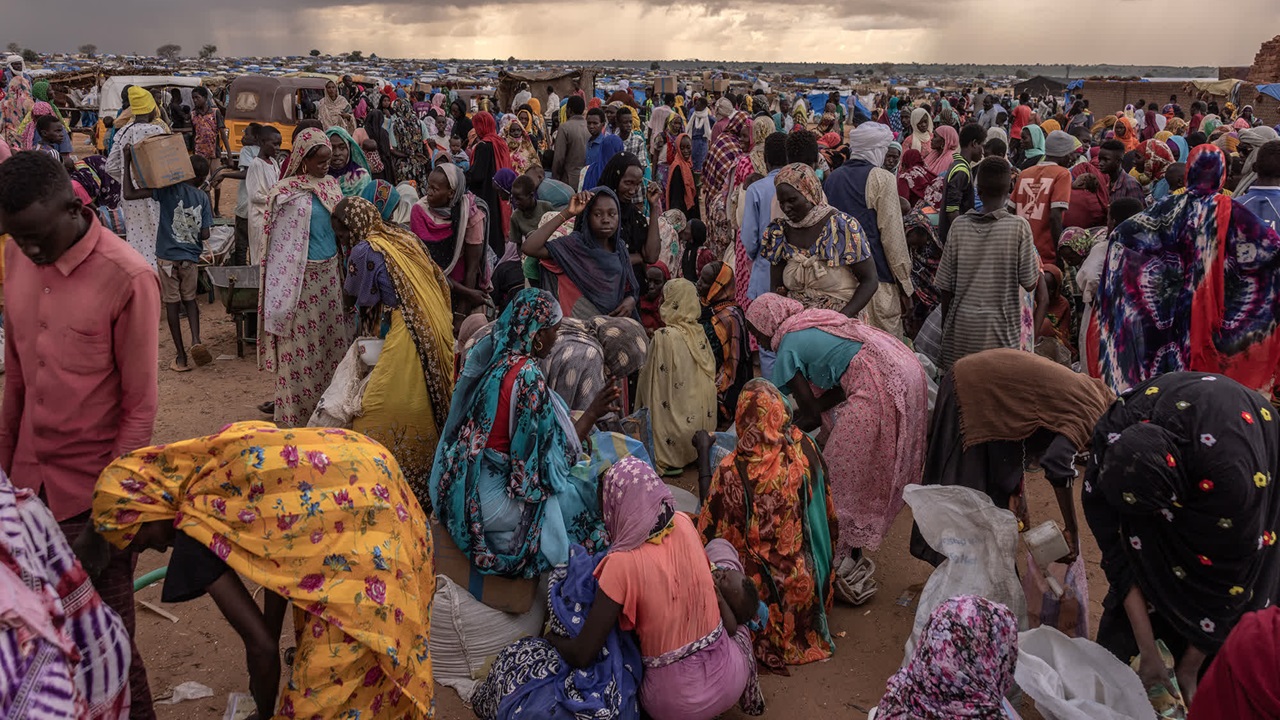
For 18 months, El-Fasher endured a brutal siege. Cut off from food, medicine, and aid, its people were trapped in a slow-motion collapse. As RSF forces tightened their grip, reports surfaced of hospitals bombed, refugee camps burned, and entire families executed.
On October 26, 2025, the siege ended—not with peace, but with the city’s fall. Satellite imagery revealed mass graves, “clusters of bodies” in residential areas, and aerial footage stained with blood across neighborhoods once bustling with life. The Saudi Hospital, El-Fasher’s last functioning medical facility, was bombed into ruin. Survivors describe scenes of door-to-door killings and indiscriminate shelling.
What remains of the city is a ghostly wasteland, its infrastructure destroyed and its population scattered.
Evidence of Genocide: The World Can See—But Will It Act?
The United Nations, human rights organizations, and independent investigators have confirmed patterns of systematic ethnic violence, sexual slavery, and mass executions. The UN Human Rights Office reported targeted assaults on displaced persons and non-Arab communities, while a Yale University satellite analysis verified evidence of mass death sites around El-Fasher.
The humanitarian toll is staggering:
· 11.7 million people displaced across Sudan.
· 4.2 million have fled to neighboring countries.
· One in five civilian deaths in October were children.
Despite global condemnation, aid convoys remain blocked, and safe zones are non-existent. The RSF’s consolidation of control over Darfur has turned an already desperate situation into one of near-total humanitarian collapse.
Regional Reactions and International Paralysis
Neighboring nations—Saudi Arabia, Egypt, Qatar, Jordan, and Turkey—have denounced the RSF’s brutality and called for a ceasefire. Yet their influence is limited. The United Nations Security Council remains divided, hampered by geopolitical rivalries and a lack of unified will.
Without strong international intervention, El-Fasher’s fall cements the RSF’s dominance over all of Darfur, effectively erasing government control in western Sudan. The violence has also intensified ethnic polarization, targeting non-Arab tribes in a chilling echo of the 2003 Darfur genocide.
Why El-Fasher Matters
El-Fasher is more than a city—it’s the final moral frontier in the Darfur conflict. Its fall signals the complete collapse of state authority in the region and exposes the impotence of international diplomacy. The humanitarian crisis now threatens to destabilize Chad, South Sudan, and the Central African Republic, as millions flee starvation and violence.
The city’s destruction represents not just a local tragedy, but a failure of global governance, where outrage has replaced action.
What Must Happen Next
The UN and global actors face a narrowing window to prevent further catastrophe. Immediate steps must include:
· A verifiable ceasefire and unrestricted humanitarian access to Darfur.
· Independent war crimes investigations under international jurisdiction.
· Sanctions and asset freezes on RSF leadership and their foreign enablers.
· A revived peace process that prioritizes civilian protection, not power-sharing among warlords.
The World’s Conscience on Trial
El-Fasher’s devastation is not just another tragedy—it is a mirror to the world’s indifference. The echoes of Darfur’s past now reverberate in real time, as the same perpetrators unleash the same horrors, unimpeded.
If the international community fails to act decisively, Sudan could soon become a graveyard for both its people and the very idea of “Never Again.”
What unfolds in Darfur today will define not only the fate of Sudan—but the credibility of global humanity itself.
(With agency inputs)