India’s Pursuit of Impenetrable Security
India’s security challenges have consistently evolved with changing geopolitics and technological advancements. Protecting its skies, critical infrastructure, and cyber domain has never been more crucial. Over the years, India has fortified its defences through the Integrated Air Command and Control System (IACCS), advanced missile interceptors, and global collaborations. Yet, the rising complexity of aerial, cyber, and hybrid warfare demands a leap beyond existing frameworks.
It is against this backdrop that Mission Sudarshan Chakra has been unveiled—a futuristic initiative to create a multi-layered, indigenously developed air defence and cyber shield, designed to protect the nation’s most vital assets over the next decade.
Mission Sudarshan Chakra: The Vision
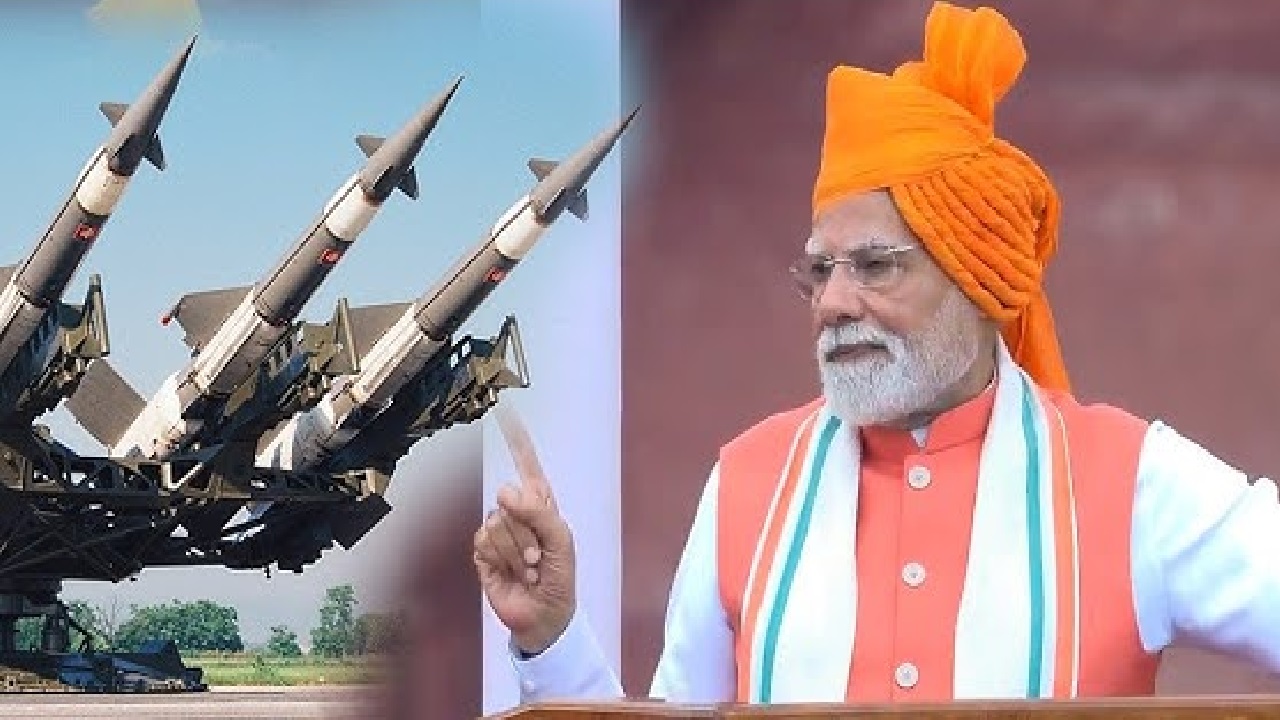
During his Independence Day address, Prime Minister Narendra Modi emphasised that “every citizen must feel protected” as he announced the Sudarshan Chakra programme. The mission, entirely based on indigenous research and technology, is envisioned as a comprehensive defence network capable of countering threats from land, sea, air, space, and cyberspace.
Inspired by mythology yet firmly rooted in strategic foresight, the initiative borrows its name from Lord Krishna’s celestial weapon, symbolising protection against all dangers. By 2035, the government plans to expand and modernise this shield into a robust system, blending India’s cultural ethos with cutting-edge defence innovation.
Learning from Global Shields
Across the world, missile defence systems form the backbone of national security. Israel’s Iron Dome, operational since 2011, has repeatedly intercepted rocket attacks with a success rate close to 90 percent. Similarly, the United States has proposed a “Golden Dome”, a $175 billion defence architecture combining land, sea, and space assets, reminiscent of the Cold War-era “Star Wars” project.
Russia relies on the A-135 system protecting Moscow and the powerful S-400 platforms, three of which India already operates. China fields the HQ-9 system, capable of intercepting a wide range of aerial threats, while nations like Japan and Taiwan have deployed their own indigenous missile shields.
Against this backdrop, India’s Sudarshan Chakra is designed not just to replicate existing models but to outpace them by integrating conventional defence with futuristic elements like AI-driven decision systems, laser-based interceptors, and cyber resilience.
Strengthening India’s Defence Web
India already operates the IACCS, which coordinates the Army, Navy, and Air Force for real-time detection and neutralisation of hostile threats. This system successfully countered Pakistan’s attacks during Operation Sindoor, demonstrating the importance of unified air defence.
The Sudarshan Chakra is expected to be an extension of this network, calibrated to integrate seamlessly with the Akashteer system, S-400 squadrons, and indigenous missile projects. With surveillance aircraft, radar grids, and fighter jets linked to command-and-control hubs, the system will deliver an umbrella of overlapping protection.
What sets Sudarshan Chakra apart is its ambition to transcend passive defence. Analysts believe it will incorporate offensive counterstrike capabilities, enabling India not just to intercept but also to retaliate with precision when required.
Future-Ready Features of the Sudarshan Chakra
The mission envisions an advanced network capable of handling threats across domains:
· Layered Missile Defence: Protection against short-, medium-, and long-range ballistic and cruise missiles.
· AI-Powered Sensor Grid: Integration of ground, aerial, and space-based sensors to track stealth and hypersonic threats.
· Directed-Energy Weapons: Use of lasers and high-powered systems for low-cost interception of drones, artillery, and loitering munitions.
· Cyber Security Architecture: Shields against hacking, phishing, and cyber sabotage targeting India’s critical infrastructure.
· Multi-Domain Launch Capability: Assets deployable from land, sea, and air with reusability options for sustained operations.
Entirely indigenised under the Make in India and Aatmanirbhar Bharat initiatives, the programme will involve defence research agencies, private industry, and the armed forces, ensuring sovereignty over critical technologies.
Protecting Critical Assets in a Complex Battlefield
Modern conflicts increasingly target civilian infrastructure—power grids, hospitals, communication networks, and food supply chains. The Sudarshan Chakra is envisioned as a holistic shield safeguarding both military and civilian domains. With AI-enabled command centres, interceptor missiles, and cyber firewalls, it will create a deterrent against adversaries seeking to destabilise India through hybrid warfare.
In many ways, the mission mirrors the combined philosophy of Iron Dome and the Golden Dome, but uniquely designed for India’s geography, threat perception, and technological ecosystem.
A Constructive Conclusion: Shielding the Future
The announcement of Mission Sudarshan Chakra comes at a decisive moment. Operation Sindoor showcased India’s capability to defend itself, but it also highlighted the escalating sophistication of adversarial threats. By committing to an indigenous, future-ready defence architecture, India signals both resilience and self-reliance.
Beyond the military dimension, Sudarshan Chakra represents a strategic assertion of sovereignty—protecting not only borders but also the digital and infrastructural lifelines of the nation. It embodies the fusion of cultural symbolism and technological ambition, positioning India to counter challenges of the coming decade with confidence.
If executed as envisioned, Sudarshan Chakra will not just be a missile shield—it will be India’s comprehensive armour, ensuring that citizens indeed feel the safety and assurance that Prime Minister Modi promised.
(With agency inputs)