The Spark of Controversy
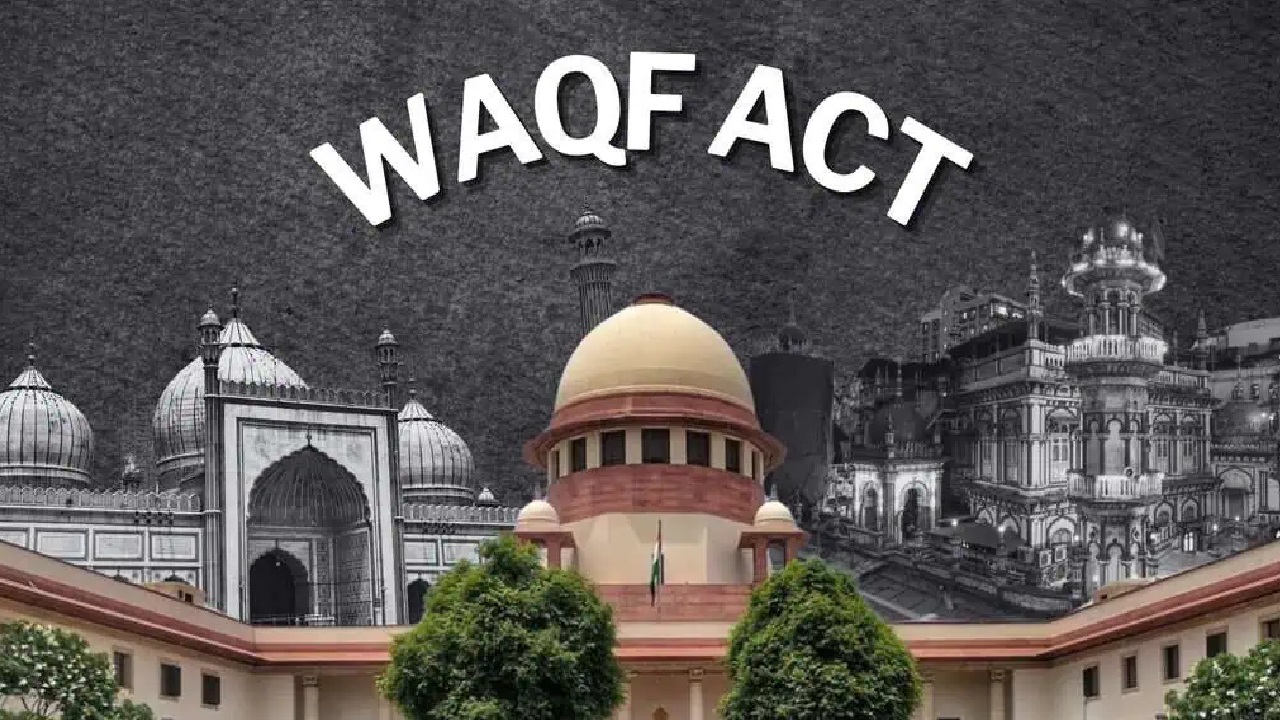
The Waqf (Amendment) Act, passed earlier this year and approved by the President in April, quickly became one of the most contested legal developments in recent memory. While the government claimed the law was crafted to curb encroachments and resolve long-standing disputes over Waqf land, Muslim groups raised alarms, branding the changes unconstitutional and alleging that they masked an attempt to seize control of Waqf assets. Protests erupted nationwide, drawing the judiciary into the heart of the debate. The Supreme Court has now intervened, issuing an interim order that halts several controversial provisions of the Act, pending a full constitutional review.
Court’s Intervention: Protecting Rights and Processes
A bench led by Chief Justice BR Gavai and Justice AG Masih clarified that while the Court generally leans toward presuming the constitutionality of laws, certain clauses of this Act warranted urgent scrutiny. The Court stopped short of suspending the entire statute but emphasized that specific sections risked enabling “arbitrary” exercises of authority. Until the challenges are fully resolved, the stayed provisions will remain frozen.
Collector’s Authority Curtailed
One of the most contentious elements of the Act was the empowerment of District Collectors to adjudicate ownership disputes over Waqf properties. Critics argued this gave excessive control to the executive branch, undermining judicial independence. The Supreme Court echoed this concern, underscoring that allowing an executive officer to decide citizens’ rights violates the principle of separation of powers. It ruled that Collectors cannot determine property ownership, nor can they authorize third-party claims until the Waqf Tribunal delivers its decisions.
Five-Year Practice Rule Put on Hold
The amended law introduced a clause that required individuals to have practiced Islam for at least five years before they could create a Waqf. The Court found this rule problematic, noting the absence of mechanisms to verify compliance. Until states frame clear rules, this section will remain inoperative. The bench reasoned that leaving such a requirement unchecked could invite misuse and arbitrary exclusions.
Property Verification Provisions Suspended
The Act also introduced new steps for recognizing Waqf land. It stated that a property would not be treated as Waqf until a government officer checked for encroachment and updated official revenue records if the land was found to belong to the state. The Court stayed these clauses, reasoning that they could distort ownership disputes and place undue control in the hands of officials.
Waqf Boards and Council: Composition Guidelines
Another area of concern was the inclusion of non-Muslims in Waqf institutions. The Supreme Court ruled that, for now, Waqf boards cannot have more than three non-Muslim members, and the Central Waqf Council no more than four. It also directed that, wherever possible, ex-officio positions in these bodies should be filled by Muslim officers. This was seen as an effort to ensure that the management of Waqf properties remains faithful to its community-oriented purpose.
Protesters’ Concerns Acknowledged
The All India Muslim Personal Law Board, one of the petitioners challenging the law, expressed cautious satisfaction with the ruling. Its representatives highlighted that many of their objections had been upheld, including issues relating to Waqf by user, monuments protection, and the removal of the five-year rule. According to them, the interim order validated the core of their concerns that unchecked powers could erode the autonomy of Waqf institutions.
Government’s Stand Defended
Despite widespread criticism, the Centre has consistently defended the amendments as necessary reforms. Officials argue that numerous Waqf properties are entangled in disputes or plagued by encroachments, and the law was designed to provide clarity and enforcement tools. The Supreme Court did not dismiss this justification outright but insisted that executive authority must not replace judicial adjudication.
Court’s Cautious Approach
Chief Justice Gavai stressed that intervention in legislative matters is rare and must be justified by compelling reasons. By pausing specific provisions instead of annulling the statute, the Court struck a balance between respecting Parliament’s intent and safeguarding constitutional principles. The interim order came after three days of exhaustive arguments and reflects a careful calibration of judicial restraint and protective oversight.
A Constructive Pause
The Supreme Court’s order marks a crucial turning point in the unfolding debate around the Waqf (Amendment) Act. By suspending contentious clauses while allowing the broader law to remain in force, the judiciary has created space for further dialogue and careful consideration of constitutional boundaries. For the government, the ruling is a reminder that administrative efficiency must not come at the expense of fundamental rights. For protesting groups, it is partial validation of their anxieties about autonomy and misuse. Ultimately, the judgment underscores that any reform in sensitive religious and community matters must balance the twin imperatives of accountability and fairness. The final word on the Act’s fate is still pending, but the Court’s intervention has provided a much-needed breather in a highly charged atmosphere.
(With agency inputs)