A Visit Laden with Symbolism and Sensitivity
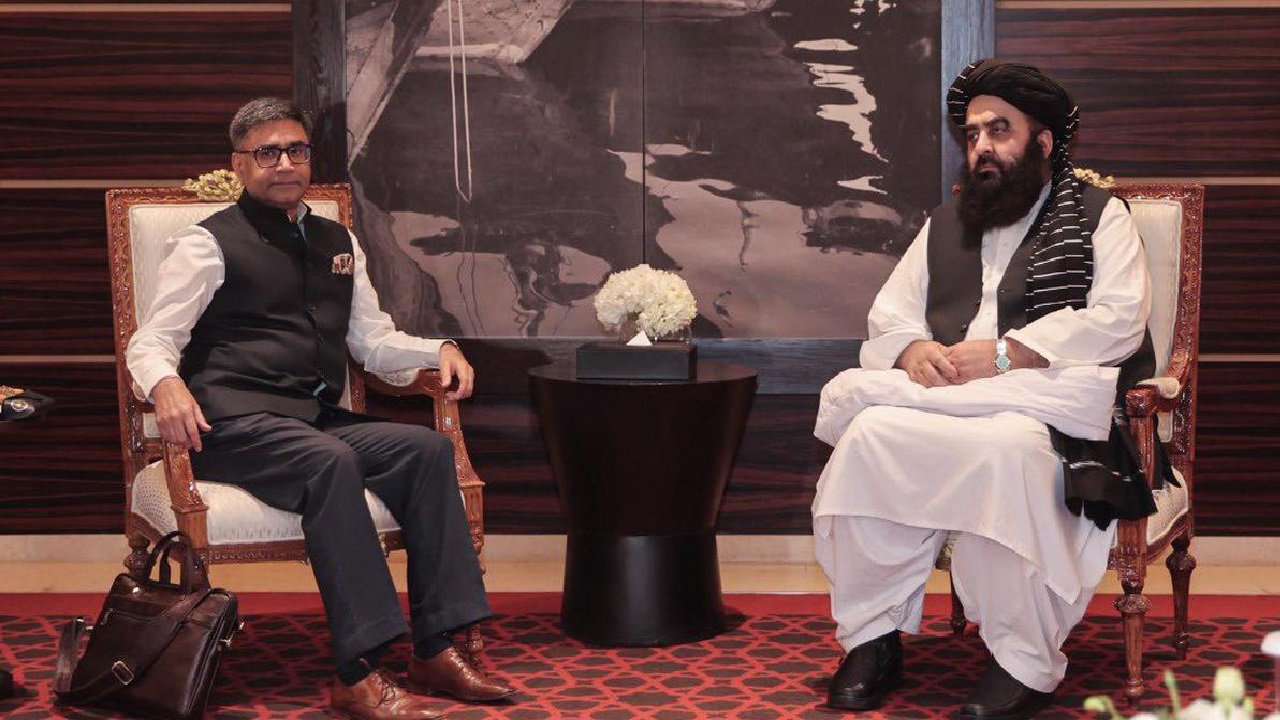
In a move laden with diplomatic intrigue and geopolitical significance, Amir Khan Muttaqi, Afghanistan’s acting Foreign Minister under the Taliban regime, arrived in New Delhi this week for a six-day visit. This marks the first high-level ministerial visit from Kabul since the Taliban seized control of Afghanistan in August 2021. The trip, facilitated by a UN Security Council travel waiver, has drawn international attention as India navigates a delicate balance between pragmatism and principle in dealing with a government it does not officially recognize.
Muttaqi’s visit—his first since the Taliban’s return—comes at a critical juncture. The meeting takes place alongside the visit of UK Prime Minister Keir Starmer in Mumbai, reflecting India’s growing role as a diplomatic hub for discussions on global stability, trade, and regional security.
Behind the Visit: Purpose and Planned Engagements
Invited by External Affairs Minister S. Jaishankar, Muttaqi is expected to engage in talks with both Jaishankar and National Security Advisor Ajit Doval. His agenda includes discussions on bilateral relations, regional connectivity, and humanitarian aid, as well as meetings with members of the Afghan diaspora and business community in India.
According to the Ministry of External Affairs (MEA), the visit aims to sustain India’s “engagement with the people of Afghanistan,” even though New Delhi continues to withhold formal recognition of the Taliban administration. Muttaqi is also likely to visit Darul Uloom Deoband—the Islamic seminary often associated with the ideological roots of the Taliban—and the Taj Mahal during his stay.
The visit, originally scheduled for September but postponed due to travel restrictions, was made possible after the UN Taliban Sanctions Committee—currently chaired by Pakistan—granted Muttaqi a temporary travel exemption to facilitate his trip to India.
A Diplomatic Dilemma: The Flag Conundrum
Even as the South Block prepares to host the Afghan minister, Indian officials face a protocol puzzle—the question of which flag to display during official engagements. International diplomatic norms require that the visiting nation’s flag be placed alongside the host country’s flag during meetings and photographs.
However, since India does not recognize the Taliban-led government, it also does not acknowledge the white Taliban flag emblazoned with the Islamic declaration of faith. The Afghan Embassy in New Delhi continues to fly the tricolor flag of the former Islamic Republic of Afghanistan, representing the pre-Taliban administration.
In previous meetings—such as Foreign Secretary Vikram Misri’s encounter with Muttaqi in Dubai earlier this year—India sidestepped the issue by omitting flags altogether. But with this meeting taking place in the Indian capital, the challenge has become more visible and politically sensitive, highlighting the fine line between diplomatic engagement and recognition.
India’s Calculated Pragmatism
While India officially maintains that it does not recognize the Taliban government, its recent actions indicate a gradual policy recalibration driven by regional realities. In 2022, New Delhi reopened a technical mission in Kabul to coordinate humanitarian assistance, medical aid, and educational cooperation.
The Modi government’s approach appears to be guided by pragmatism rather than endorsement. Analysts point out that India cannot afford to isolate itself from Kabul given Afghanistan’s strategic proximity to Pakistan and China. As security expert C. Uday Bhaskar observed, “India is engaging the Taliban not out of trust, but necessity—ensuring Afghan soil is not used against Indian interests remains the core priority.”
Muttaqi’s visit also follows his earlier phone conversation with Jaishankar in May, after which the Taliban government condemned the Pahalgam terror attack in Jammu and Kashmir—a gesture seen as part of Kabul’s attempt to project moderation.
Critics Raise Red Flags
Not everyone views India’s engagement with optimism. Critics argue that hosting a taliban minister, even under UN exemption, risks legitimizing a regime accused of human rights violations, particularly against women and minorities. Opposition parties and civil society voices have urged the government to ensure that dialogue does not translate into implicit acceptance.
Foreign policy analyst Manjari Singh noted, “Engagement must not come at the cost of principle. India must ensure that any outreach focuses on humanitarian and security interests without validating the Taliban’s oppressive governance.”
A Step Toward Stability or Strategic Gamble?
India’s outreach to the Taliban, though cautious, reflects a strategic necessity in the evolving geopolitical landscape. With the US withdrawn, China and Pakistan increasing their influence, and Russia seeking greater regional integration, New Delhi’s engagement aims to safeguard its long-term security and economic interests in Afghanistan.
Muttaqi’s visit may not signal recognition, but it does mark a new phase of dialogue—one where India seeks to shape outcomes from within, rather than from the sidelines.
Walking the Tightrope of Diplomacy
Amir Muttaqi’s India visit underscores the complexities of modern diplomacy—where engagement, not endorsement, often drives policy. For New Delhi, the challenge lies in maintaining its moral stance on democracy and human rights while protecting its geopolitical stakes in Afghanistan.
As India continues this delicate balancing act, the visit may prove to be a measured step toward regional stability—provided the dialogue remains anchored in security, humanitarianism, and shared responsibility. In the theatre of South Asian diplomacy, New Delhi’s tightrope walk continues—careful, cautious, and crucial.
(With agency inputs)