


A Press Meet That Stirred a Storm
A diplomatic visit meant to foster dialogue between India and Afghanistan instead ignited a firestorm of controversy. On Friday, Afghan Foreign Minister Amir Khan Muttaqi held a press conference at the Afghan Embassy in New Delhi, following talks with India’s External Affairs Minister S. Jaishankar. While the discussions reportedly revolved around trade, humanitarian assistance, and regional security, the spotlight quickly shifted elsewhere — to the glaring absence of women journalists at the event.
Photographs revealed an all-male media gathering, sparking anger across India and abroad. The incident served as a stark reminder of the Taliban’s enduring gender bias, even as it unfolded on the democratic soil of India.
Taliban’s Decision Behind the Media Exclusion
According to sources, the Taliban delegation unilaterally decided the list of invitees, disregarding India’s informal suggestion to include female reporters. The exclusion instantly drew condemnation from journalists, rights advocates, and global observers, who saw it as a blatant extension of the Taliban’s repressive policies beyond Afghan borders.
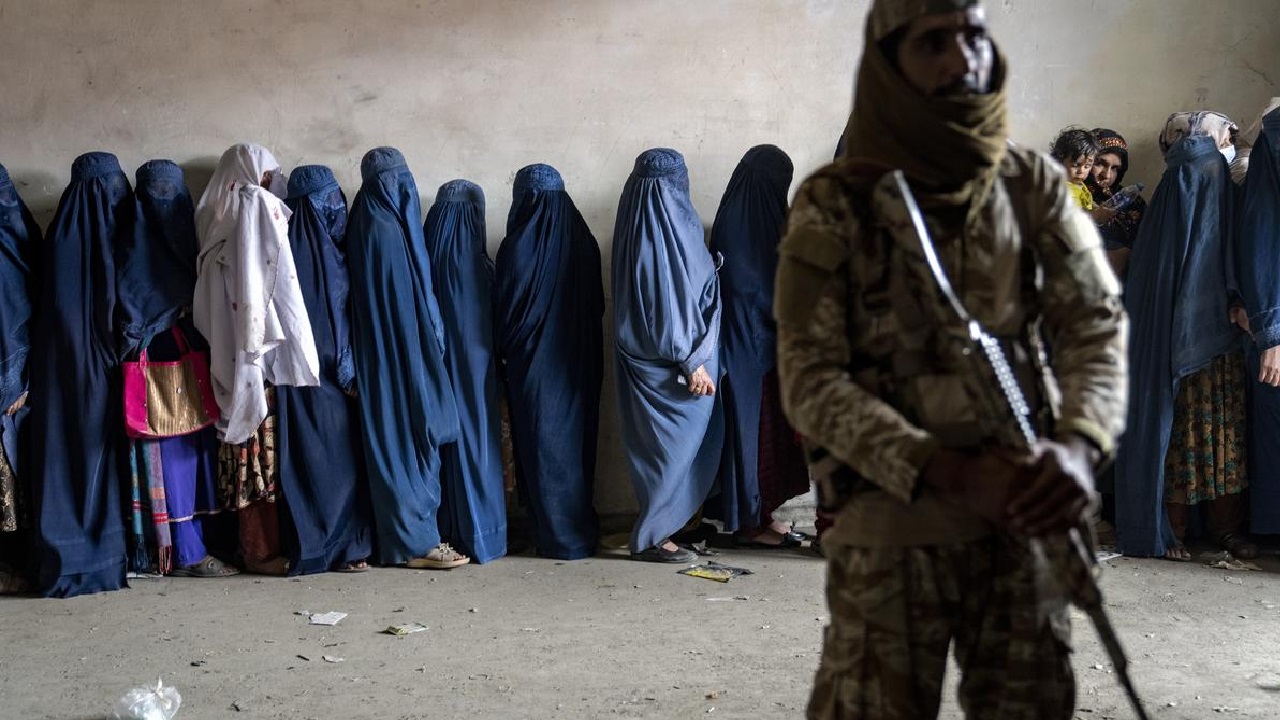
This decision mirrored the group’s broader governance model in Afghanistan, where women’s rights have been systematically dismantled since the Taliban’s 2021 return to power. The outrage was amplified by the irony of such discrimination occurring in New Delhi, a country that prides itself on gender equality and press freedom.
Muttaqi Dodges Women’s Rights Questions
When asked about the condition of Afghan women, Muttaqi sidestepped the question, offering a diplomatic deflection: “Every country has its own customs, laws, and principles, and there should be respect for them.”
He instead focused on claiming that Afghanistan’s security situation had improved under Taliban rule, citing fewer daily casualties than before 2021. His avoidance only reinforced global criticism, as observers noted the lack of accountability or acknowledgment regarding the plight of Afghan women — barred from education, work, and public life under his government.
India Distances Itself Amid Criticism
As the backlash intensified, India’s Ministry of External Affairs (MEA) swiftly issued a clarification, asserting that it had “no role or involvement” in the press meet’s organization. Officials emphasized that the event was held within the Afghan Embassy, which falls under the purview of Afghan authorities.
Despite this clarification, critics questioned the symbolism of extending diplomatic courtesies to a regime known for suppressing women’s rights while allowing such exclusionary practices on Indian soil. Senior journalist Suhasini Haidar labeled the incident “abhorrent and illegal discrimination brought to India under full official protocol,” echoing widespread frustration within media circles.
Global Condemnation of Taliban’s Gender Policies
Since seizing power in August 2021, the Taliban have imposed severe restrictions on women, including bans on higher education, most forms of employment, and even access to public spaces without male guardians. In July, the United Nations warned that Afghanistan’s women faced one of the most extensive and systematic oppressions globally.
The Delhi episode thus became more than just a diplomatic misstep — it symbolized the continuing erosion of women’s freedoms under Taliban rule and the international community’s struggle to engage with the regime without legitimizing its misogyny.
A Lesson in Principles and Diplomacy
The men-only press conference in New Delhi has become a defining reminder of the world’s uneasy engagement with the Taliban. While India may not have organized the event, its occurrence within its capital underscores the delicate balance between realpolitik and moral responsibility.
The incident calls for stronger global resolve — not just statements — in demanding gender equality as a non-negotiable standard in international diplomacy. Beyond borders and political pragmatism, the exclusion of women from platforms of power remains a universal affront to human dignity, one the world can no longer afford to overlook.
(With agency inputs)