Seeking Calm Amid Internal Turbulence
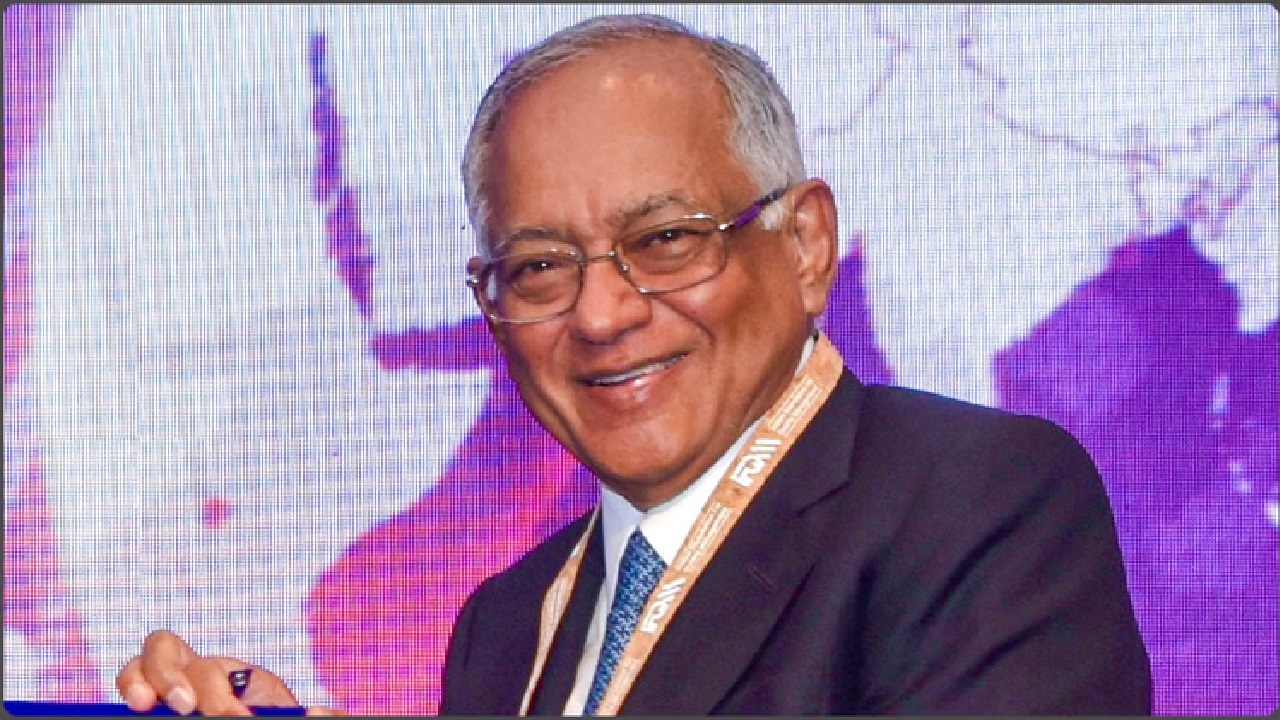
In a week marked by whispers of discord and leadership uncertainty, the Tata Trusts have taken a decisive step to restore balance. Just days after insiders revealed that Tata Group representatives had urged government intervention to mediate brewing tensions within the trusts, the organization announced the reappointment of Venu Srinivasan as a trustee for life.
The decision, finalized unanimously before Srinivasan’s term ended on October 23, 2025, comes at a pivotal moment for the $300 billion conglomerate’s philanthropic and governance nerve center. The Tata Trusts, which collectively control nearly 66% of Tata Sons, have been grappling with internal rifts between factions backing Noel Tata and those aligned with Mehli Mistry, a figure closely linked to the Shapoorji Pallonji Group.
In this tense environment, Srinivasan’s lifetime appointment is being seen as a strategic move toward unity, signaling a return to consensus-driven decision-making in the post–Ratan Tata era.
A Calculated Move: Consolidating Leadership and Confidence
The board’s decision to extend Srinivasan’s tenure indefinitely was not merely administrative—it was a carefully timed assertion of stability. As Chairman Emeritus of the TVS Group and Vice-Chairman of the Sir Dorabji Tata Trust, Srinivasan commands both corporate respect and institutional trust.
By reappointing him before the review of Mehli Mistry’s tenure on October 28, the Trusts have subtly prioritized experience and neutrality over factional interests. This sequence of actions sends a clear signal: the Tata Trusts are keen to avoid governance paralysis and reinforce their long-standing ethos of collective leadership.
His appointment, insiders say, also seeks to reassure both stakeholders and regulators that despite internal frictions, the Trusts remain unified, functional, and forward-looking.
The Lifetime Model: Institutionalizing Continuity
Srinivasan’s reappointment marks the first major implementation of a governance framework adopted in October 2024, which eliminated tenure caps for trustees. Under this policy, trustees now serve for life, subject to performance and health reviews at the age of 75. The rule also stipulates that dissenting trustees may be deemed in breach of the Trusts’ charter — a clause designed to minimize internal disruptions and promote stability in succession planning.
This structural shift, though significant, underscores the Trusts’ intent to preserve strategic continuity in key areas such as Tata Sons’ dividend policy, investment strategy, and philanthropic initiatives. It also serves to bridge the leadership vacuum created after Ratan Tata’s passing, ensuring that Noel Tata’s leadership transition remains grounded in institutional memory rather than political maneuvering.
Implications: Balancing Legacy and Reform
The decision has wide-reaching implications. As Tata Sons navigates debates over whether to remain privately held or pursue a public listing, Srinivasan’s lifetime trusteeship provides an anchor of stability amid competing visions. His vast corporate experience, combined with a reputation for discretion and discipline, offers a steadying influence as the group faces an increasingly complex business environment.
At the same time, governance experts caution that lifetime appointments, while effective in maintaining continuity, must be balanced with transparency and accountability. Without clear oversight mechanisms, they warn, such concentration of power could hinder adaptability — a potential challenge for a group as diversified and global as the Tatas.
Toward a Unified Legacy: The Road Ahead
The reappointment of Venu Srinivasan may well mark the beginning of a new governance era for the Tata Trusts — one rooted in stability but tested by the need for evolution. For an organization that has long stood as the moral compass of Indian industry, this decision reflects both prudence and foresight.
If managed judiciously, Srinivasan’s lifetime role could serve as a bridge between tradition and transformation, helping reconcile internal factions and strengthen public confidence. But the Trusts must now ensure that this continuity does not translate into rigidity.
In essence, Tata Trusts’ latest move is more than an administrative reshuffle — it is a statement of intent. By anchoring leadership in experience and unity, the Trusts reaffirm their founding philosophy: that enduring institutions are built not on transient power struggles, but on trust, integrity, and collective purpose.
(With agency inputs)