A City Shaken, A Nation on Alert
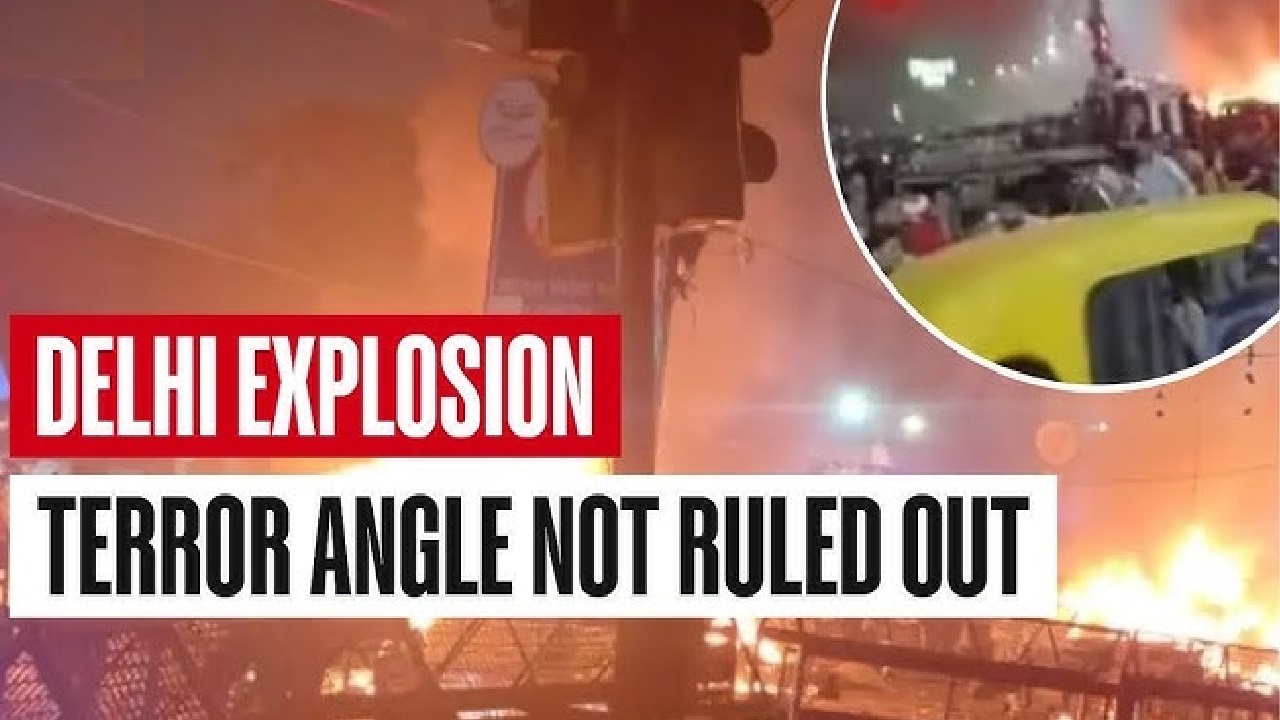
Delhi was thrown into chaos on Monday evening after a powerful explosion ripped through the area near the historic Red Fort Metro Station. The high-intensity car blast claimed at least eight lives and left twenty others injured, marking one of the capital’s most serious terror incidents in recent years. The Delhi Police have now registered a case under the Unlawful Activities (Prevention) Act (UAPA)—a clear indication that investigators believe the explosion was not an accident, but a coordinated act of terror.
As emergency sirens wailed through the old quarters of the city, the blast scene quickly transformed into a war-zone: burnt vehicles, shattered glass, and the unmistakable fear that Delhi’s security had been breached once again.
Incident Recap: The Moment of Impact
The explosion occurred around 6:52 p.m. when a white Hyundai i20 suddenly detonated at a busy traffic signal outside Lal Qila Metro Station, one of Delhi’s most crowded intersections. The blast’s impact was so severe that nearby vehicles caught fire, window panes shattered across a wide radius, and panic swept through the evening rush hour.
Firefighters and rescue teams responded swiftly—seven fire tenders were dispatched, and emergency medical crews ferried the injured to LNJP Hospital and AIIMS Trauma Center. By nightfall, investigators cordoned off the area, sifting through the wreckage for clues to what officials were already calling a “deliberate and sophisticated attack.”
UAPA Case and the Anti-Terror Focus
Within hours of the blast, forensic findings and intelligence reports pointed toward a pre-planned operation. Acting on this evidence, the Delhi Police invoked Sections 16 and 18 of the UAPA, India’s most stringent anti-terror legislation, along with provisions of the Explosives Act.
The Special Cell, in coordination with the National Investigation Agency (NIA) and other anti-terror units, has taken charge of the probe. The timing of the explosion—just as the evening crowds were swelling—suggests that the perpetrators intended maximum destruction and visibility.
Senior police officials have described the attack as “technically executed,” fueling suspicions that trained operatives, possibly linked to a larger terror network, were involved.
The Hunt for Suspects: A Trail of Clues
At least four suspects are currently in custody as part of a citywide crackdown. Investigators are reviewing hours of CCTV footage, cross-checking vehicle registration data, and interrogating eyewitnesses. The owner of the car used in the blast has been traced, and the probe now centers on how the vehicle changed hands in recent months.
Authorities are particularly focused on potential links between the Red Fort blast and recent seizures in Faridabad, where police uncovered 350 kilograms of ammonium nitrate and a cache of arms at a house tied to a Kashmir-based doctor. This connection has fueled theories of a coordinated terror operation that may involve unconventional operatives—educated professionals recruited for covert roles.
Security Tightened Nationwide
Following the explosion, Delhi has been placed under maximum security alert. Barricades and vehicle checks have been reinforced across major routes, markets, metro stations, and airports. Neighboring states—including Uttar Pradesh, Bihar, and Maharashtra—have also ramped up surveillance to deter any potential follow-up attacks.
Both Prime Minister Narendra Modi and Home Minister Amit Shah have condemned the act, expressing condolences to the victims’ families and vowing swift justice. International leaders, including the President of Maldives, have extended solidarity, underscoring the attack’s regional and diplomatic resonance.
Forensic Investigation and Analysis
Teams from the Forensic Science Laboratory (FSL) are now analyzing chemical residues and metallic fragments from the blast site. Preliminary findings suggest ammonium nitrate as a likely component—consistent with materials seized in nearby regions.
Experts believe the choice of target and method indicates a strategic escalation by terror outfits seeking to test India’s urban security grid. The Red Fort, a UNESCO World Heritage site and symbol of India’s sovereignty, carries deep historical and political significance—making it a potent stage for such a statement attack.
Security analysts warn that the incident highlights a growing pattern: the use of low-cost, easily assembled explosives and localized operatives who can evade detection until the final moment.
Vigilance in the Face of Uncertainty
The decision to register the case under UAPA underscores the government’s recognition of the blast as an act of terror, not merely a criminal offense. As the investigation widens, Delhi’s residents are left grappling with renewed fears and the uneasy memory of past attacks.
This tragedy serves as a sobering reminder that terrorism’s tactics are evolving, exploiting everyday vulnerabilities in even the most secure zones. Authorities are now racing to dismantle the network behind the Red Fort blast and restore a sense of safety to a city that stands at the heart of India’s democratic spirit.
(With agency inputs)