


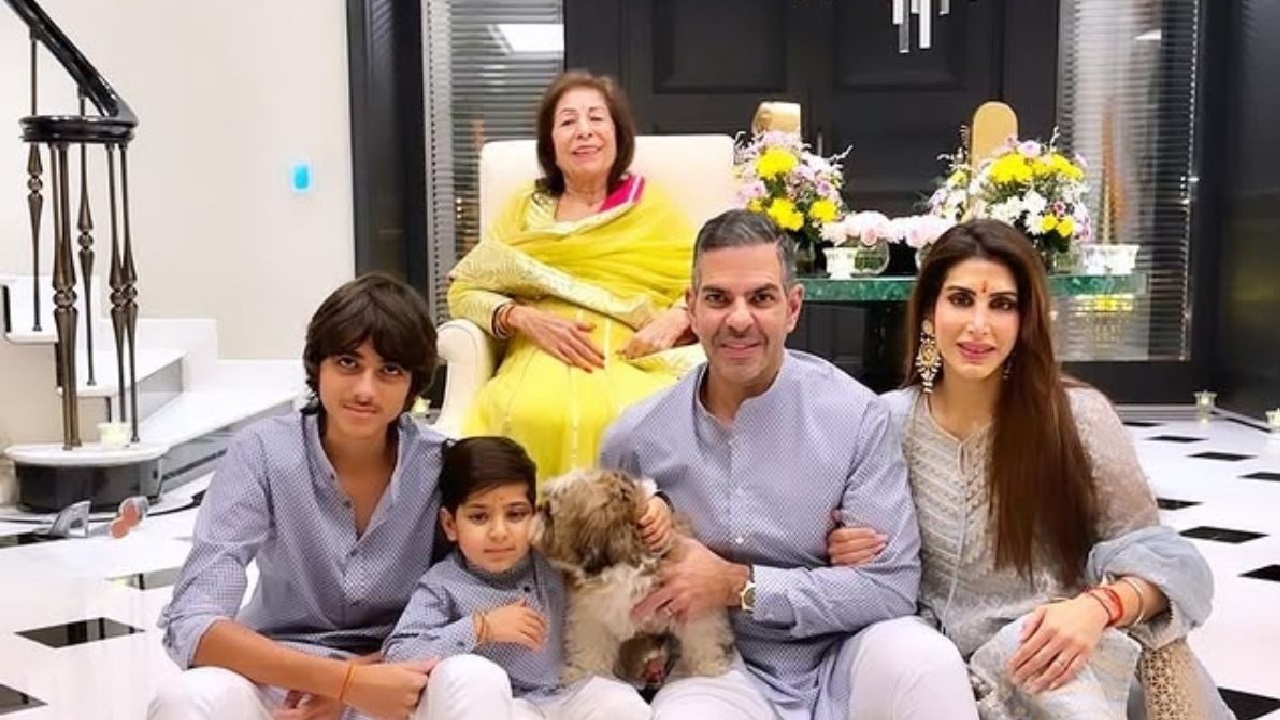
A Sudden End to a Tycoon’s Life
When industrialist Sunjay Kapur—chairman of Sona Comstar and scion of the Sona Group—collapsed and died in June this year after reportedly swallowing a bee during a polo match, the shockwaves extended far beyond his family circle. At just 57, Kapur’s unexpected death left behind not only a vast automotive-to-real-estate business portfolio but also a ₹30,000-crore fortune whose fate now hangs in legal uncertainty.
The most pressing question: who gets it all? That answer is tangled in inheritance law, contested claims, and even allegations of foul play.
An Empire Without a Will
Current indications suggest Kapur may have died intestate—without a valid, legally registered will. In India, when a Hindu man dies intestate, the Hindu Succession Act, 1956 dictates the division of assets. The law is explicit: the estate is split equally among all Class I heirs—including the widow, mother, and all living biological or legally adopted children.
In Kapur’s case, that would mean:
· Priya Sachdev Kapur, his widow
· His biological children from his marriage to actor Karisma Kapoor
· Any legally adopted stepchildren
· His mother, Rani Kapur
Sisters, former spouses, and other relatives fall into lower categories of heirs, meaning they would only inherit if no Class I heirs survive.
A Mother’s Fight for Her Share
Among those asserting claims, Rani Kapur—the late tycoon’s mother—has been the most vocal and combative. Her approach has been two-pronged: questioning the circumstances of her son’s death and staking her claim to a significant portion of his wealth.
In a July 24 letter to the Sona Comstar board, Rani alleged she was pressured into signing documents while still in mourning and suggested a corporate conspiracy might be at play. She demanded the postponement of the company’s annual general meeting and accused unnamed figures of seizing control of the business during the family’s grief.
Her claims didn’t stop at the boardroom. She filed a criminal complaint with UK authorities, alleging that Sunjay’s death may have been “facilitated or orchestrated” as part of an “international conspiracy” involving forged legal documents, suspicious financial transactions, and coordinated beneficiaries.
Corporate Pushback
Sona Comstar’s response was swift and aggressive. The company issued a cease-and-desist notice, demanding that Rani retract what it called “false, malicious, and damaging” allegations within three days or face civil and criminal legal action. It dismissed her assertions as “malafide, unwarranted, and unsubstantiated.”
The Mystery Will
Adding to the intrigue, Rani has reportedly produced a 2015 will that she claims names her as the primary beneficiary of Sunjay’s estate. If authentic, such a document could dramatically alter the distribution of assets, bypassing intestate succession rules.
However, as Supreme Court advocate Tushar Agarwal notes, proving a will in India is no easy task. The burden lies on the person presenting it to:
· Produce the original document
· Prove it was signed by the testator in sound mind
· Establish that it was properly attested by valid witnesses
Any shortcomings in these areas can lead to the will’s rejection—especially if other potential heirs contest its validity.
The Allegations of Foul Play
Rani’s suspicions extend beyond inheritance disputes. In her communication to UK authorities, she stated that new evidence suggests her son’s death might not have been accidental. She pointed to forged asset transfer records, dubious legal filings, and patterns of coordination between individuals who, she believes, stood to gain financially.
Her letter claimed:
“Since the date of his death, I have come into possession of records… which point to prima facie forged legal and financial documents, dubious asset transfers, and suspicious legal filings, along with indications of coercion or collusion.”
While no official investigative body has confirmed her allegations, her persistence has ensured that both the death and the estate remain under intense public and legal scrutiny.
The Tangled Web of Trusts
Kapur’s holdings are not limited to direct ownership. Much of his wealth is reportedly tied up in family trusts and corporate structures—some domestic, some offshore. Such arrangements could delay, complicate, or even shield certain assets from distribution under intestate succession.
Trusts often come with their own governance documents and beneficiary designations, which can override or bypass normal inheritance rules. Until their terms are examined, the full scope of who gets what remains uncertain.
Why This Fight Matters
Beyond the headline figures, the battle for Kapur’s fortune is a test case in how India’s succession laws intersect with modern corporate wealth. The stakes aren’t just personal; they’re strategic. Control over the Sona Group, with its global automotive reach, could shape the company’s direction for years to come.
Moreover, the legal outcome could influence how other wealthy Indian families structure their estates—particularly in cases involving multiple marriages, children from different relationships, and cross-border assets.
A Legacy in Limbo
For now, Sunjay Kapur’s empire remains in limbo—its control split between the certainty of statutory law, the uncertainty of an unproven will, and the turbulence of high-stakes family conflict.
The Hindu Succession Act offers a clear path when no will exists, but in this case, competing narratives—accidental death versus conspiracy, intestate inheritance versus a secret will—make the road anything but straightforward.
Until the courts sift through the claims, authenticate documents, and address allegations, the ₹30,000-crore question will remain unanswered. In the meantime, what should have been a carefully planned transfer of legacy has turned into a very public, very bitter family battle—one where the final chapter is yet to be written.
(With agency inputs)