A Comedian Caught in Crossfire
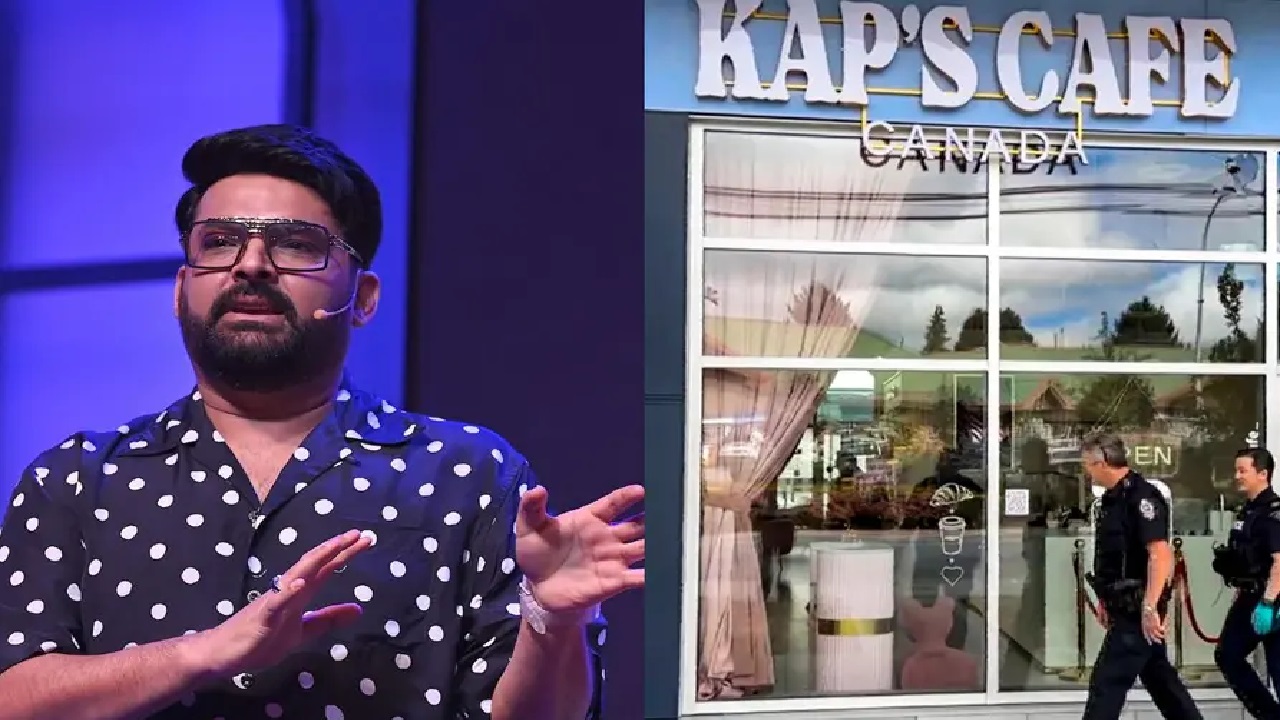
The sound of gunfire has once again shattered the calm around Kapil Sharma’s Cafe in Surrey, British Columbia, marking the third attack in just four months. The comedian’s venture, Kap’s Cafe, co-owned with his wife Ginni Chatrath, has become an unlikely target of organized crime overseas. The latest incident saw three bullets fired at the cafe earlier this week, though, fortunately, no injuries were reported.
This escalating violence has revived questions about the transnational reach of the Lawrence Bishnoi gang — a notorious India-based criminal network now deeply entrenched in Canada. What began as local extortion operations has evolved into an international web of intimidation, vengeance, and propaganda disguised as “moral justice.”
The Third Strike: A Disturbing Pattern
According to Canadian news outlet News Derby, police vehicles swarmed the cafe moments after the shots were fired. This attack follows two earlier shootings — one on July 10, when staff were still inside, and another on August 8, when over 25 rounds were fired at the property.
The latest incident has reinforced fears among local residents, who now see the cafe as a recurring flashpoint of gang rivalry. Despite heightened security, law enforcement authorities have yet to make any arrests or confirm the authenticity of a social media post through which gang members claimed responsibility.
Bishnoi Gang’s Claim of Responsibility
Soon after the shooting, Goldy Dhillon and Kulvir “Nepali” Sidhu, known affiliates of the Lawrence Bishnoi network, allegedly issued an online statement taking credit for the attacks. “We have no enmity with the general public,” the post read. “But those who cheat people or refuse to pay should be prepared.”
In the same message, the duo warned that “bullets can come from anywhere” — a chilling echo of the gang’s violent reputation. While the post’s authenticity remains under investigation, it aligns with the Bishnoi syndicate’s established modus operandi: public declarations of responsibility to amplify fear and reinforce their dominance across Indian and Canadian territories.
Why is Kapil Sharma’s Cafe a Target?
Investigators suspect the attacks are linked to Kapil Sharma’s association with Bollywood superstar Salman Khan, who inaugurated the cafe on a Netflix special. A leaked audio clip obtained by India Today reportedly features a Bishnoi gang member, Harry Boxer, admitting that the shootings were retribution for Kapil’s collaboration with Khan.
The Bishnoi gang has long viewed Salman Khan as a symbolic enemy, stemming from his 1998 blackbuck poaching case, which offended the Bishnoi community’s religious sentiments. In April 2024, the gang fired shots outside Khan’s Mumbai home, calling it an act of “divine justice.” Kapil’s public camaraderie with Khan may thus have drawn the syndicate’s wrath, turning his cafe into a symbolic target.
The Ideology Behind the Violence
From inside Ahmedabad’s Sabarmati Jail, Lawrence Bishnoi continues to project himself as a vigilante warrior — claiming to defend religion, wildlife, and social morality. This pseudo-ideological branding has given his gang an aura of righteous retribution, even as it engages in extortion, shootings, and assassinations.
The gang’s recent strikes in Surrey, including attacks on Indian-owned businesses and media houses, were similarly justified under moral pretences — accusing owners of “exploitation” or “disrespecting religion.” In reality, these operations have become tools for terrorizing diaspora entrepreneurs, enforcing illegal levies, and asserting dominance in North America’s underworld.
Kapil Sharma’s Silence and the Broader Fallout
So far, Kapil Sharma has not commented publicly on the latest attack. After the July shooting, the cafe issued a heartfelt statement, calling the violence “heart-breaking” but vowing resilience: “We are not giving up.”
Yet, repeated shootings have raised concerns over diaspora safety, law enforcement coordination, and the expanding global footprint of Indian gangs. The Bishnoi network’s ability to carry out attacks across continents highlights the transnational dimension of organized crime, operating through encrypted communications and digital propaganda.
Crime Draped in Cause
The triple attack on Kapil Sharma’s Cafe is more than an isolated act of gang rivalry — it is a manifestation of how the Bishnoi syndicate weaponizes ideology to justify violence. Beneath its self-styled moral rhetoric lies a sophisticated crime empire that thrives on fear, extortion, and publicity.
For Indian and Canadian authorities alike, the challenge now is not just to trace the shooters but to dismantle the myth that fuels such networks. Until that illusion of moral vigilantism is stripped away, figures like Lawrence Bishnoi will continue to blur the line between criminality and crusade — turning fame, faith, and fear into tools of control.
(With agency inputs)