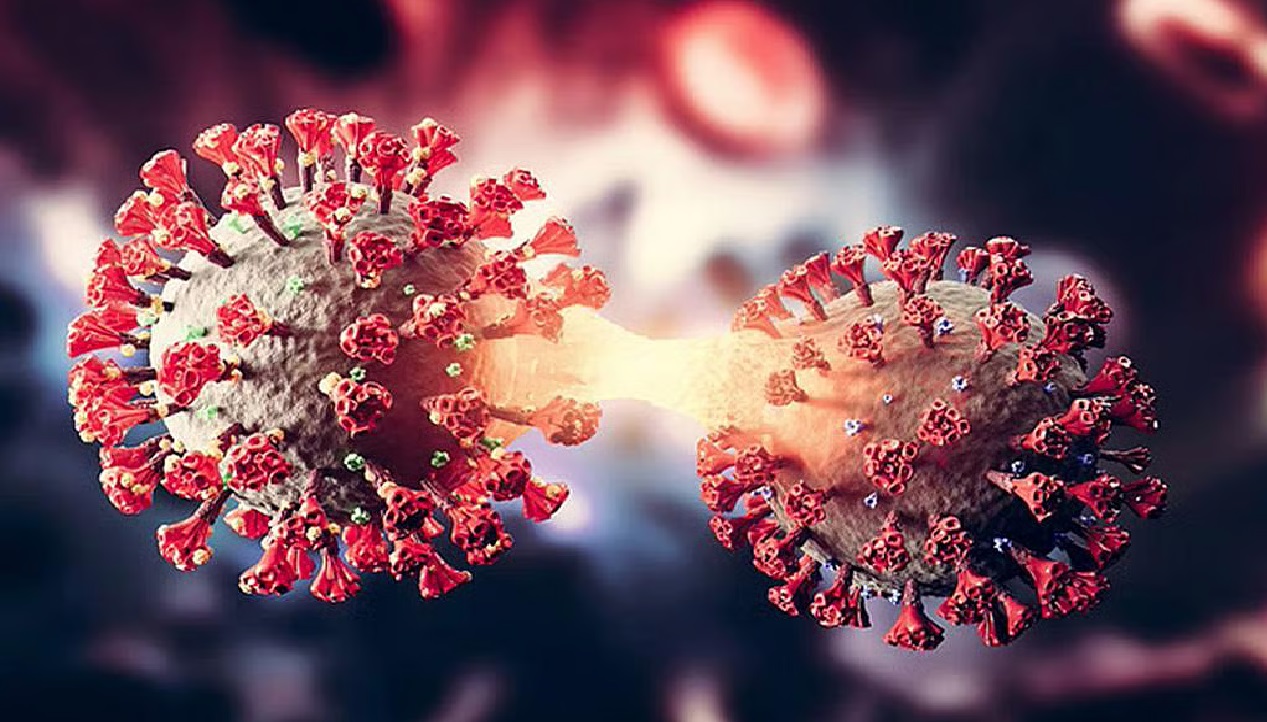
A New Omicron Subvariant Gains Ground in India and China
A fresh wave of Covid-19 concern is sweeping across Asia as NB.1.8.1, a subvariant of Omicron, takes hold in India and China. This new strain, identified as approximately 1.5 times more contagious than previous variants like LP.8.1, is raising red flags among virologists and public health officials due to its increased transmissibility and ability to evade immunity.
Though current cases remain largely mild, experts warn that the variant’s immune evasiveness—even among vaccinated and previously infected individuals—demands serious surveillance and preparation.
Understanding NB.1.8.1: A Variant Under Watch
Classified as a “variant under monitoring” by the World Health Organization (WHO), NB.1.8.1 is part of the ever-evolving Omicron lineage, closely related to other recent subvariants like LP.8.1 and JN.1. While it hasn’t yet shown a major public health impact, its genetic mutations are significant enough to trigger global caution.
This subvariant has already spread across borders, with confirmed cases in China, India, Thailand, South Korea, Japan, and even among travellers from Europe, according to the GISAID global virus database. Its increasing detection in community transmission patterns signals the early stages of global dispersal.
What Makes It Different: Transmissibility and Immune Evasion
What truly sets NB.1.8.1 apart is its dual threat: increased spreadability and reduced susceptibility to immune responses. Gautam Menon, professor and dean of research at Ashoka University, underscores this, saying, “NB.1.8.1 is estimated to be 1.5 times more contagious than LP.8.1, but we’re still trying to understand what drives that.”
More concerning is the uncertainty around the effectiveness of existing immunity. “We don’t yet know if JN.1-based vaccines provide cross-protection against NB.1.8.1,” Menon added.
The WHO’s assessment corroborates these concerns. The variant seems to have developed a greater resistance to antibodies, especially when compared to its immediate relatives.
How It Bypasses Immunity: The Science Behind the Spread
In a preliminary but noteworthy lab study, Australian virologist Lara Herrero and her team at Griffith University uncovered critical traits of NB.1.8.1 that explain its rapid transmission.
Their research found that the variant exhibits stronger binding affinity to the human ACE2 receptor—the entry point for the virus in human cells—than other subvariants. This means NB.1.8.1 can attach to and infect cells more effectively, giving it a biological edge.
Even more telling were the results of antibody neutralisation tests. Compared to LP.8.1.1, NB.1.8.1 was 1.5 times less responsive to antibodies developed through vaccination or prior infection. In short, the immune system has a harder time neutralising this variant, making reinfection or breakthrough infections more likely.
The Public Health Implications: Mild Today, But Monitor Closely
So far, most reported NB.1.8.1 infections have been mild, and hospitalisation rates remain low. However, history has shown that underestimating early variants can be costly. As it stands, the main risk is wider, silent spread, especially among populations with waning immunity or delayed booster coverage.
Updated vaccines may be needed if NB.1.8.1 becomes dominant, and genomic surveillance must continue aggressively. The variant’s spread is a reminder that Covid-19 is far from over, and that the virus continues to adapt in ways that could challenge both medical and public health systems.
A Variant Worth Watching, Not Yet Worrying
NB.1.8.1 doesn’t appear to be deadlier—but it is smarter, faster, and more elusive. Its emergence is a clear signal to health authorities: the race between viral mutation and human response is ongoing. While panic is unwarranted, vigilance and proactive measures are essential to prevent history from repeating itself.
(With agency inputs)