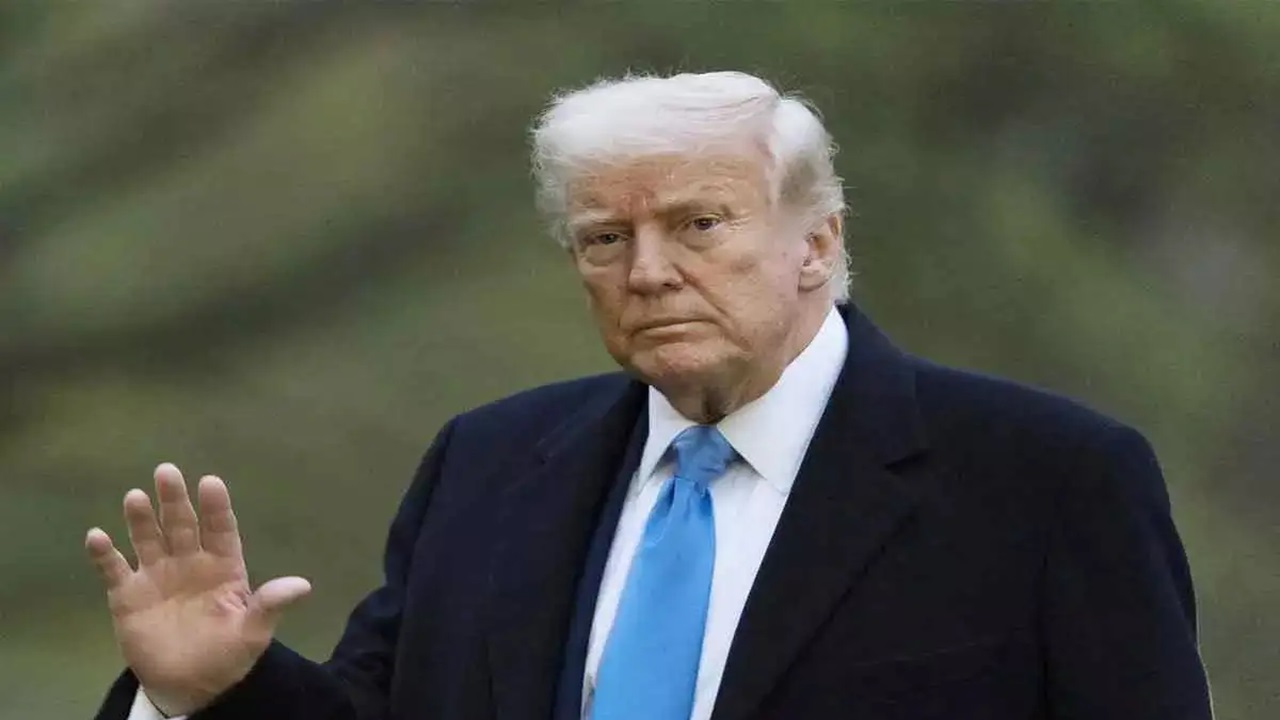
Trump Media & Technology Group’s decision to anchor an investment of USD 5 billion (roughly ₹1 lakh crore) in Telangana’s planned Bharat Future City has instantly transformed the initiative from a regional urban experiment into an international talking point. Announced at the Telangana Rising Global Summit 2025, the commitment marks a significant escalation of foreign interest in India’s next-generation urban development models—and signals Trump Media’s deeper entry into India’s technology and infrastructure landscape.
The Birth of Bharat Future City: A Greenfield Vision for the AI Age
Bharat Future City is envisioned as a sprawling 765 sq km city-region built from the ground up. Located along the Srisailam–Nagarjunasagar growth corridor, the project aims to merge high-tech industry clusters, digital governance, and sustainable urban design into a unified metropolis. A 30,000-acre core zone will host clusters for AI, quantum technologies, semiconductors, digital media, EV manufacturing, health tech, and life sciences.
The Telangana government has already signed MoUs worth around ₹41,000 crore, including plans for an international media and smart-technology hub. Complementary announcements—such as a 40 MW AI-focused green data centre—indicate a coordinated infrastructure push to build a second tech-industrial engine beyond Hyderabad’s dense western precincts.
Telangana’s Strategy and Trump Media’s Motivation
As the state positions itself to compete with global innovation regions, Trump Media has been designated the “anchor investor”—the financial signal intended to attract further foreign investment into the emerging metropolis. Over the next decade, the company plans to deploy up to ₹1 lakh crore, with the state projecting this anchor role to catalyse parallel investments from other global firms.
For Chief Minister A. Revanth Reddy, the partnership represents a dual victory: a high-visibility endorsement of Telangana’s investment climate and an opportunity to build a city that embodies AI-driven governance and future-ready urban services.
For Trump Media, the move diversifies its portfolio far beyond social media. The investment positions the group at the heart of India’s fast-expanding digital infrastructure ecosystem, enabling it to participate in content technologies, data systems, urban operating platforms, and next-generation media environments.
Where Bharat Future City Stands Among India’s Smart-City Experiments
· Scale and Urban Blueprint
Most Indian smart-city projects retrofit existing neighbourhoods over limited acreage. Bharat Future City, by contrast, is a true greenfield design—larger than Dholera SIR and on an entirely different scale compared to the area-based upgrades in cities like Pune or Indore. Its “live-learn-work-play” model integrates housing, industry, education, nature, and mobility into a master plan intended to redistribute Hyderabad’s economic density southward.
· Technology Integration
While GIFT City is finance-centric and Dholera is oriented toward manufacturing and logistics, Bharat Future City aims to weave digital infrastructure, AI governance, smart mobility, and immersive media into the city’s operating fabric from the outset. Rather than bolting on “smart” elements later, its design treats data centres, predictive dashboards, and urban digital twins as foundational.
· Sustainability and Governance
The project aspires to operate on a net-zero energy framework with extensive walkability, green buffers, circular water systems, and fully integrated waste management. A dedicated Future City Development Authority, paired with Telangana’s industrial infrastructure corporation, oversees planning—similar in structure to GIFT and Dholera but managing a more diverse land-use mix.
Ambition Meets Opportunity
Trump Media’s involvement has catapulted Bharat Future City into global conversation, but the true measure of success will lie in how effectively Telangana can translate this capital influx into a functioning, inclusive, and technologically coherent urban region. If executed well, the project could signal a pivot in India’s urban strategy—from incremental smart-city upgrades to fully engineered, AI-enabled, sustainable city-regions that define the next century of Indian urbanisation.
(With agency inputs)