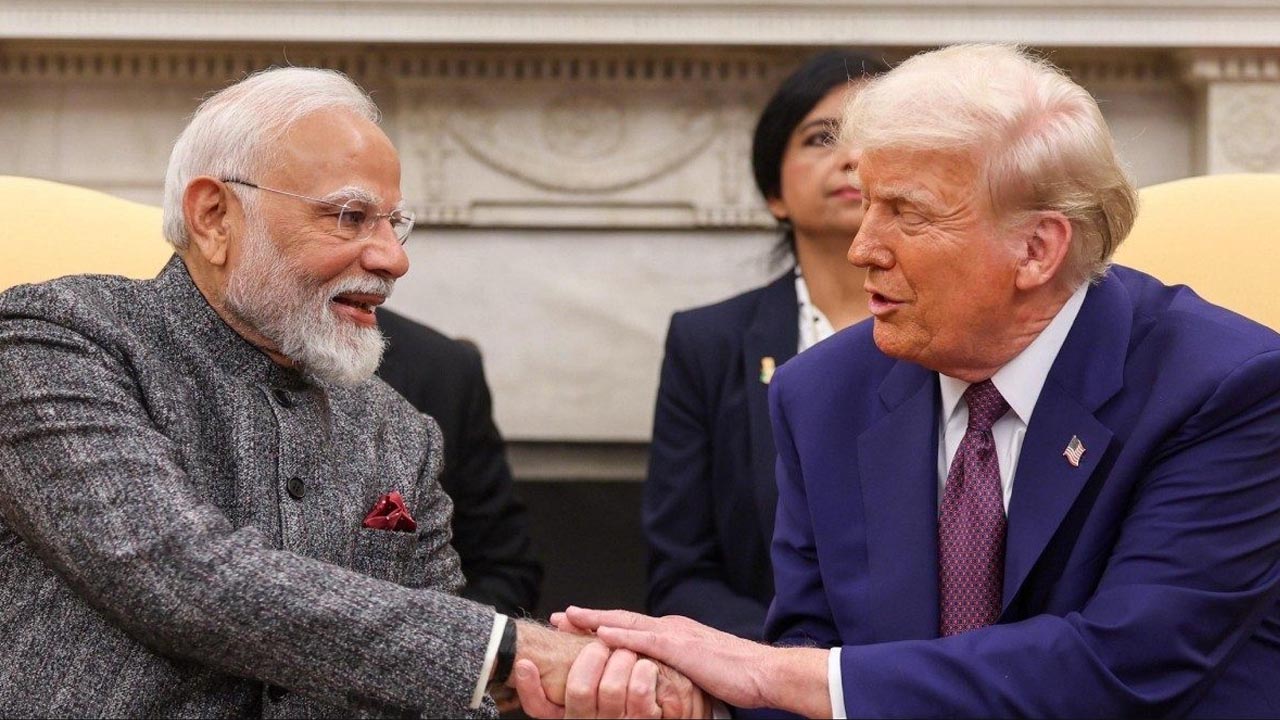
A Relationship Once Celebrated
The personal camaraderie between U.S. President Donald Trump and Indian Prime Minister Narendra Modi was once hailed as a symbol of deepening bonds between the world’s largest democracies. Their joint rallies, warm exchanges, and visible chemistry gave the impression of a partnership rooted not just in diplomacy but in mutual admiration. Yet, as former U.S. National Security Adviser (NSA) John Bolton recently observed, that rapport appears to have dissolved, leaving behind strained ties and strategic uncertainty.
Bolton’s Stark Warning
In a recent interview with British broadcaster LBC, Bolton, who served during Trump’s presidency, noted that Trump often interprets global politics through his personal relationships with leaders. “If he has a good relationship with Vladimir Putin, then he assumes America has a good relationship with Russia. That’s obviously not the case,” Bolton remarked. Applying the same logic, he argued that Trump’s once-cordial ties with Modi no longer guarantee stability in bilateral relations. “Trump had a very good relationship personally with Modi. I think that’s gone now,” Bolton said, cautioning that personal warmth cannot shield nations from damaging policy disputes.
Strained Ties at a Low Point
Bolton’s observations come at a time when India-U.S. relations are widely considered to be at their most fragile in two decades. The turbulence stems from multiple factors: Trump’s protectionist tariff measures, his administration’s sharp criticism of New Delhi, and the broader uncertainty over Washington’s commitment to long-term strategic alignment with India. These policies, Bolton argued, undid years of bipartisan U.S. efforts to strengthen India’s role as a counterbalance to China.
The Geopolitical Costs
Bolton went further, suggesting that Trump’s handling of trade and strategic issues may have inadvertently pushed India closer to Russia and China. Beijing, he noted, has taken advantage of this rift, presenting itself as a credible alternative partner to Washington. He described the imposition of tariffs on India—particularly linked to its energy imports from Russia—as an “unforced error” that risked driving New Delhi deeper into Moscow and Beijing’s orbit. “This has set U.S.-India relations back decades,” he warned, though he also expressed hope that the trend could be reversed with renewed diplomatic effort.
A Consistent Critic of Trump
Since leaving the White House, Bolton has emerged as one of Trump’s fiercest critics, often challenging his former boss’s worldview and decisions. His latest comments came just days ahead of Trump’s planned visit to the United Kingdom in mid-September. Ironically, Bolton himself is under federal scrutiny, as the FBI recently searched his Maryland residence and Washington office in connection with an investigation into possible mishandling of classified materials.
Lessons Beyond Personal Chemistry
The fading of the Trump-Modi rapport underlines a larger truth in international affairs: personal bonds between leaders can complement, but never substitute, the hard work of consistent policy and institutional cooperation. While the warmth of Trump and Modi’s past interactions once symbolized a flourishing partnership, Bolton’s analysis highlights how quickly such goodwill can erode without strong policy underpinnings. For both nations, the lesson is clear—strategic alignment must rest on enduring shared interests rather than the fleeting dynamics of personal chemistry.
(With agency inputs)