


Trump’s ‘Make in America’ Vision
Since returning to the White House, Donald Trump has sharpened his long-standing “Make in America” narrative. For him, the measure of global corporations is not just their innovation but the extent of their commitment to U.S. jobs and manufacturing. This emphasis came into sharp focus when Trump hosted a glittering dinner in the White House Rose Garden for some of the world’s most influential technology leaders. Artificial intelligence and innovation were formally on the agenda, but the underlying theme was unmistakable—an investment drive that would anchor tech giants firmly in U.S. soil.
The Dinner That Spoke Volumes
Seated beneath umbrellas in a setup reminiscent of his Florida retreat, Trump welcomed tech titans ranging from Apple’s Tim Cook to Meta’s Mark Zuckerberg. Indian-origin CEOs such as Sundar Pichai (Google), Satya Nadella (Microsoft), Sanjay Mehrotra (Micron), Vivek Ranadive (TIMCO Software), and Shyam Sankar (Palantir) underscored the growing prominence of Indian leadership in Silicon Valley. Trump, however, was less interested in celebrating diversity and more intent on quantifying commitments. Going around the table, he asked each executive the same blunt question: “How much money will you be investing in the United States?”
Apple in the Spotlight
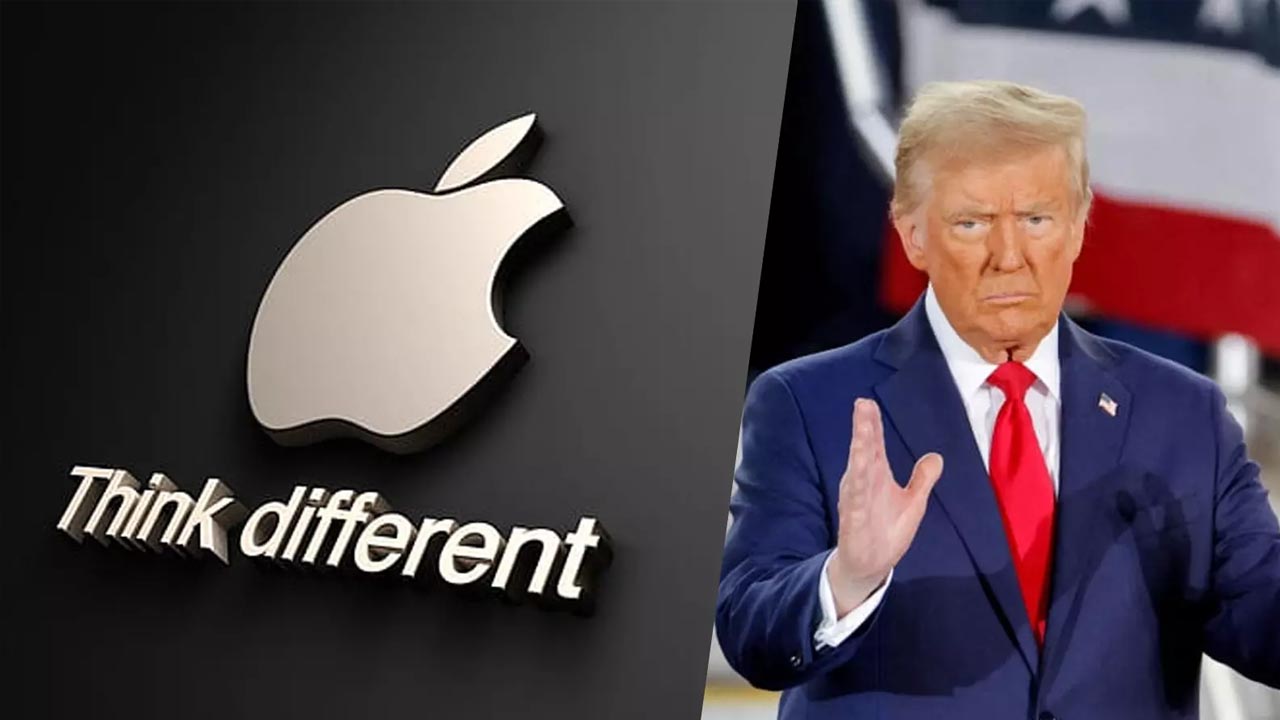
Apple CEO Tim Cook found himself directly challenged. Only weeks earlier, Apple had inaugurated its first large-scale manufacturing facility in India—an important step in reducing dependence on China and diversifying supply chains. Trump, referencing that move, pressed Cook to prioritize America. “I don’t want you building in India,” Trump reportedly quipped, before demanding a firm number. Cook responded with a pledge of $600 billion in U.S. investment, thanking Trump for “setting the tone” that enabled such growth.
For India, however, Apple’s parallel strategy tells a more nuanced story. The company has signaled its intent to expand Indian production to 25% of global iPhone output within a few years. According to reports, Apple is planning to invest around $2.5 billion in India, boosting its local production capacity from 40 million to 60 million iPhones annually. While Trump’s rhetoric may be aimed at shoring up domestic confidence, Apple’s India operations remain central to its global resilience.
The Other Giants Follow Suit
Tim Cook was not the only one on the hot seat. Zuckerberg matched Apple’s promise with his own $600 billion U.S. commitment, drawing enthusiastic praise from Trump. Google’s Sundar Pichai announced plans to exceed $250 billion in U.S. investments over the next two years, while Microsoft’s Satya Nadella reported between $75 and $80 billion this year alone. Each answer was met with Trump’s trademark applause and assurances of job creation, reinforcing his transactional style of diplomacy.
Absence Noticed: Musk Missing
The evening’s guest list was packed with industry powerhouses, from Bill Gates to Sam Altman. But one absence loomed large—that of Elon Musk. Once a close ally of Trump, Musk’s falling out with the President earlier this year left space for rivals to fill the AI spotlight. Altman, now among Musk’s chief competitors in artificial intelligence, became a symbolic replacement at the table. The omission of Musk reinforced the message that Trump’s alliances are conditional, shaped by political loyalty and investment priorities.
Indian-Origin Leaders in Global Spotlight
From an Indian vantage point, the dinner offered both pride and caution. The strong showing of Indian-origin executives highlighted the country’s remarkable talent pipeline, which continues to dominate the upper echelons of global technology firms. Pichai and Nadella, in particular, carry the dual weight of representing American corporate strength while being symbols of India’s global diaspora success. Their presence at Trump’s table, however, underscores a reality: while Indians may lead these corporations, their investment decisions are inevitably shaped by U.S. political imperatives.
Strategic Tensions: What It Means for India
Trump’s insistence that companies “build in America” collides directly with India’s ambitions to position itself as the next global manufacturing hub. Apple’s rising footprint in India, combined with New Delhi’s production-linked incentives, represents a once-in-a-generation opportunity for India to capture supply chains leaving China. Yet, Trump’s pushback signals the possibility of friction. If global giants feel torn between appeasing U.S. policymakers and pursuing diversification strategies in India, the result may slow down India’s aspirations of becoming a top technology manufacturer.
Criticism of Trump’s Approach
Even within the U.S., Trump’s focus on dollar commitments drew skepticism. While executives showered him with praise, figures such as Senator Josh Hawley criticized the tech industry for inadequate regulation of artificial intelligence. Hawley’s remarks reflect a growing debate in Washington: whether Trump’s transactional focus on investment overshadows deeper concerns around ethics, security, and innovation in emerging technologies.
Navigating Opportunity and Challenge
From an Indian standpoint, Trump’s dinner showcased both opportunity and caution. On one hand, the prominence of Indian-origin CEOs illustrates the country’s unmatched talent pipeline. On the other, Trump’s America-first push signals a future in which U.S. policy may attempt to limit global corporations’ expansion into India.
For New Delhi, the path forward lies in reinforcing India’s unique advantages—cost efficiency, market size, and strategic positioning—as complements, not competitors, to American investment. Rather than framing it as a zero-sum choice, India can position itself as an indispensable partner in diversifying supply chains and advancing innovation. The challenge will be ensuring that global giants like Apple see their investments in India not as a liability in Washington but as a necessary step toward shared resilience in an unpredictable world.
(With agency inputs)