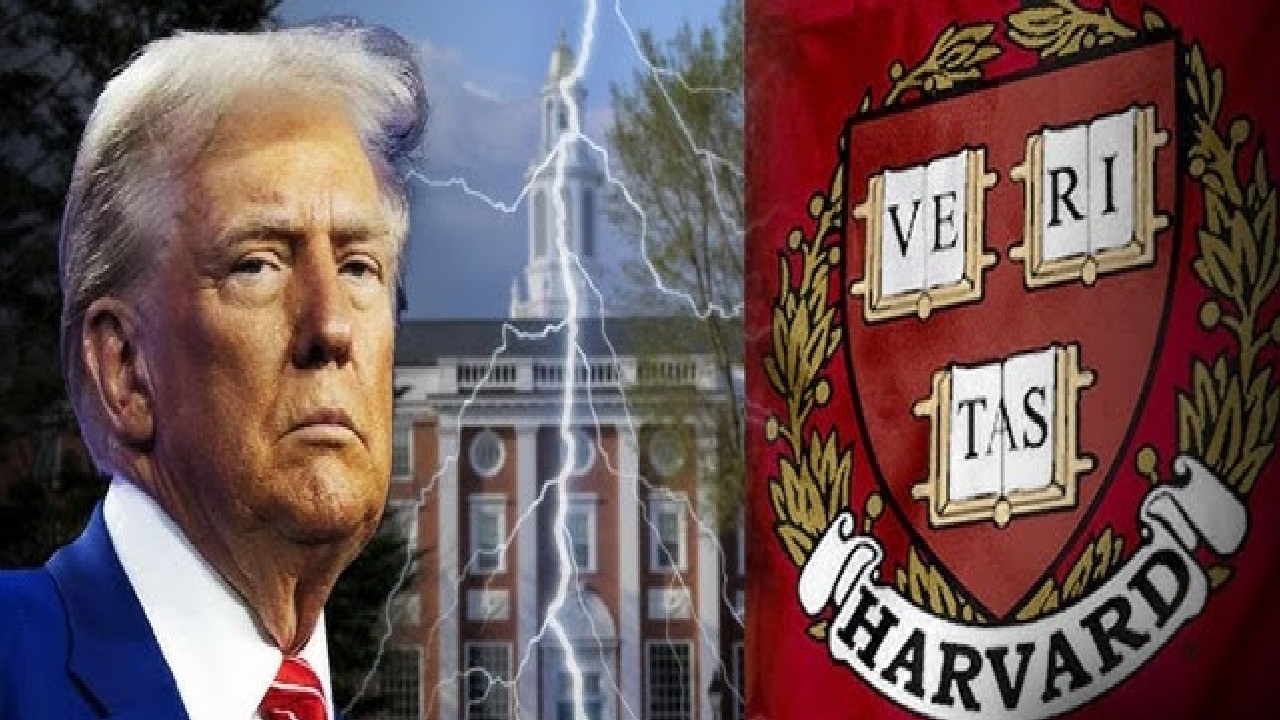
Trump’s latest strike against Harvard University jeopardizes international education, ignites legal battles, and places Indian and other foreign students in turmoil.
A Flashpoint in the Trump-Harvard Clash
In an unprecedented escalation, U.S. President Donald Trump’s administration has revoked Harvard University’s certification to host international students. This sweeping move means that Harvard is now prohibited from enrolling foreign students for the 2025–2026 academic year — and existing international students must either transfer or lose their legal visa status in the United States.
The decision sent shockwaves through academia, drawing condemnation from Harvard, global educators, and students. Harvard slammed the measure as “unlawful” and “retaliatory,” warning that it threatens not only the institution but the very soul of global education. The move is just the latest in a string of hostilities between Trump and the Ivy League institution, which has already filed lawsuits over funding cuts and federal overreach.
What Triggered This Controversial Move?
At the heart of the action lies Harvard’s refusal to turn over certain conduct records of foreign students requested by the Department of Homeland Security (DHS). Homeland Security Secretary Kristi Noem, in a stern letter, accused the university of harbouring “anti-American, pro-terrorist” foreign individuals and claimed it had turned into a “hotbed” of extremism.
According to the administration, the revocation of Harvard’s Student and Exchange Visitor Program (SEVP) certification is a matter of national security. Noem also alleged ties between Harvard and the Chinese Communist Party, further inflaming the rhetoric.
However, critics see this as a calculated political attack designed to punish Harvard for its resistance to Trump-era policies. It’s a stark reminder of how higher education has become a battleground for ideological conflict.
How Will This Impact International Students?
For Harvard’s nearly 7,000 international students — who make up over 27% of its student body — the consequences are immediate and severe. The DHS mandate effectively strips them of their legal status unless they transfer to another SEVP-certified institution. For Indian students, who currently number close to 800 at Harvard, the situation is particularly distressing.
Students who are graduating this semester may be allowed to finish their degrees, but those mid-way through their programs face a harsh ultimatum: transfer or depart. This decision not only disrupts academic plans but also throws visa and immigration status into jeopardy — a bureaucratic nightmare with personal and professional implications.
The emotional toll is equally significant. As Karl Molden, an Austrian student at Harvard, said, “We’ve worked our whole lives to get here — and now we might lose everything in a matter of weeks.”
Financial Fallout: Harvard, Students, and the U.S. Economy
The move isn’t just a moral or educational dilemma — it has massive financial ramifications. International students are a crucial revenue stream for U.S. universities, paying higher tuition rates and contributing significantly to local economies.
At Harvard, where tuition for international students can exceed $87,000 a year including room and board, their departure could leave a multimillion-dollar hole. Beyond tuition, these students support a regional ecosystem: renting apartments, eating at local restaurants, and working at nearby institutions like Massachusetts General Hospital and various biotech firms.
On a national scale, the threat looms even larger. According to NAFSA, over a million international students contribute approximately $44 billion to the U.S. economy annually. The ripple effect of policies like this — if extended to other universities — could be catastrophic.
Harvard’s Legal and Institutional Response
Unsurprisingly, Harvard is fighting back. The university has vowed to pursue every legal avenue to reverse the decision. Harvard spokesperson Jason Newton stated, “This retaliatory action threatens serious harm to the Harvard community and our country, and undermines Harvard’s academic and research mission.”
Students, too, are mobilizing. Swedish student Leo Gerden told The Harvard Crimson, “Every tool available should be used — legal, political, financial — to fight this. This must be Harvard’s top priority.”
The university has been given 72 hours to comply with DHS demands. Whether Harvard capitulates or courts intervene remains to be seen. Either way, the case could become a landmark moment in the ongoing conflict between academic freedom and federal authority.
The Bigger Picture: Ideology Over Education?
What began as a bureaucratic spat now threatens to redefine the U.S. higher education landscape. Trump’s administration has framed the issue as one of national security and American values. Critics argue it’s an attempt to silence dissent and exert political control over independent institutions.
Foreign students are caught in the crossfire — pawns in a larger ideological struggle. For Indian students, many of whom see Harvard as the pinnacle of educational success, this is a dream disrupted. For the U.S., it’s a reputational risk: if America is no longer seen as a welcoming destination for the world’s best and brightest, where will they go instead?
A Dangerous Precedent
The Trump administration’s move against Harvard doesn’t just threaten one institution — it threatens the foundation of global academic exchange. If upheld, it could set a precedent that reshapes the future of international education in the U.S.
For Indian students and others around the world, the message is chilling: your academic aspirations can be upended not by your own actions, but by political agendas beyond your control.
Harvard will fight. So will its students. But this moment — where immigration policy, education, and ideology collide — could define the global standing of American universities for years to come.
(With agency inputs)