


Final Tunnel Excavation Marks Engineering Feat in Odisha’s Landmark Rail Project
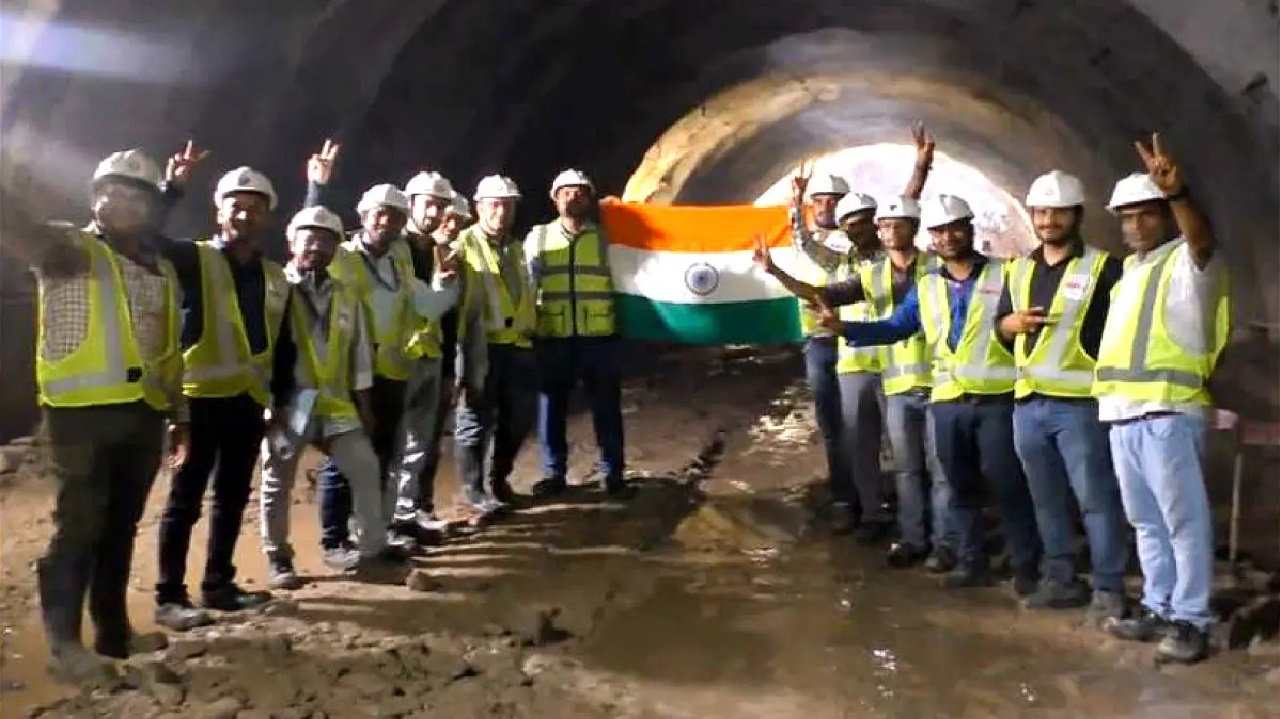
The ambitious Khurda Road–Bolangir railway line project has crossed a major engineering milestone with the successful completion of the final tunnel excavation. On Sunday, engineers achieved a breakthrough in Tunnel T2, located between Buguda and Daspalla in Nayagarh district. This marks the completion of all seven tunnels across the challenging 75-kilometre Daspalla–Purunakatak section, signaling a major leap forward in one of Odisha’s most critical infrastructure projects.
Connecting Odisha: The Vision Behind the Project
Launched as a strategic east-west rail corridor, the 301-kilometre Khurda–Bolangir line is more than a transportation project—it’s a developmental lifeline. Designed to bridge the physical and economic gap between eastern Odisha’s coastal hubs and the relatively underdeveloped western districts, the railway line aims to catalyze inclusive growth, encourage industrial activity, and offer reliable connectivity for both passengers and freight.
So far, 215 kilometres have been commissioned:
· Khurda Road to Daspalla (105.8 km)
· Bolangir to Purunakatak (109 km)
Construction continues steadily on the central link, including the crucial Purunakatak to Adhenigarh stretch, with tunnel excavation now completed.
Tunnel T2: Engineering Excellence Through NATM
The breakthrough in Tunnel T2 is a feat of modern engineering. Built using the New Austrian Tunnelling Method (NATM)—a technique celebrated for its adaptability in complex geological conditions—T2 is now the second-longest tunnel in Nayagarh district. It navigates the difficult Eastern Ghats terrain, demonstrating the project’s reliance on cutting-edge methods to meet topographical challenges.
Earlier, Tunnel T3, the longest at 2.6 km, was completed in January 2025 between Buguda and Banigochha. Like T2, it was built using NATM and featured a 2-degree curve, highlighting the sophisticated design challenges overcome during construction.
Economic and Social Impacts: A Corridor of Opportunity
Once fully operational, the Khurda–Bolangir rail line is set to revolutionize regional connectivity. For western Odisha—often hampered by poor infrastructure—this means:
· Faster passenger travel between Bhubaneswar and towns like Bolangir and Boudh
· Reduced transportation costs for agricultural and industrial goods
· New logistics hubs and economic clusters around stations
· Increased tourism and spiritual travel to places like Nayagarh and Bolangir
The project also strengthens Odisha’s integration with national freight corridors, making it easier to transport goods to ports and metros.
Bridging the Developmental Divide
Perhaps the most important aspect of the rail line is its potential to uplift backward districts. By unlocking access to markets, healthcare, and education, the rail corridor becomes an engine of social equity. Towns and villages long cut off from Odisha’s economic progress will now have a direct link to prosperity.
Odisha on the Rails to Progress
The completion of tunnel works on the Khurda–Bolangir railway line is not merely an engineering achievement—it’s a symbol of Odisha’s forward march. With visionary planning, robust technology, and inclusive intent, the state is redefining connectivity as a catalyst for development. As the remaining phases of the project unfold, this railway line will stand as a monument to transformation—built through mountains, for the people, by the people.
(With inputs from agencies)