


Two Suicides, One Department in Uproar
Haryana’s police force is reeling after two back-to-back suicides—first that of senior IPS officer Y. Puran Kumar, and then Assistant Sub-Inspector (ASI) Sandeep Kumar—each leaving behind deeply troubling notes. What began as a single act of despair has now spiraled into a tangled web of allegations involving corruption, caste politics, and institutional breakdown within the state’s law enforcement hierarchy.
The tragedy has not only sparked public outrage and political tremors but also exposed fault lines within the Haryana Police, where one officer’s accusations of caste-based harassment appear to have collided with another’s claims of systemic corruption.
The Second Death: ASI’s Explosive Allegations
Just days after the death of Inspector General Y. Puran Kumar, ASI Sandeep Kumar, posted with the Cyber Cell in Rohtak, was found dead in a field—having allegedly shot himself with his service revolver. The 36-year-old officer left behind a three-page suicide note and a video message, both of which accused the late IPS officer of corruption and manipulation.
In his note, Sandeep described Puran Kumar as “an absolutely corrupt cop who used caste politics to shield his crimes.” He claimed that the senior officer had taken his own life fearing that his “wrongdoings were about to be exposed.”
“I am ending my life to demand a fair investigation. This corrupt system should not be spared,” Sandeep wrote, asserting that his death was a sacrifice “for the truth.” In his video, he alleged that corruption had seeped into the department’s ranks, claiming that certain officers used intimidation, extortion, and sexual misconduct against subordinates.
The Bribery Link and Internal Rift
According to reports, Sandeep had earlier exposed a bribery case involving Puran Kumar’s gunman, who allegedly accepted ₹2.5 lakh from a liquor contractor. When the matter came to light, Puran Kumar purportedly dismissed it as caste-motivated slander. Sandeep, however, maintained that the IPS officer’s suicide was driven not by harassment but by the fear of being unmasked.
“This was never about caste. It was about corruption,” his note insisted.
Interestingly, Sandeep expressed respect for DGP Shatrujeet Kapur and Rohtak Police Chief Narendra Bijarnia—both of whom were named in Puran Kumar’s suicide letter. He alleged that a “lobby of IAS officers” wanted these senior police officials removed “to enjoy the spoils of power.”
Both Bijarnia and Kapur have since been relieved of active duty pending further inquiry, as investigators now face the daunting task of untangling two overlapping cases, each contradicting the other.
Community Anger and the Jat Protest
Tension escalated across Rohtak and Jind districts when Sandeep’s body was seized by members of the Jat community, who refused to perform his cremation. The protesters demanded the arrest of IAS officer Dr. Amneet P. Kumar, wife of the late IPS officer, accusing her of shielding those responsible for institutional corruption.
The demonstrators carried Sandeep’s body to the Julana-Lakhan Majra highway, blocking traffic for hours in a display of grief and defiance. Local leaders called for a judicial inquiry, arguing that both suicides point to “a systemic rot in governance.”
Sandeep, a native of Julana, leaves behind his wife, two daughters, and a son. His father, a former police inspector, died in a train accident two decades ago—a grim echo of tragedy within the same family.
The First Death: IPS Officer’s Note of Despair
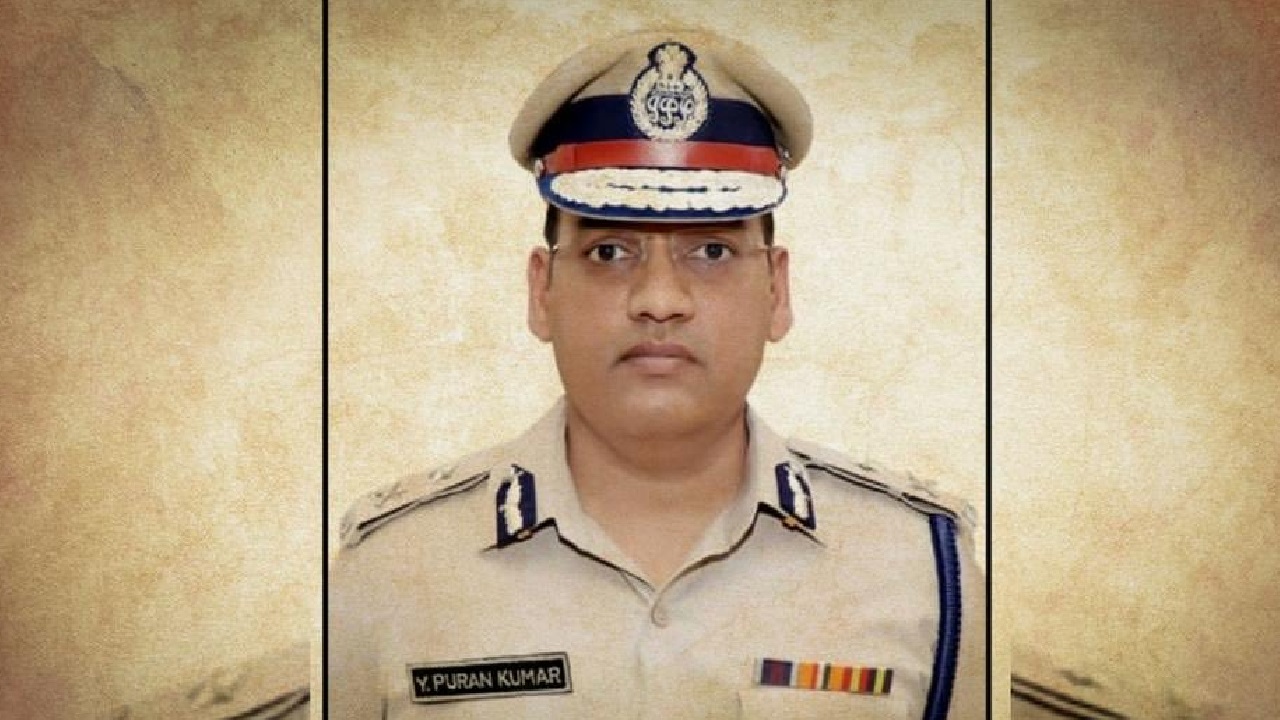
The controversy traces back to the death of Inspector General Y. Puran Kumar, a 2001-batch IPS officer, who allegedly shot himself at his office in Sunaria, Rohtak. A nine-page suicide note recovered from his pocket accused 12 senior officials, including 7-8 IPS officers and two IAS officers, of mental harassment, humiliation, and caste-based discrimination.
He wrote that repeated appeals for help went unanswered:
“Having waited for sufficient time and with no response, I am left with no option but to take this extreme step. I hope this animosity ends with me.”
Following his death, his wife, Dr. Amneet Kumar, filed a formal complaint naming DGP Shatrujeet Kapur and SP Narendra Bijarnia, alleging abetment to suicide. She refused to allow the post-mortem until an FIR was filed, insisting that “those responsible for my husband’s death cannot go unpunished.”
Politics, Perceptions, and Public Pressure
The twin suicides have triggered a political storm in Haryana. While Chief Minister Nayab Saini has promised a “fair and transparent probe,” the public mood remains tense. “No matter how powerful the guilty, they will not be spared,” he stated.
Within the police, however, morale has dipped sharply. Officers privately admit that the institution’s credibility is at stake, as allegations of caste bias, corruption, and bureaucratic interference intertwine in a narrative that has blurred the lines between victim and perpetrator.
A Department in Crisis, a System on Trial
The deaths of Y. Puran Kumar and Sandeep Kumar have left behind more questions than answers. Each man’s note paints the other as the symbol of a broken system—one consumed by caste divisions, corruption, and despair.
The tragedy underscores an urgent need for independent oversight within police institutions, free from political and bureaucratic influence. As Haryana mourns two officers lost to internal turmoil, the state must confront the deeper crisis that led them there: the corrosion of trust within its law enforcement ranks.
Whether these deaths become a catalyst for reform or are buried under procedural investigations will determine not just the future of the Haryana Police—but also public faith in the justice system itself.
(With agency inputs)