A Terror Attack That Rekindled Tensions
On April 22, 2025, the tranquil tourist destination of Baisaran Valley in Pahalgam, Indian-administered Kashmir, was shattered by one of the deadliest terror attacks since 2008. Four heavily armed militants stormed the valley, targeting and executing Hindu men after confirming their religion. The chilling attack claimed 26 lives, triggering a wave of grief and fury across India and prompting swift retaliation from New Delhi.
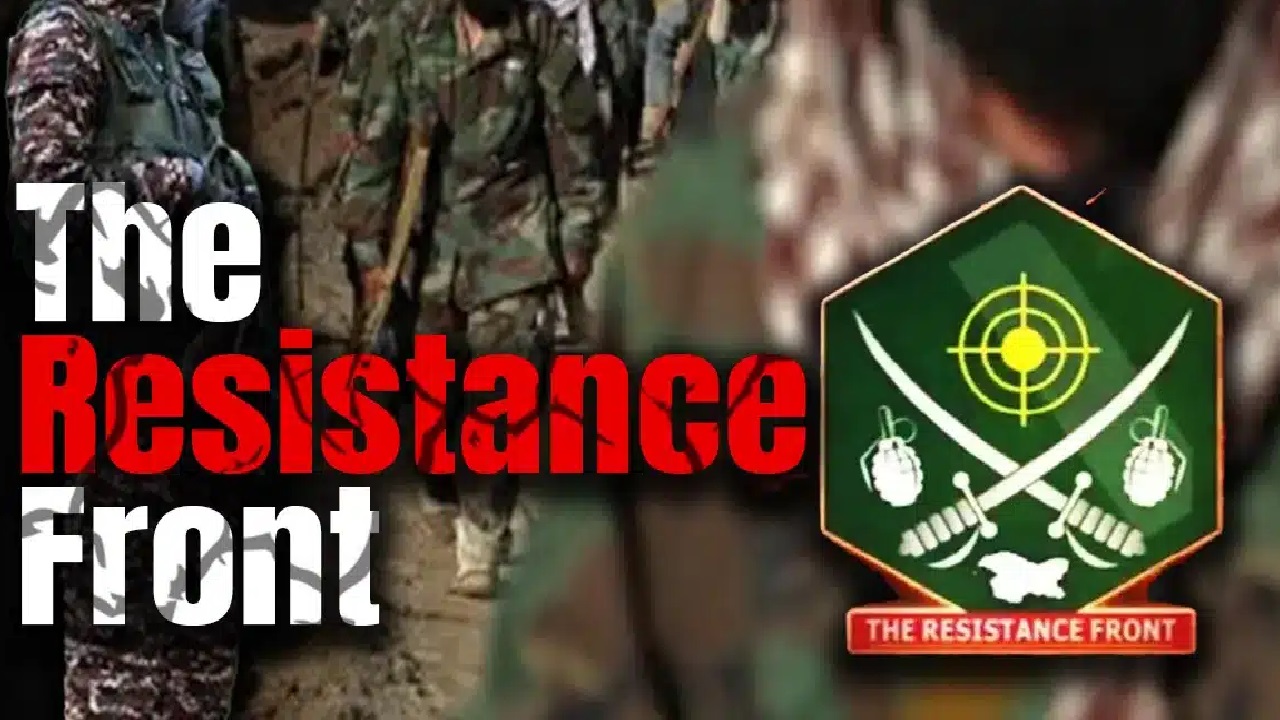
The militant group known as The Resistance Front (TRF), initially claimed responsibility for the attack but retracted the statement days later. This ambiguity did not stop the geopolitical fallout. India accused Pakistan of harbouring the perpetrators, reigniting long-standing hostilities between the two nuclear-armed neighbors.
The Pahalgam Attack: A Catalyst for Conflict
India responded to the April 22 massacre with Operation Sindoor, a coordinated military campaign that saw precision airstrikes targeting terrorist launchpads in Pakistan and Pakistan-occupied Kashmir (POK) on May 7. Indian fighter jets reportedly damaged key Pakistani military installations, including the Noor Khan Air Base in Rawalpindi. Pakistan retaliated with a series of cross-border escalations — missile launches, drone activity, and artillery shelling — along the Line of Control (LoC) and the international borders in Punjab and Rajasthan.
Dozens were killed on both sides before a ceasefire was declared on May 10. While former U.S. President Donald Trump claimed on Truth Social that his intervention brokered peace, India rejected that narrative, asserting that the ceasefire was a result of direct military dialogue between the two countries.
U.S. Designates TRF a Terrorist Organization
The U.S. government took a definitive stance on July 17 when Secretary of State Marco Rubio officially designated The Resistance Front as a “foreign terrorist organization” (FTO) and a “specially designated global terrorist” (SDGT). The move aligned Washington with India’s position and sent a strong message against Pakistan-based terror proxies.
Rubio, in his statement, described TRF as a front and proxy for Lashkar-e-Taiba (LeT), a group already sanctioned by the U.S. for its role in the 2008 Mumbai attacks. The South Asia Terrorism Portal — a Delhi-based think tank — had long considered TRF an offshoot of LeT, having emerged in 2019 as a rebranded face of Pakistan-sponsored terrorism in Kashmir.
Rubio emphasized that this designation fulfilled a “call for justice for the Pahalgam attack,” reinforcing the United States’ counterterrorism commitment. The decision was met with approval in New Delhi, with Foreign Minister Subrahmanyam Jaishankar calling it a “strong affirmation of India-US counterterrorism cooperation.”
Strategic Implications and Regional Dynamics
The U.S. decision carries weight beyond the immediate legal sanctions. According to Michael Kugelman, a South Asia expert based in Washington, the designation signals Washington’s implicit support of India’s view that TRF is linked to LeT. It also helps the U.S.-India relationship rebound after months of strained diplomatic exchanges over trade and regional issues.
However, the move places Washington in a delicate position. While India is seen as a strategic partner in countering China’s influence in Asia, Pakistan remains a long-time U.S. ally, particularly in regional security and Afghan affairs. Balancing this duality requires nuanced diplomacy.
The renewed India-Pakistan skirmishes also reignited the unresolved Kashmir dispute. Both nations claim the region in full but govern only parts of it. They have fought multiple wars over Kashmir and continue to experience periodic escalations despite sporadic peace initiatives.
A Fragile Peace and Global Repercussions
The Pahalgam terror attack and the subsequent U.S. designation of TRF underscore the fragile and combustible nature of South Asia’s security dynamics. While the ceasefire on May 10 restored a temporary calm, underlying tensions remain unresolved.
India’s insistence on bilateralism and its refusal to accept foreign mediation contrast with Pakistan’s repeated calls for international intervention. Meanwhile, Washington’s decision to sanction TRF without directly blaming Islamabad reflects a careful geopolitical balancing act.
As the region grapples with the legacy of the April 22 attack, the global community faces a familiar dilemma: supporting counterterrorism efforts without exacerbating regional rivalries. The Pahalgam incident has once again highlighted how terrorism in Kashmir continues to reverberate far beyond the Himalayas.
(With agency inputs)