Tariff Turmoil Strains Strategic Ties
Tensions between India and the United States have escalated sharply following a major policy shift from Washington. In a dramatic move, President Donald Trump signed an Executive Order that doubles tariffs on Indian imports, raising duties to an unprecedented 50%. Citing national security and foreign policy concerns linked to India’s continued trade with Russia, the U.S. has now frozen all trade negotiations with New Delhi. The decision threatens to derail years of diplomatic and economic cooperation between the two democracies.
The Executive Order: A Steep Economic Penalty
On Wednesday, the White House announced an additional 25% tariff on all Indian goods entering American ports—on top of the existing 25% imposed earlier. The new tariff regime, scheduled to take effect on August 27, applies broadly to Indian exports, sparing only those in transit or under specific exemptions.
The official justification hinges on national security: the White House argues that India’s ongoing import of Russian oil—either directly or via intermediaries—poses an “extraordinary threat” to U.S. interests. The executive order grants the President leeway to adjust these tariffs in response to evolving geopolitical developments or retaliatory measures from India.
Trump’s Stance: No Dialogue Until Dispute Resolved
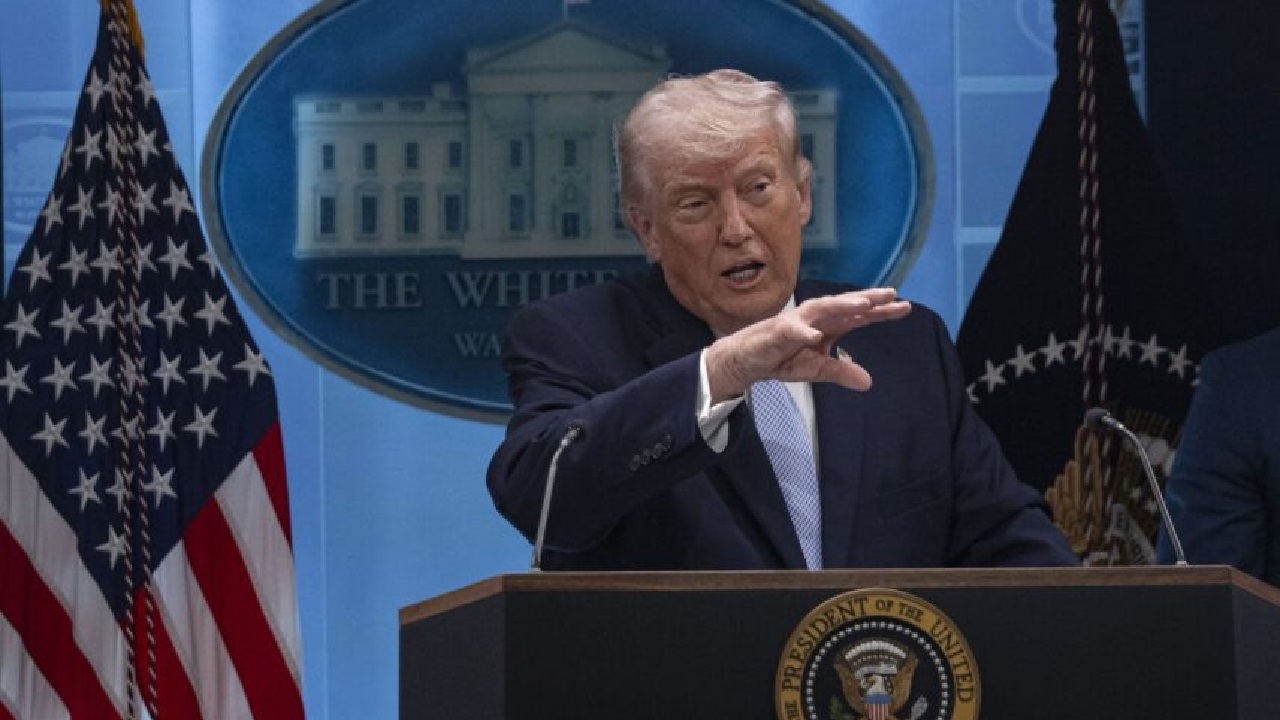
When asked whether the United States would consider reopening trade discussions with India despite the mounting tariffs, President Trump offered a blunt response: “No, not until we get it resolved.” His remarks underscore Washington’s hardline approach, indicating that trade diplomacy is now firmly on hold until India complies or concessions are made on the oil imports issue.
This signals a potential shift in how the U.S. handles international economic relations—using punitive tariffs not just as a trade tool but as a geopolitical lever.
India Responds: No Compromise on Core Interests
Prime Minister Narendra Modi responded firmly during a speech at the MS Swaminathan Centenary International Conference in New Delhi. “India will never compromise on the interests of our farmers, fishermen, and dairy workers,” Modi declared. Framing the dispute as a defense of national welfare, he emphasized that protecting domestic sectors—especially agriculture—takes precedence over international pressure.
India has long resisted opening its rural-based sectors to global competition, arguing that millions of livelihoods are at stake. Modi’s tone suggested that New Delhi is prepared for economic fallout in order to uphold these principles.
Geopolitical Undercurrents: Russia and China Back India
Adding an international dimension to the dispute, both Russia and China have publicly backed India. Chinese Foreign Minister Wang Yi condemned the U.S. tariffs as a breach of global trade norms, while Russia, bolstering its strategic alignment with India, recently hosted National Security Adviser Ajit Doval in Moscow. Following this visit, the Kremlin announced that President Vladimir Putin will soon visit India, signaling growing cooperation between the two allies.
This alignment may deepen existing divides in the global power structure, with India, Russia, and China finding common cause against U.S.-led economic pressure.
Bridging the Divide with Dialogue and Diplomacy
The current impasse between India and the United States is more than a trade disagreement—it reflects diverging worldviews on sovereignty, national security, and economic policy. For both nations, the stakes are high. India seeks to preserve its strategic autonomy and domestic stability, while the U.S. aims to enforce its geopolitical priorities through economic means.
A solution lies in renewed dialogue, potentially facilitated by neutral intermediaries or multilateral platforms such as the WTO or G20. Both nations must recognize that sustained trade friction serves neither’s long-term interests. Building trust, rather than imposing tariffs, may be the only path back to a stable, mutually beneficial partnership.
(With agency inputs)