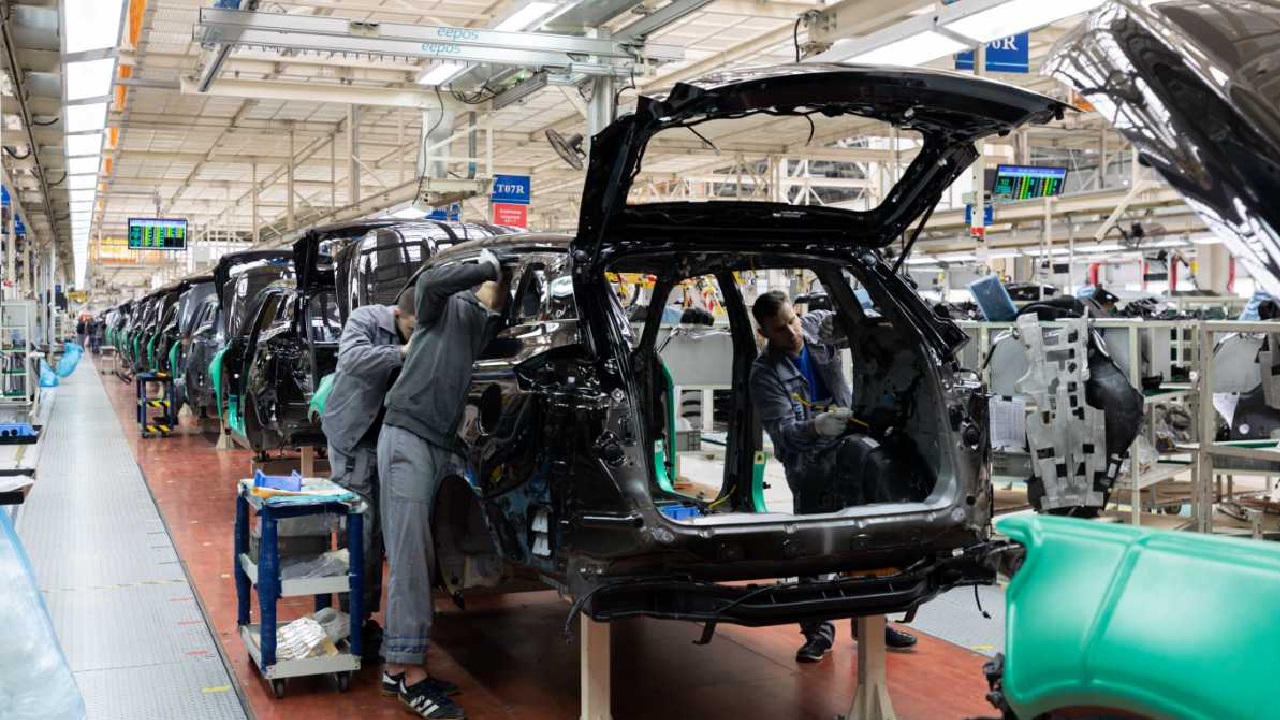
Dealers Flag Risks as West Asia Conflict Deepens
India’s automobile dealers have sounded an early warning: the escalating tensions between the United States and Iran could disrupt supply chains and impact vehicle availability in the coming months. Industry body Federation of Automobile Dealers Associations (FADA) has cautioned that rising input costs and logistical bottlenecks may soon overshadow the sector’s recent growth momentum, particularly if the conflict continues to strain oil routes through the Strait of Hormuz.
Record Sales Mask Emerging Vulnerabilities
Despite these concerns, India’s auto sector closed FY26 on a high note. Passenger vehicle dispatches surged to a record 4.7 million units, marking a 10% year-on-year growth. This rebound was driven by GST reforms, improved financing conditions, and strong festive demand. Automakers such as Mahindra & Mahindra even managed to outperform rivals like Tata Motors in key segments.
However, this strong performance now faces uncertainty. The ongoing conflict in West Asia has triggered a sharp 15–20% rise in global oil prices, threatening to erode gains by increasing both production and transportation costs.
Supply Chain Disruptions Ripple Across Industry
India’s dependence on West Asia for critical energy supplies makes the sector particularly vulnerable. Nearly 60% of LPG imports and a vast majority of oil shipments pass through the Strait of Hormuz. Disruptions here directly affect manufacturing processes, especially those involving coatings and surface treatments.
The crisis has already led to force majeure declarations by key chemical suppliers, halting the supply of essential inputs such as polyethylene, synthetic rubber, and carbon black. These materials are integral to components ranging from sitting systems to dashboards. Additionally, shortages of aluminium scrap and industrial gases threaten to slow or halt production lines.
Logistics challenges are compounding the problem. Shipping routes are being diverted around the Cape of Good Hope, increasing transit times and costs significantly. This has also stalled nearly $1 billion worth of auto exports to the Middle East, further tightening cash flows for manufacturers.
Rising Input Costs and Industry-Wide Pressure
The conflict’s economic impact is evident in surging material costs. Aluminium prices have risen by 12%, copper by 10%, and steel by 8%, collectively pushing up vehicle production costs by an estimated 5–7%. Companies like Hyundai Motor India are already reporting export delays, while vendors struggle with fuel shortages affecting daily operations.
The Automotive Component Manufacturers Association of India has warned of a cascading “domino effect” across the integrated supply chain, where disruptions in one segment could quickly spread across the entire ecosystem.
Mitigation Efforts and Uncertain Outlook
In response, industry players are exploring alternative sourcing strategies and prioritizing domestic energy use. However, these measures offer only limited short-term relief. Prolonged disruptions could lead to higher vehicle prices, reduced demand—especially in price-sensitive segments like two-wheelers—and pressure on profit margins.
Growth Meets Geopolitical Reality
India’s auto sector stands at a critical juncture, where record-breaking growth is colliding with geopolitical uncertainty. While FY26 showcased the industry’s resilience, the West Asia conflict underscores its structural vulnerabilities. The coming months will test how effectively manufacturers and policymakers can adapt to external shocks. Ultimately, the sector’s ability to sustain momentum will depend not just on domestic demand, but on stability in global energy and trade corridors that keep its wheels turning.
(With agency inputs)